making repair spaces
more socially inclusive
Project Type: Diploma Thesis
Project Period: 01/2025 - 9/2025
Project Partners:
Repair Café DreCo, Konglomerat e.V., re:sax (Landesverband Nachhaltiges Sachsen e.V.),
Dear Future Festival
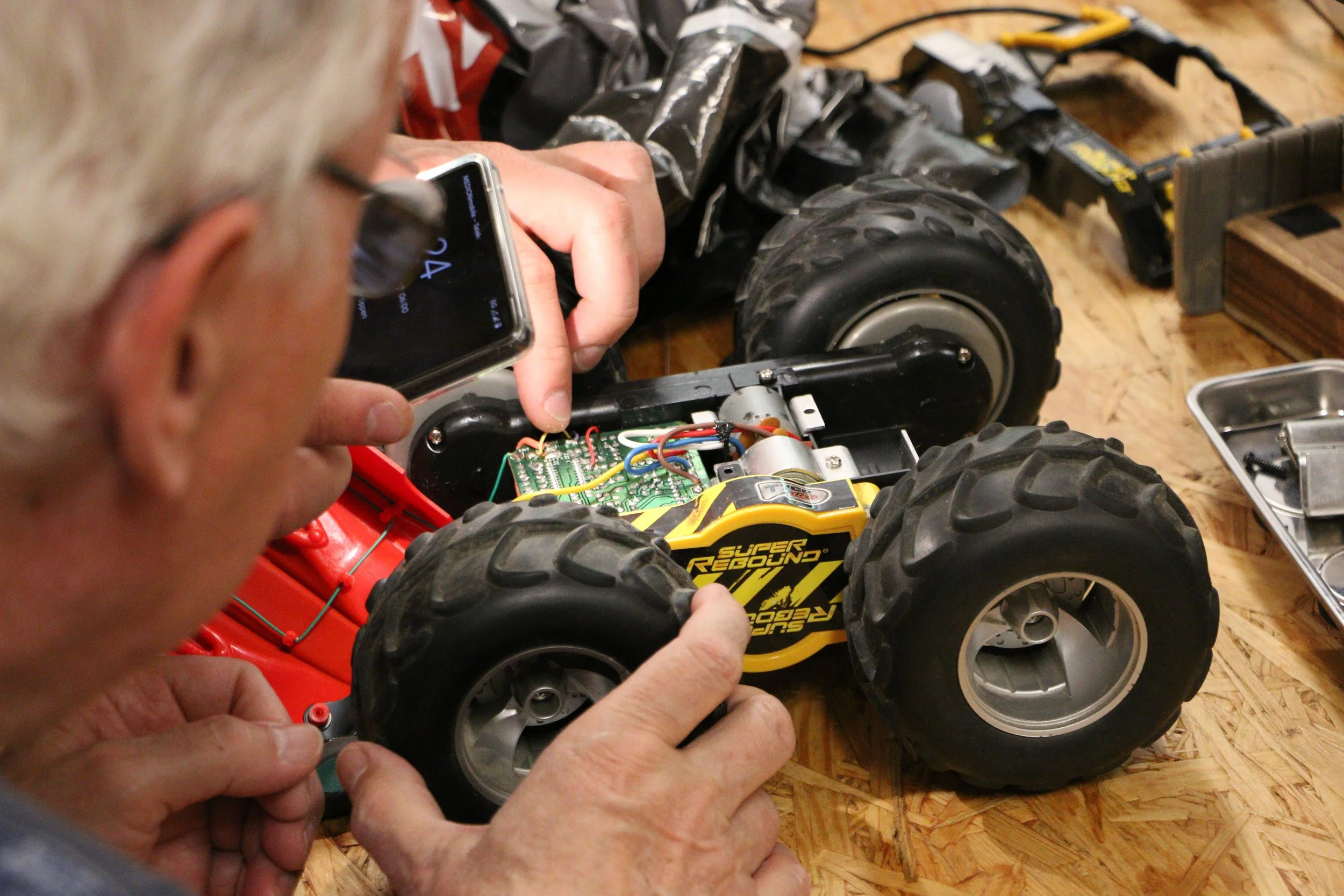
Repair initiatives like repair cafés are open spaces where volunteers support the repair of everyday objects. By raising awareness of what can be repaired and sharing practical skills, they contribute to a more circular society.
This project explores how their social reach and inclusivity can be strengthened to unlock their full potential in supporting a just eco-social transition.
Project Highlights:
-
![]()
Cultural Probe Set
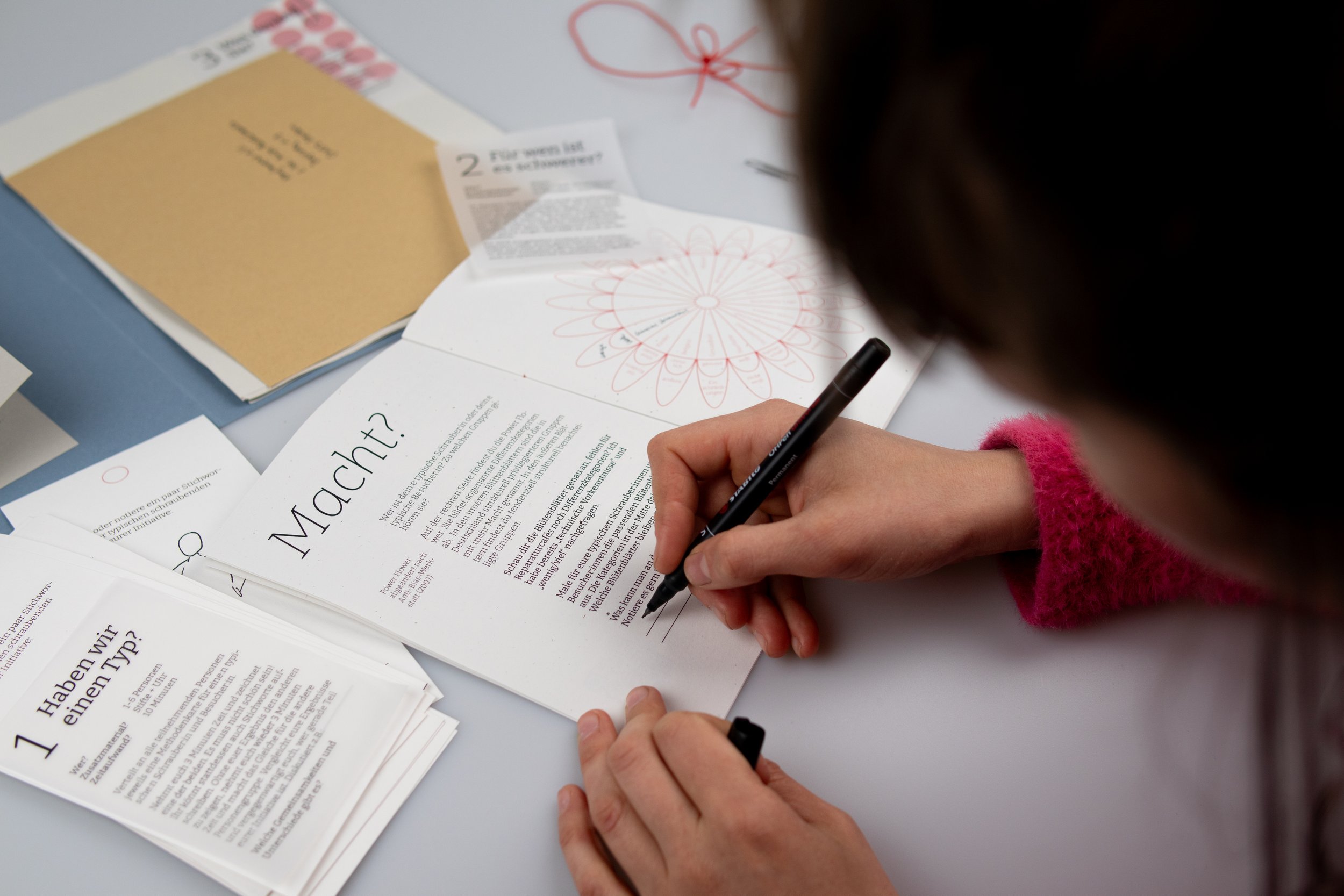
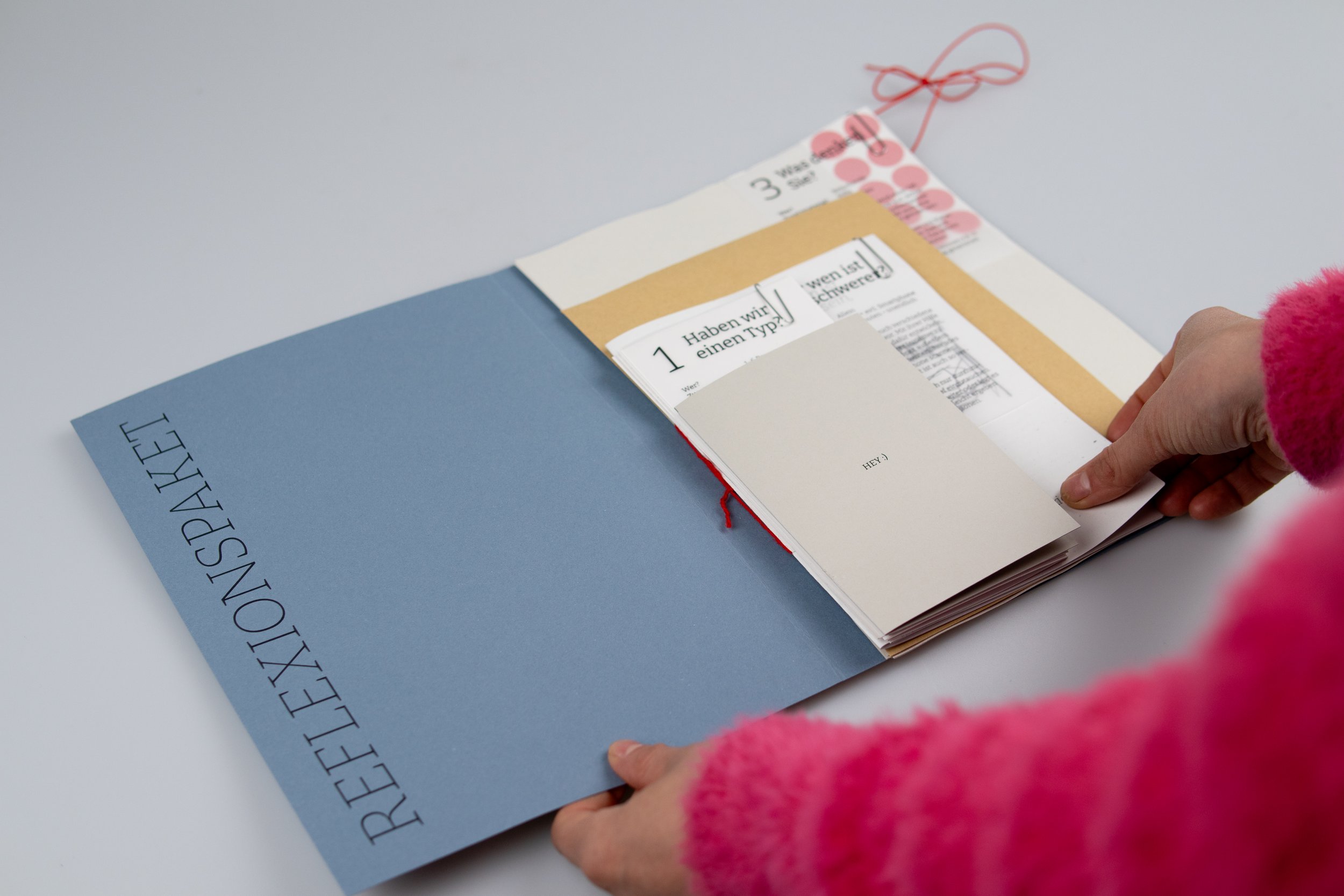
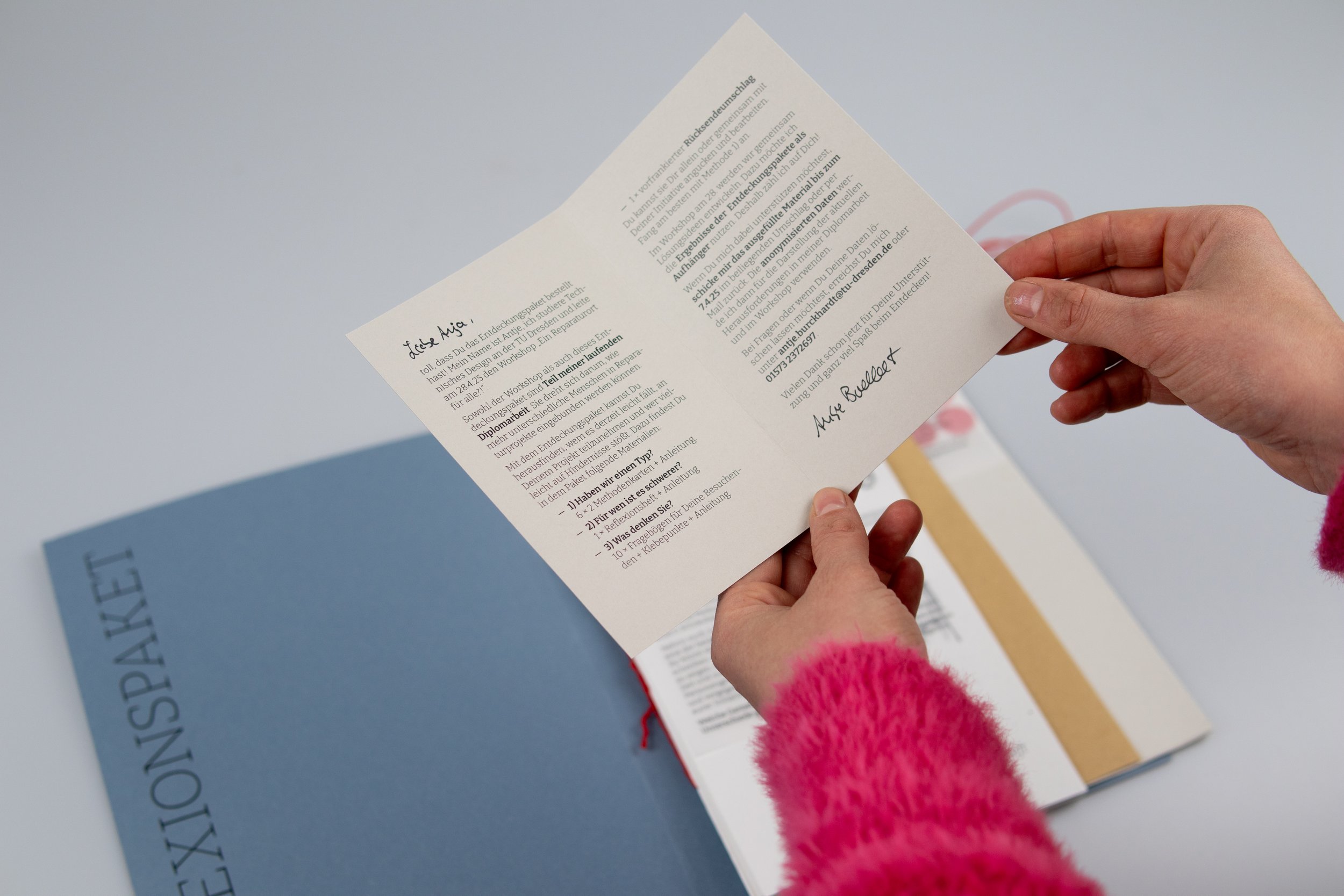
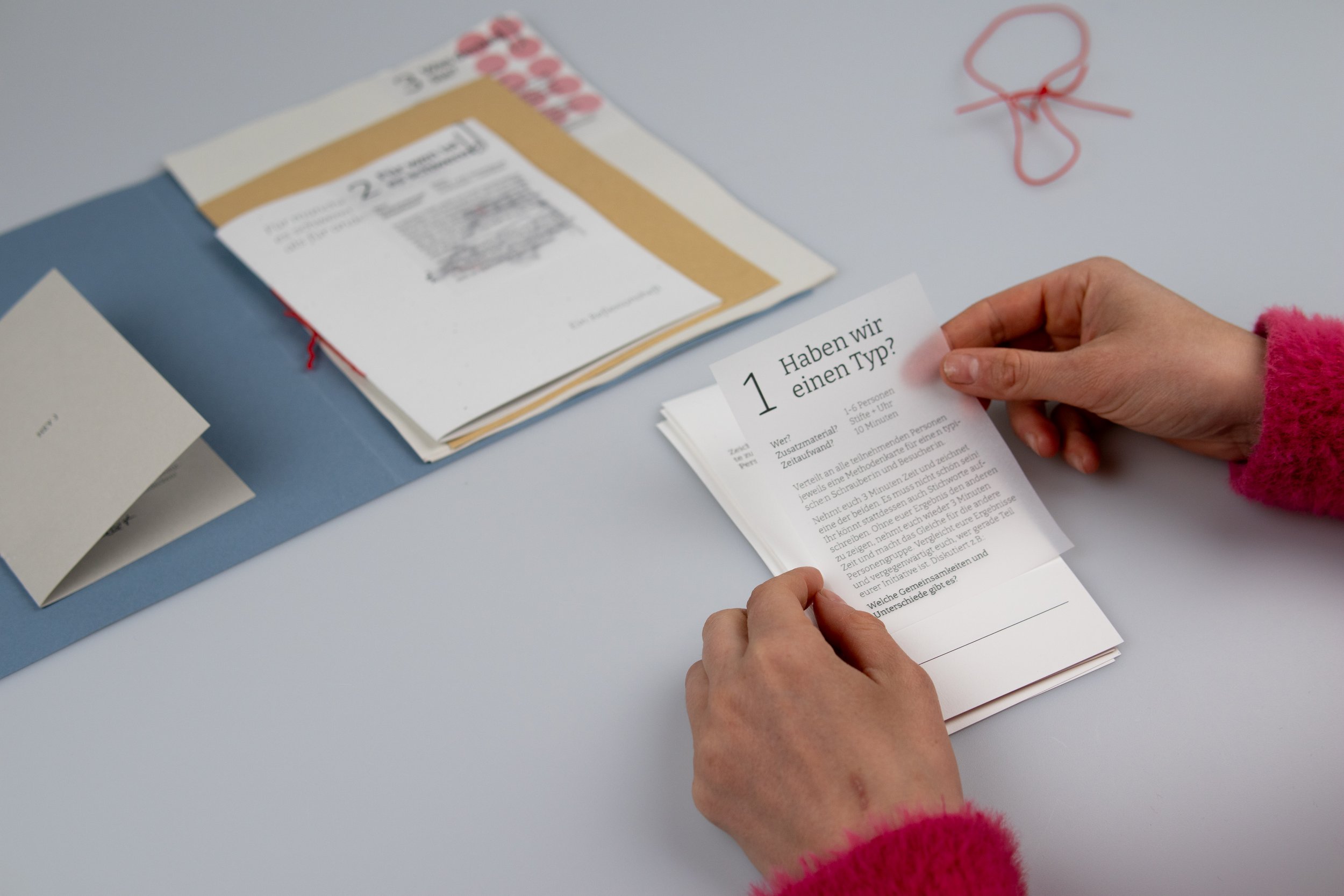
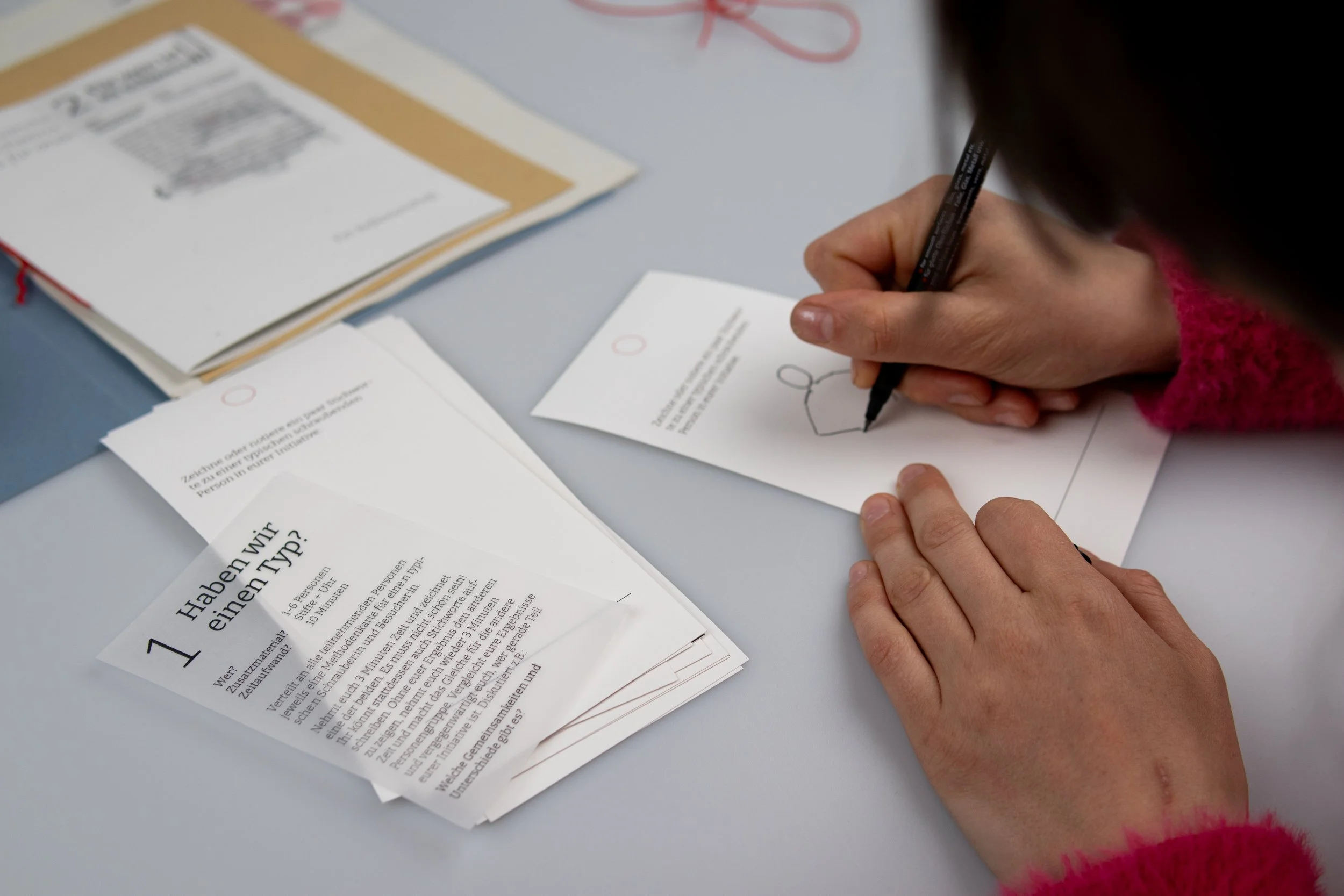
The “ Reflexionspaket” guides repair initaitives in reflecting on their social outreach.
-
![]()
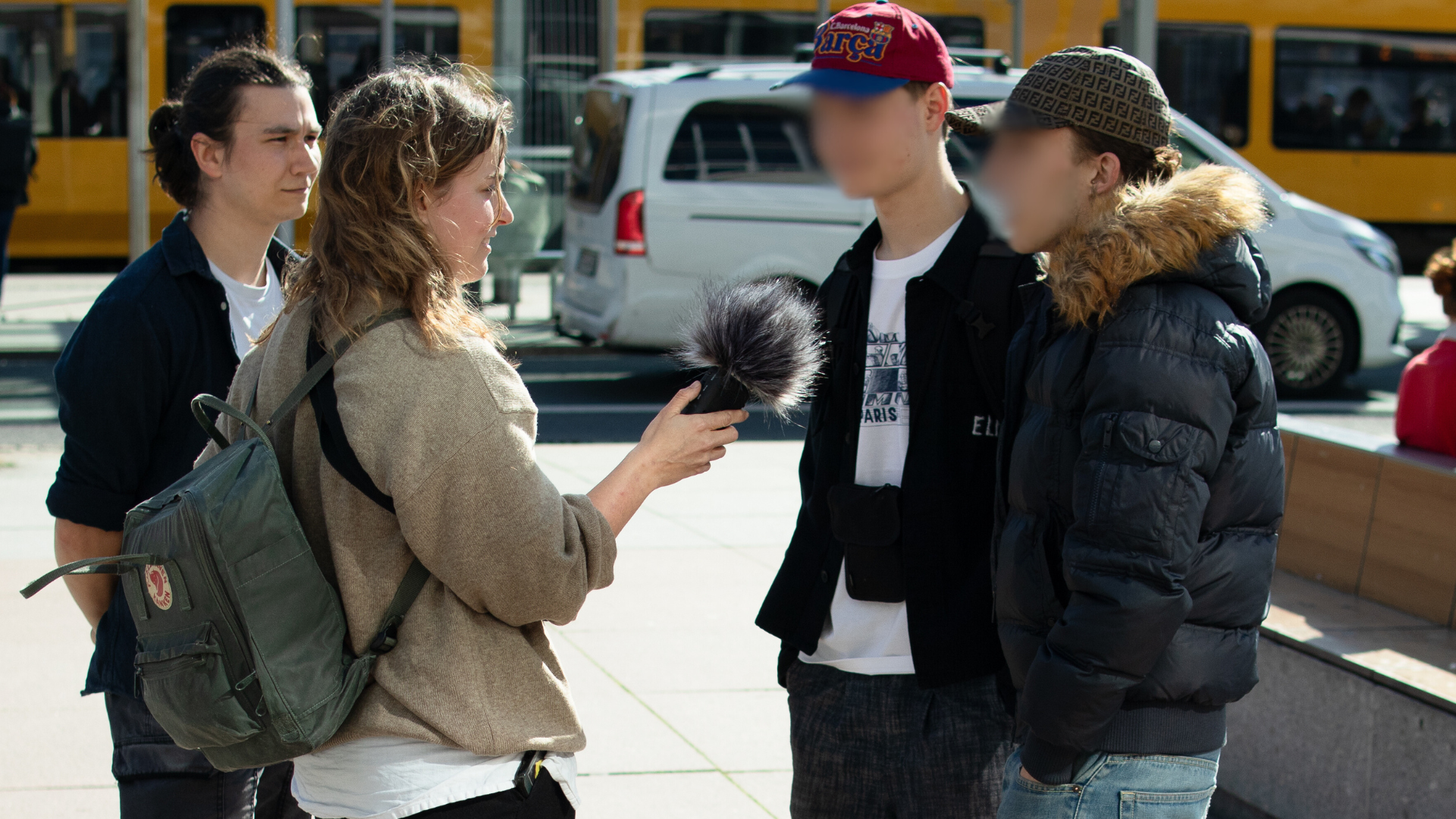
53 User Interviews
What are barriers to a visit in a repair initiative and what could be improved?
-
![]()
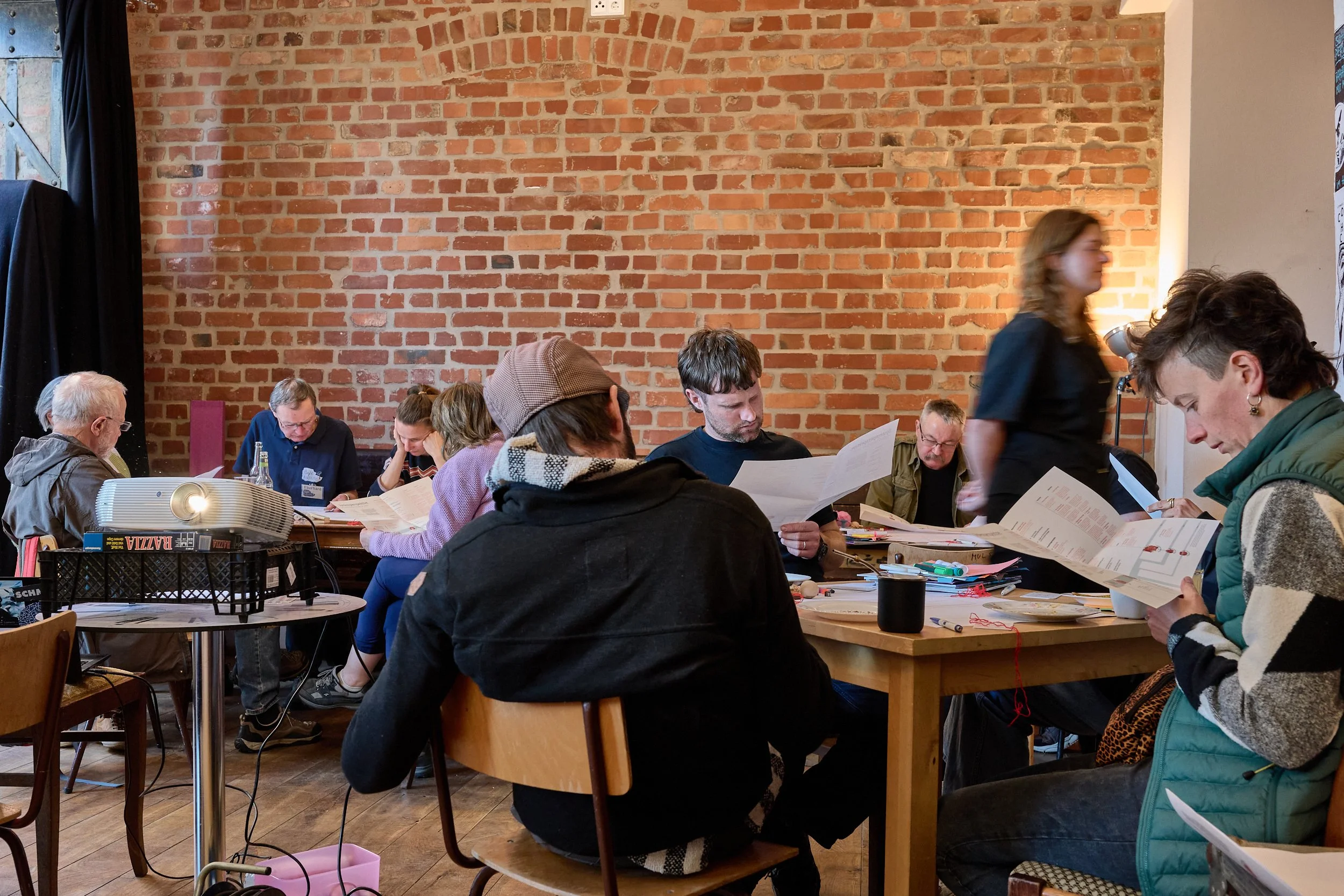
Prototyping Workshop
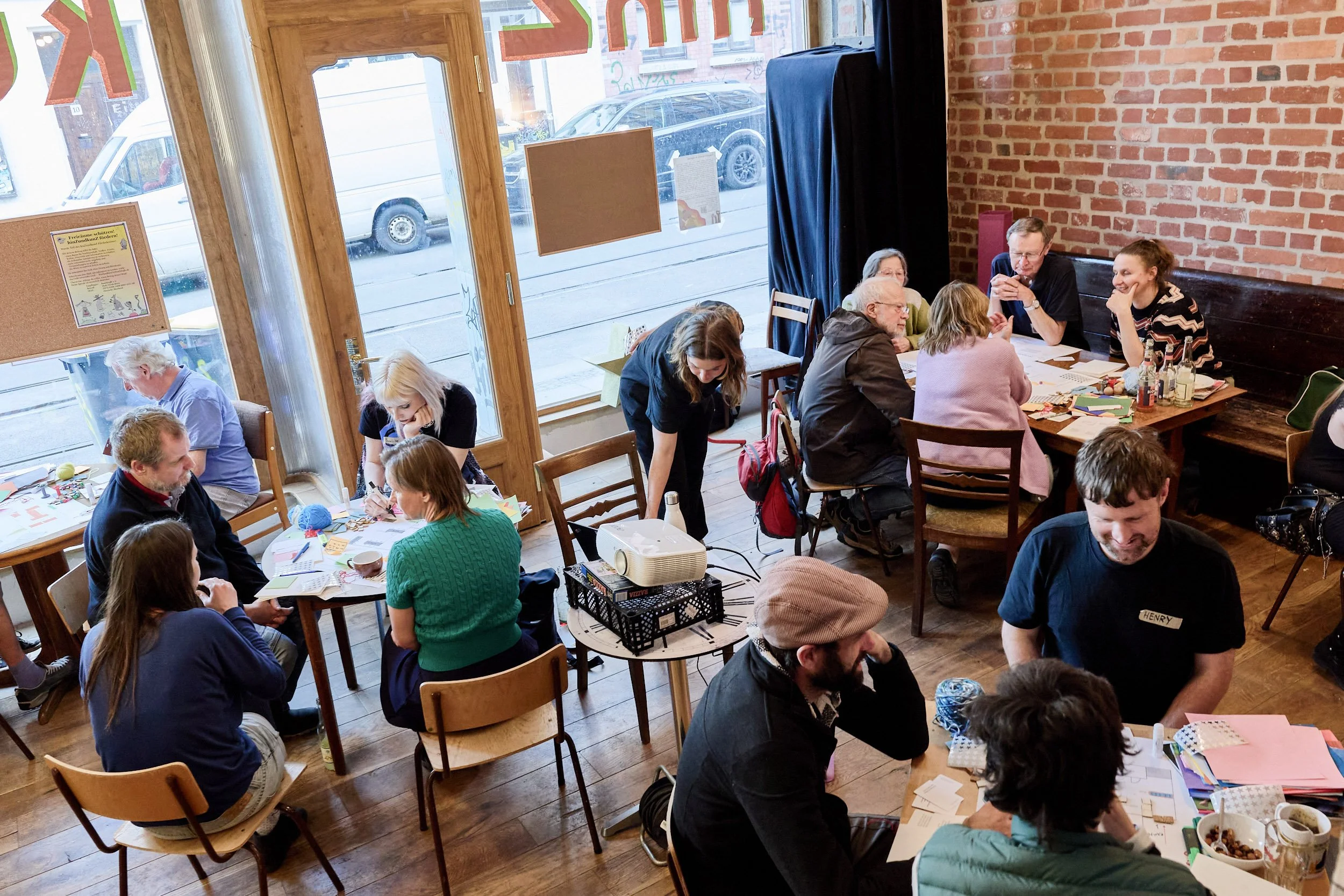
20 participants from six initiatives prototyped more socially inclusive repair initiatives.
-
![]()
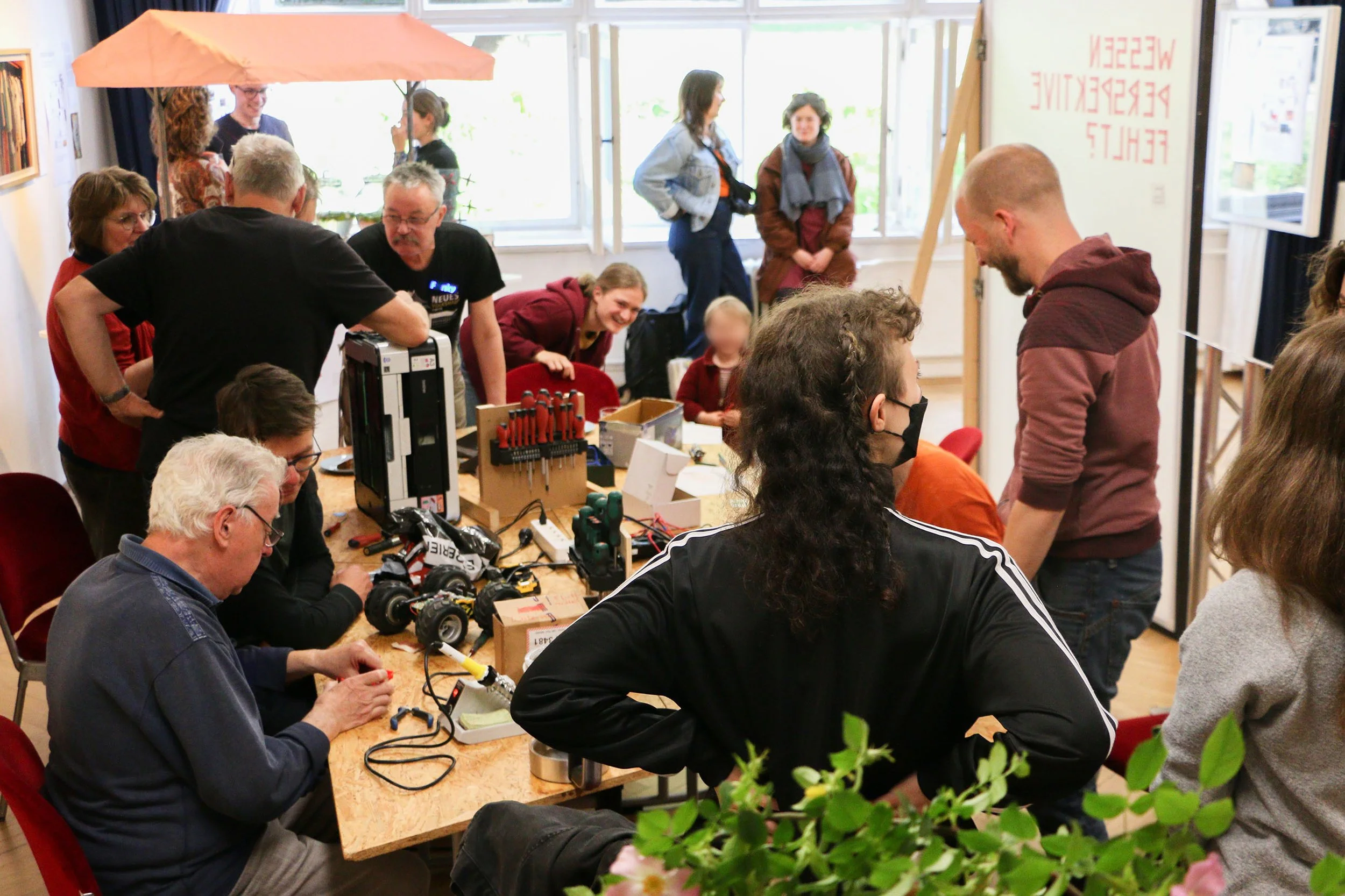
Utopian Repair Café
Testing different prototyped ideas together with a partner initiative.
-
![]()
Conference Paper (pending)
Designing Social Inclusion in Circular Transitions: A Participatory Study of Repair Initiatives in Germany.
In-Depth-Process
overall approach
transformative
design research
Guiding research question:
How can social inclusion in repair initiatives be promoted?
Qualitative analysis of the current social accessibility.
Using design methods to co-develop ideas for change.
Testing ideas in practice.
Step 1. Uncovering different perspectives.
„We actually reach a wide cross-section of society. […] The visitors are mainly pensioners and students.“
– repair initiative representative
Pensioners and students are not a wide cross-section of society. Driven by my own experiences in open workshops I decided to explore the social accessibility within repair initiatives in my diploma thesis.
Motivation:
Establish connections to repair initiatives.
Understand the status quo from the perspective of repair initiatives, current visitors and non-visitors to identify relevant leverage points for more social accessibility.
Goals Phase 1:
Snowballing of local repair initiatives for participant recruitment.
4 participatory observations as a visitor.
5 expert interviews with repair initiatives and networks.
42 interviews with potential visitors with a high affiliation to repair initiatives via voice messages.
11 street interviews with potential visitors as more randomized control group.
Thematic mapping and qualitative content analysis of the interview results.
Methods:
Initiatives are unaware of the full extent of the barriers facing visitors. They have limited personal resources and are primarily interested in social inclusion in relation to securing new volunteers.
Results:
Selected Interview Responses
Step 2. Building new visions.
„I've had conversations with people
I would never have spoken to otherwise.“
– repair initiative representative
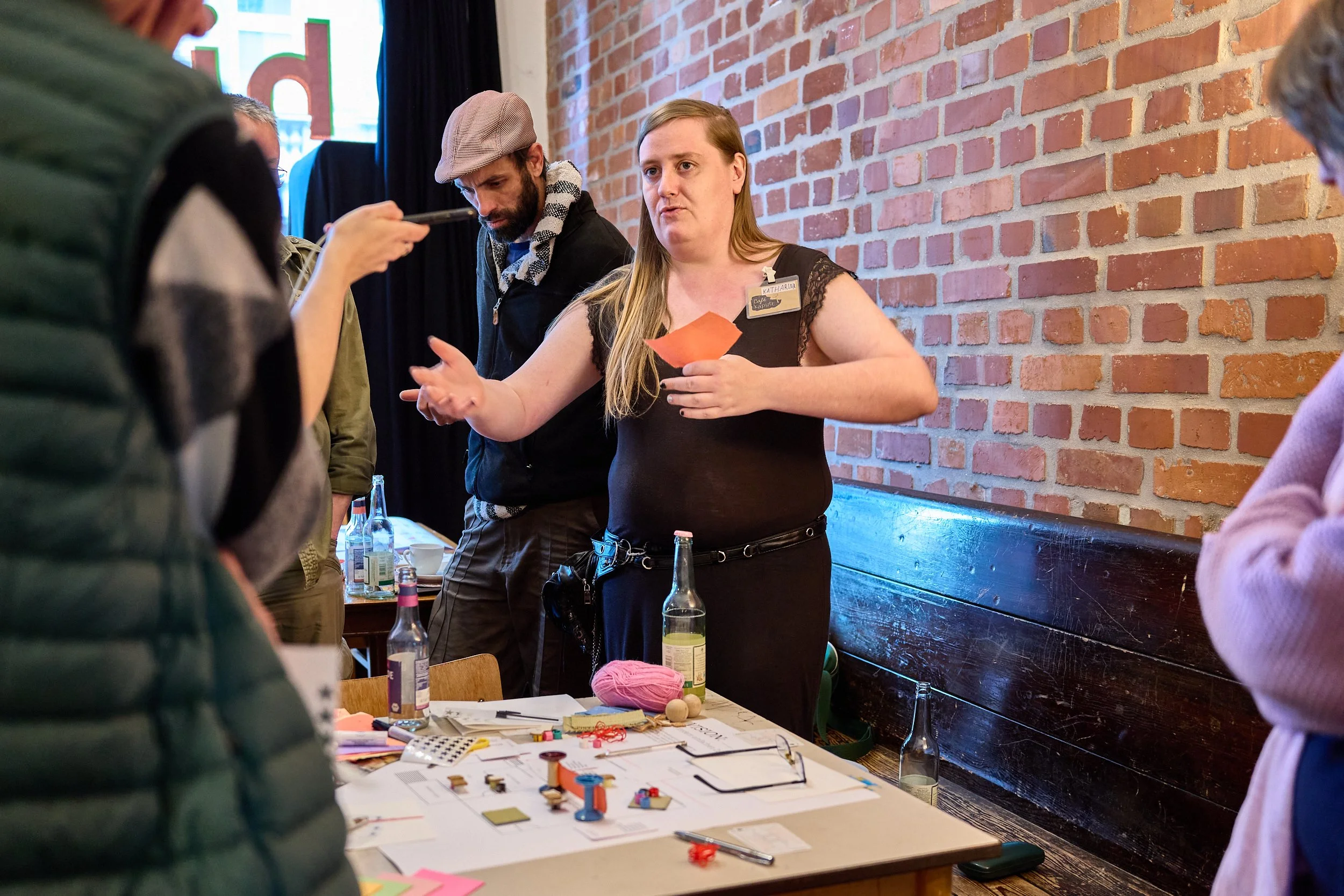
Share the new findings on the barriers identified for visitors in the first part and spark a reflection process on initiative-specific obstacles for more social inclusion.
Co-design first ideas on how to mitigate barriers and increase the accessibility of repair initiatives for different social groups.
Encourage peer learning by facilitating exchange between repair initiatives with a higher or lower focus on social accessibility.
Goals Phase 2:
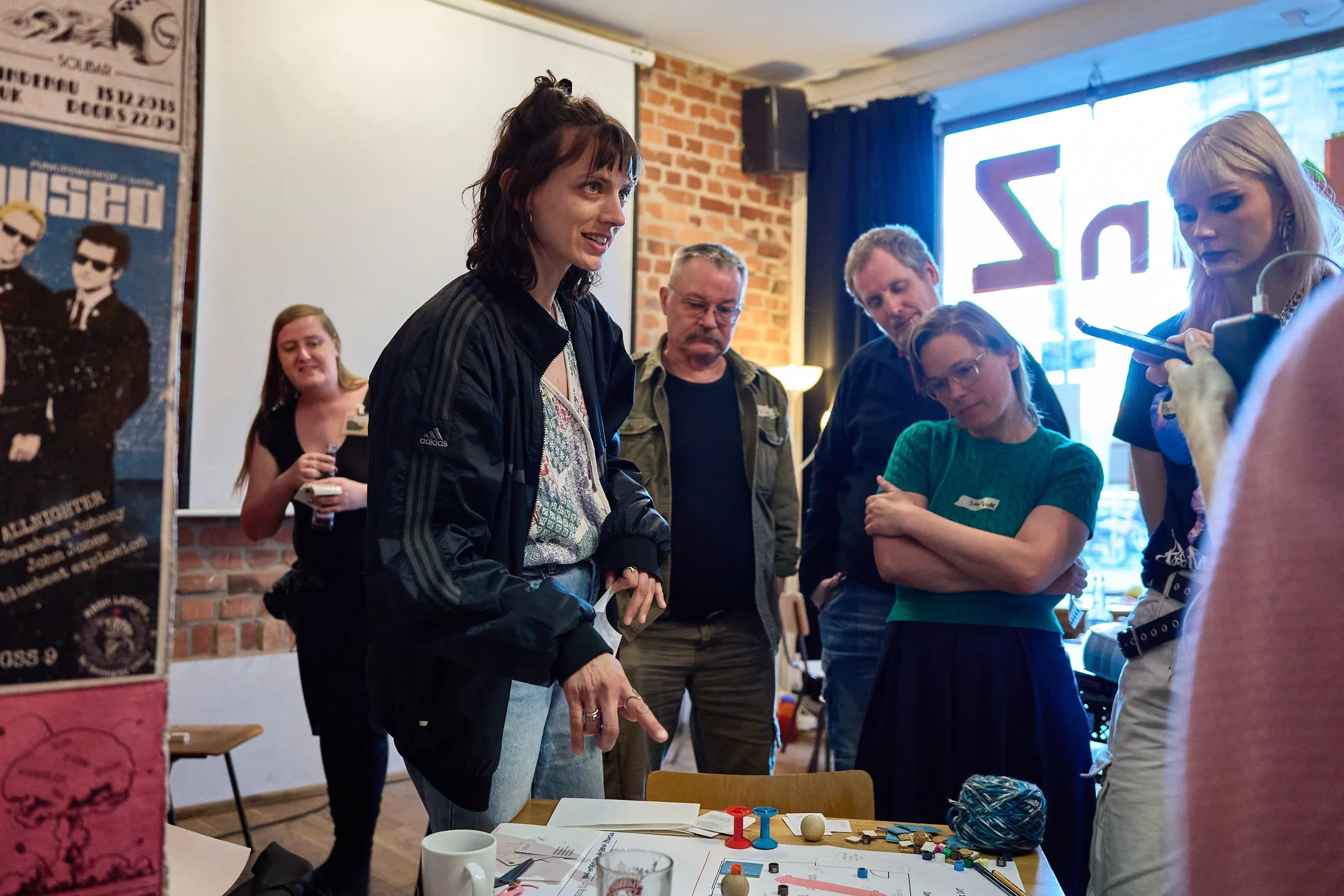
Scaling community impact by integrating a workshop into a statewide repair initiative network event.
Development of a two-part workshop consisting of:
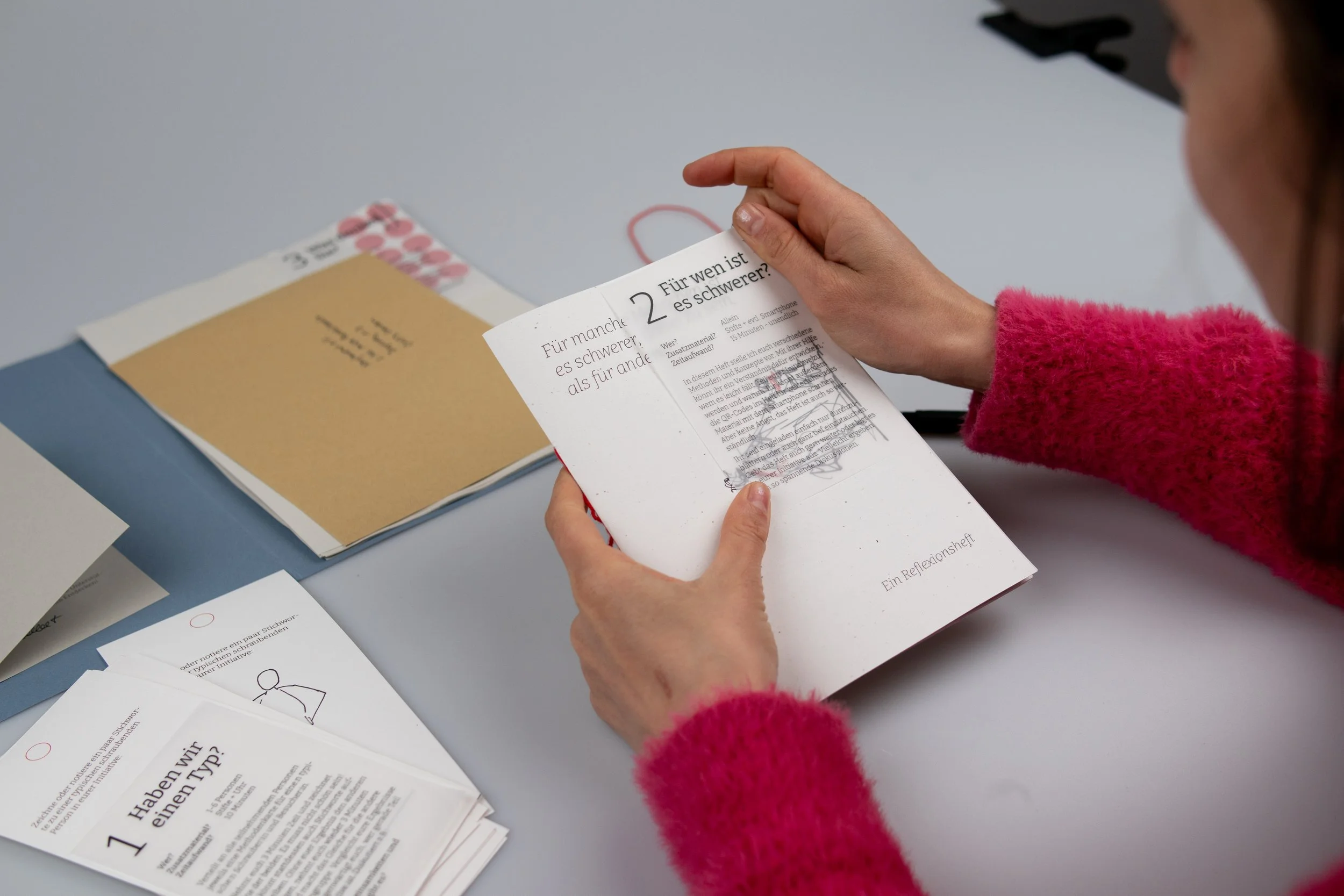
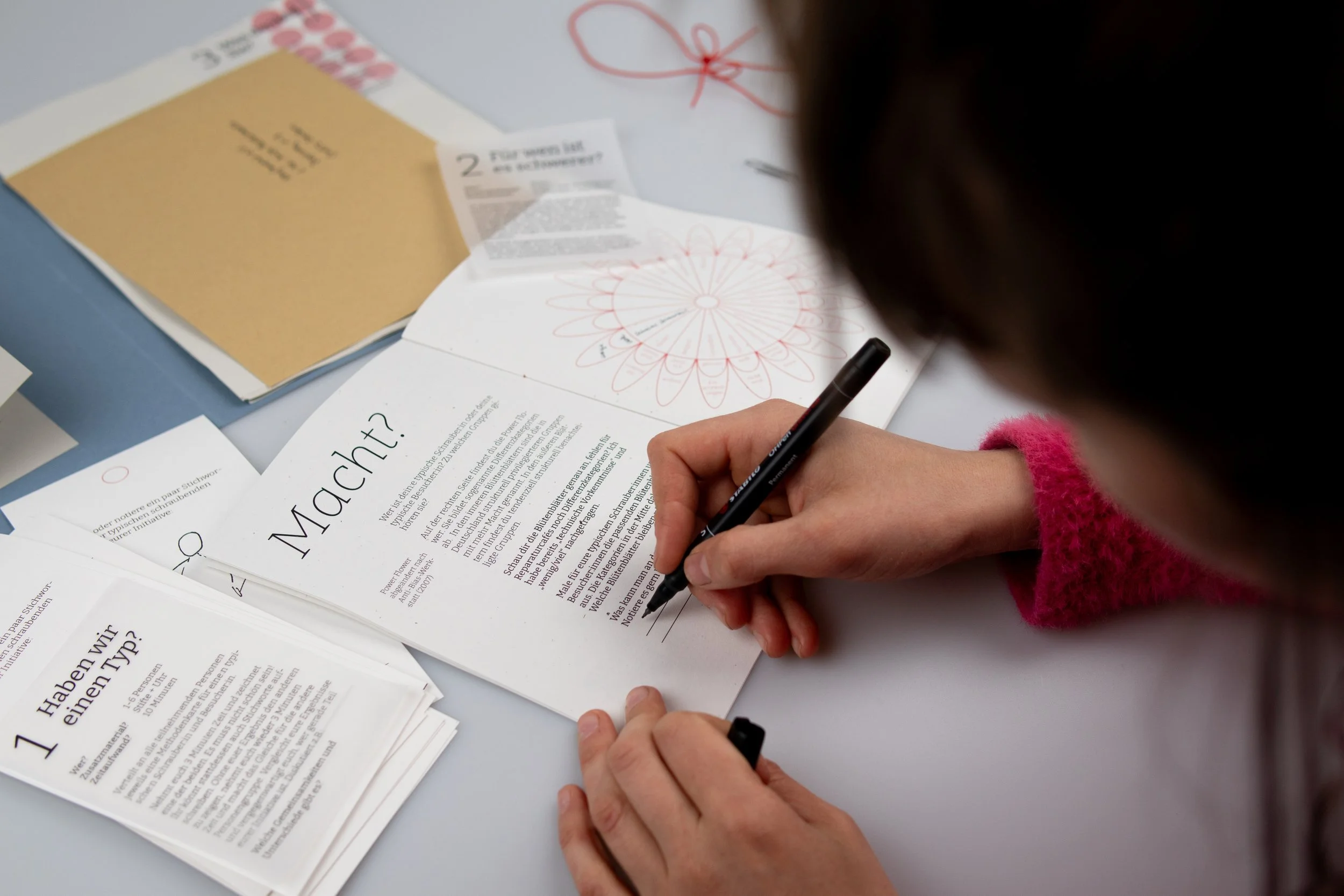
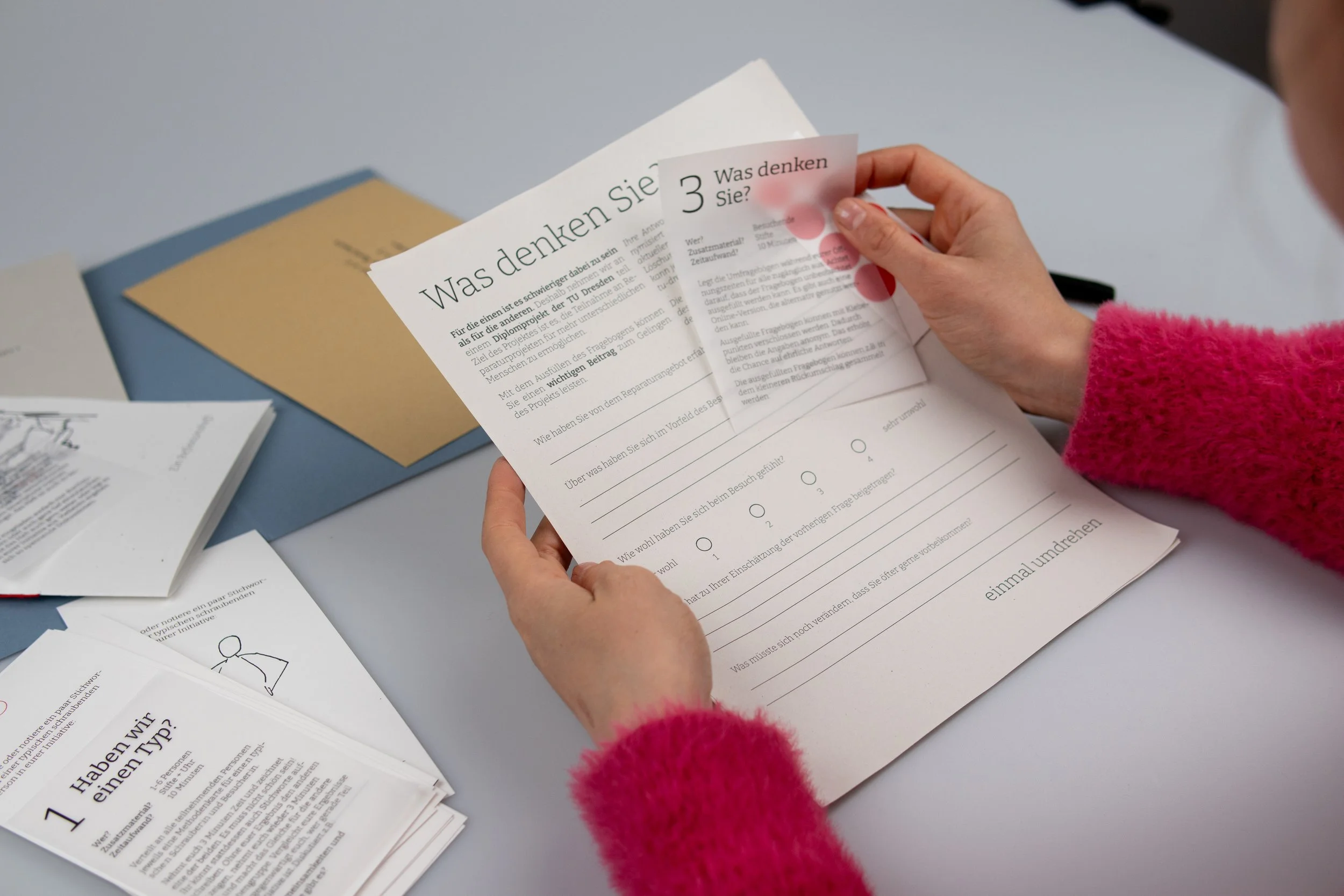
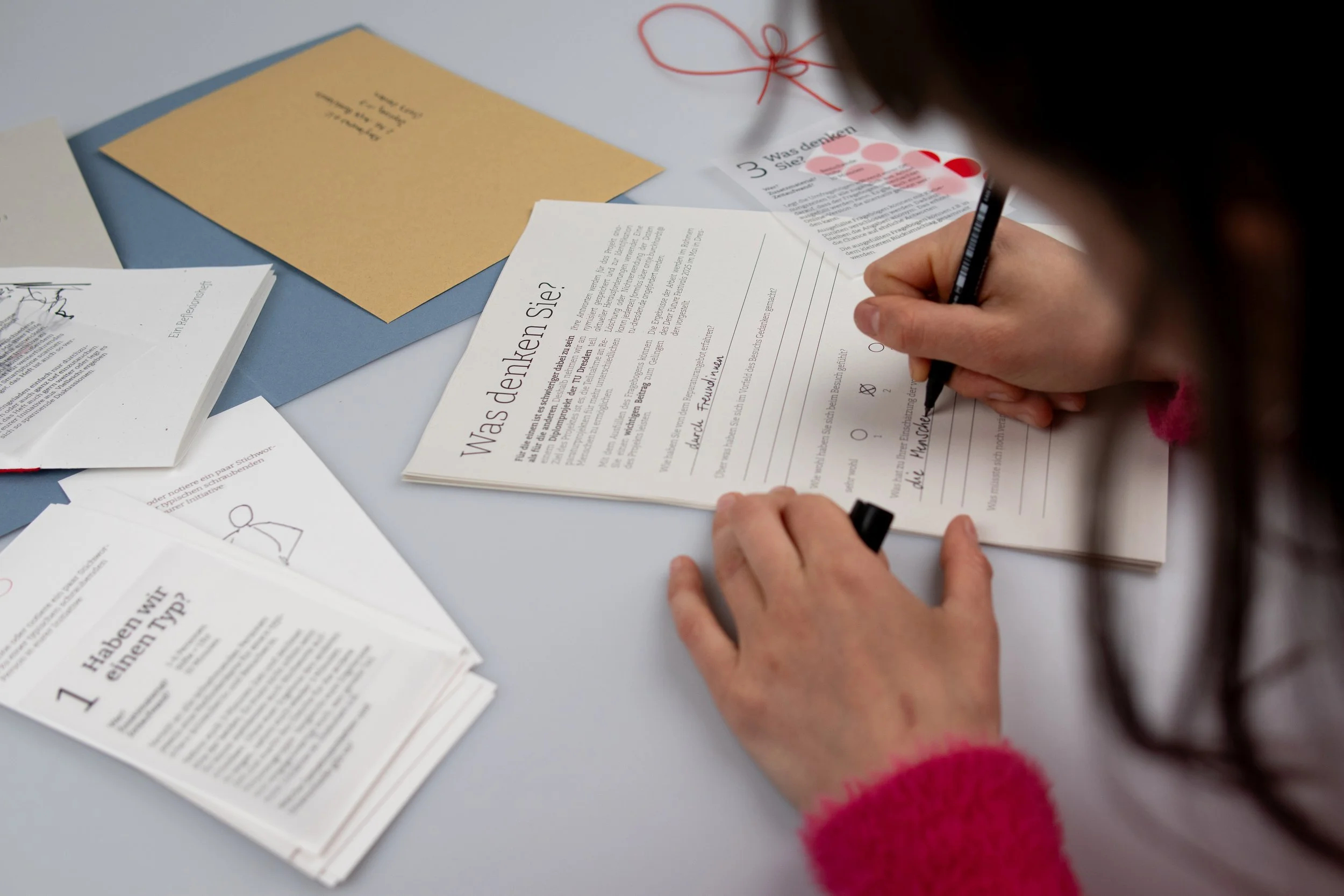
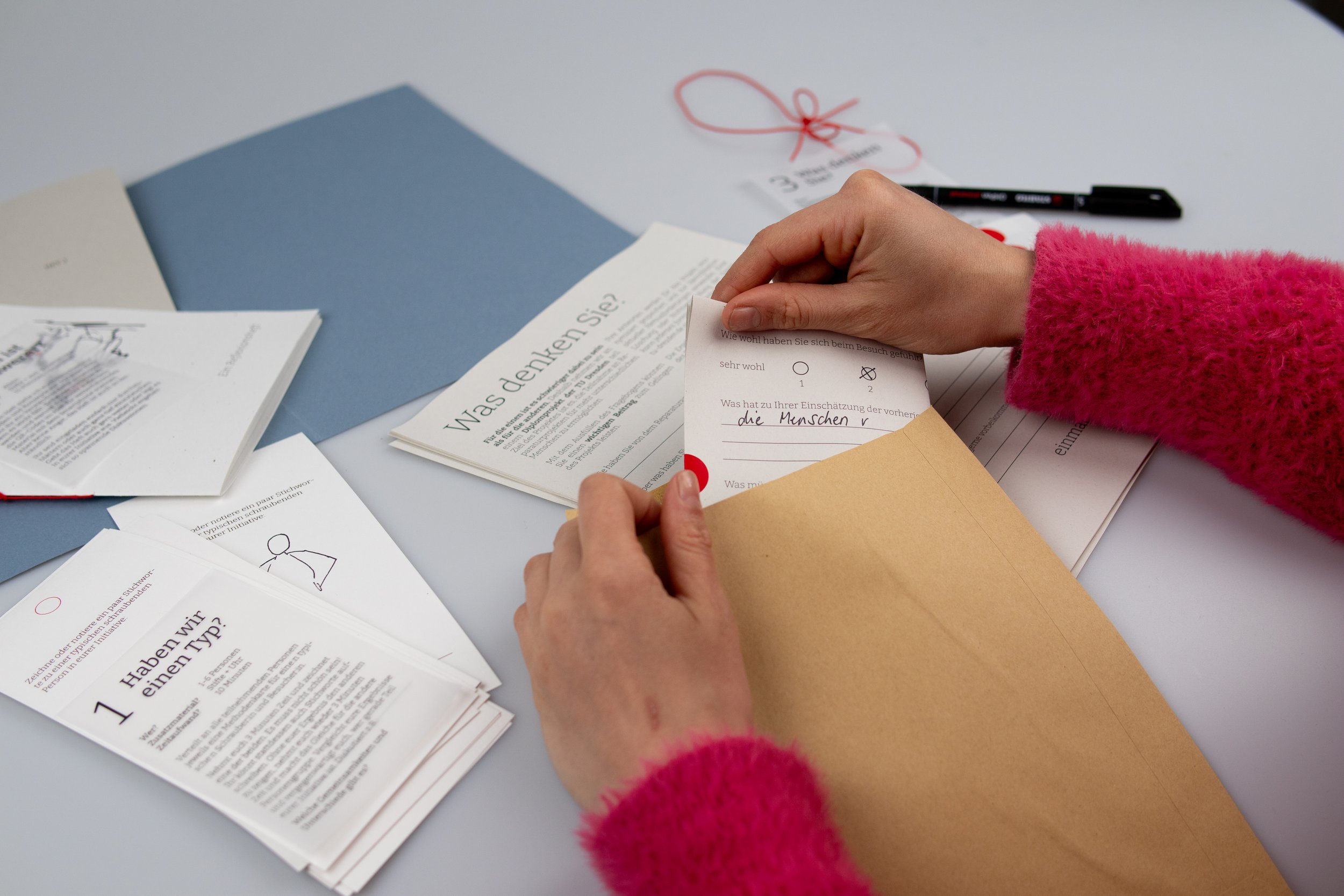
Reflection set: independently usable toolkit for researching social inclusion in the own iniative before and after the workshop, doubling as a cultural probe set.
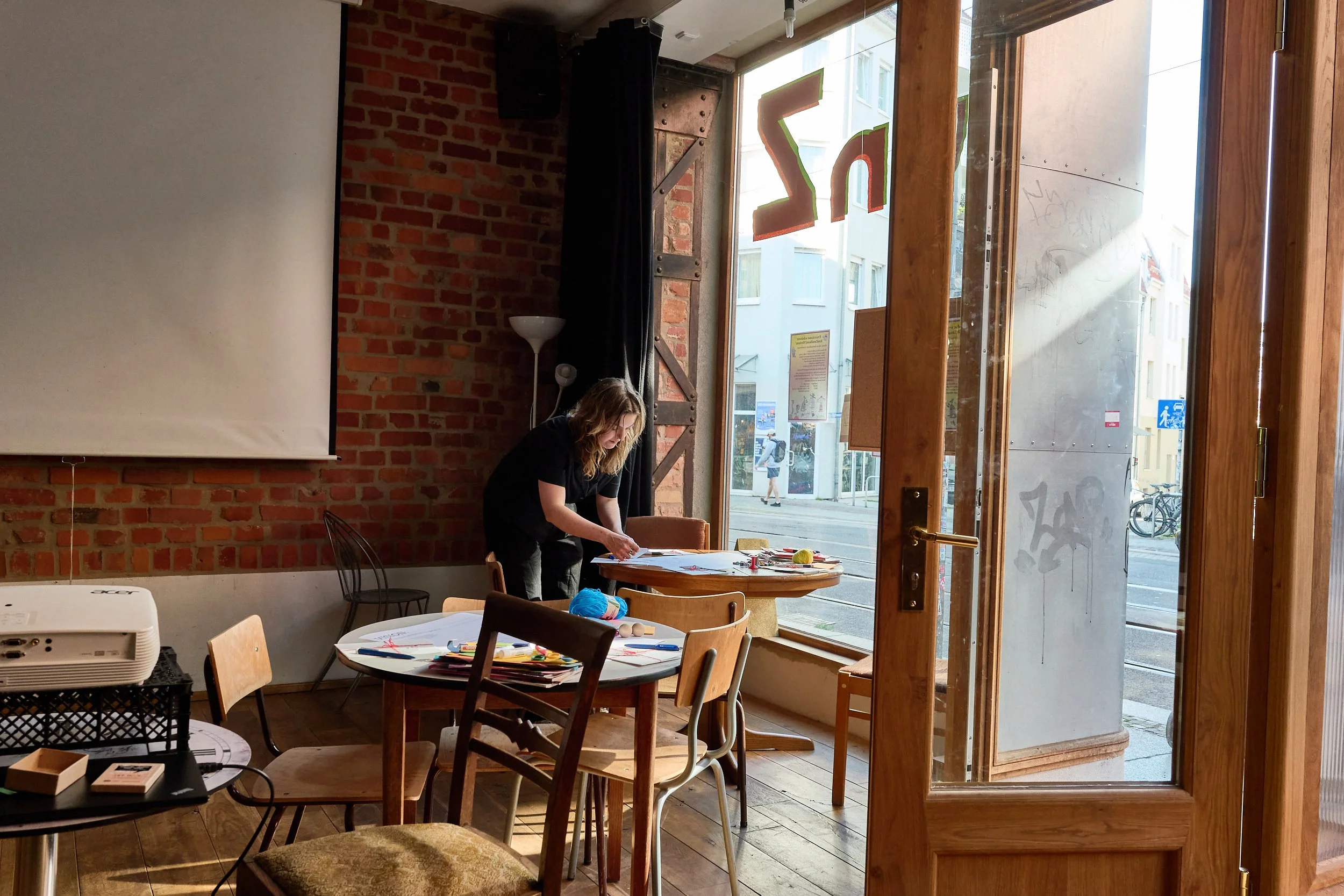
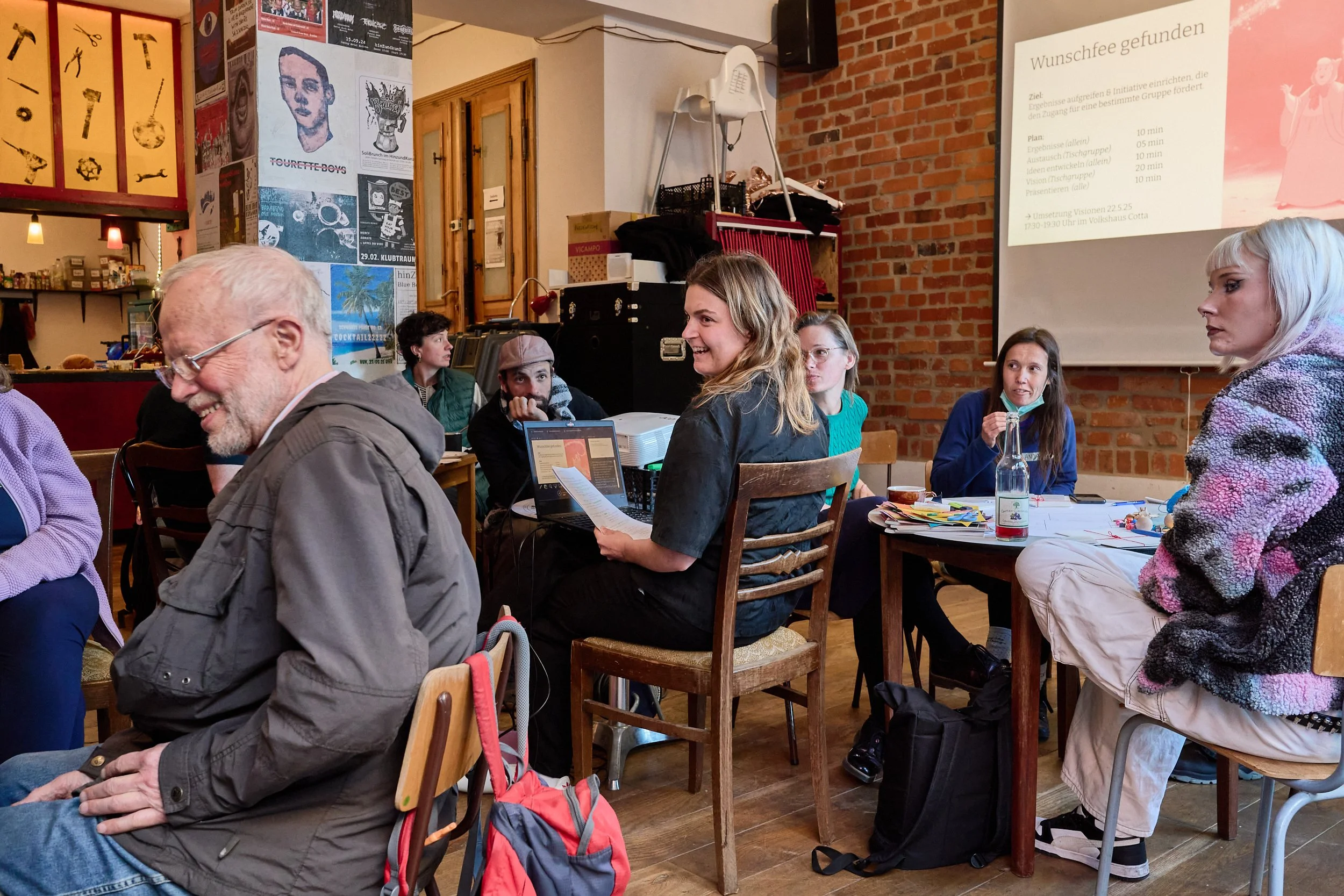
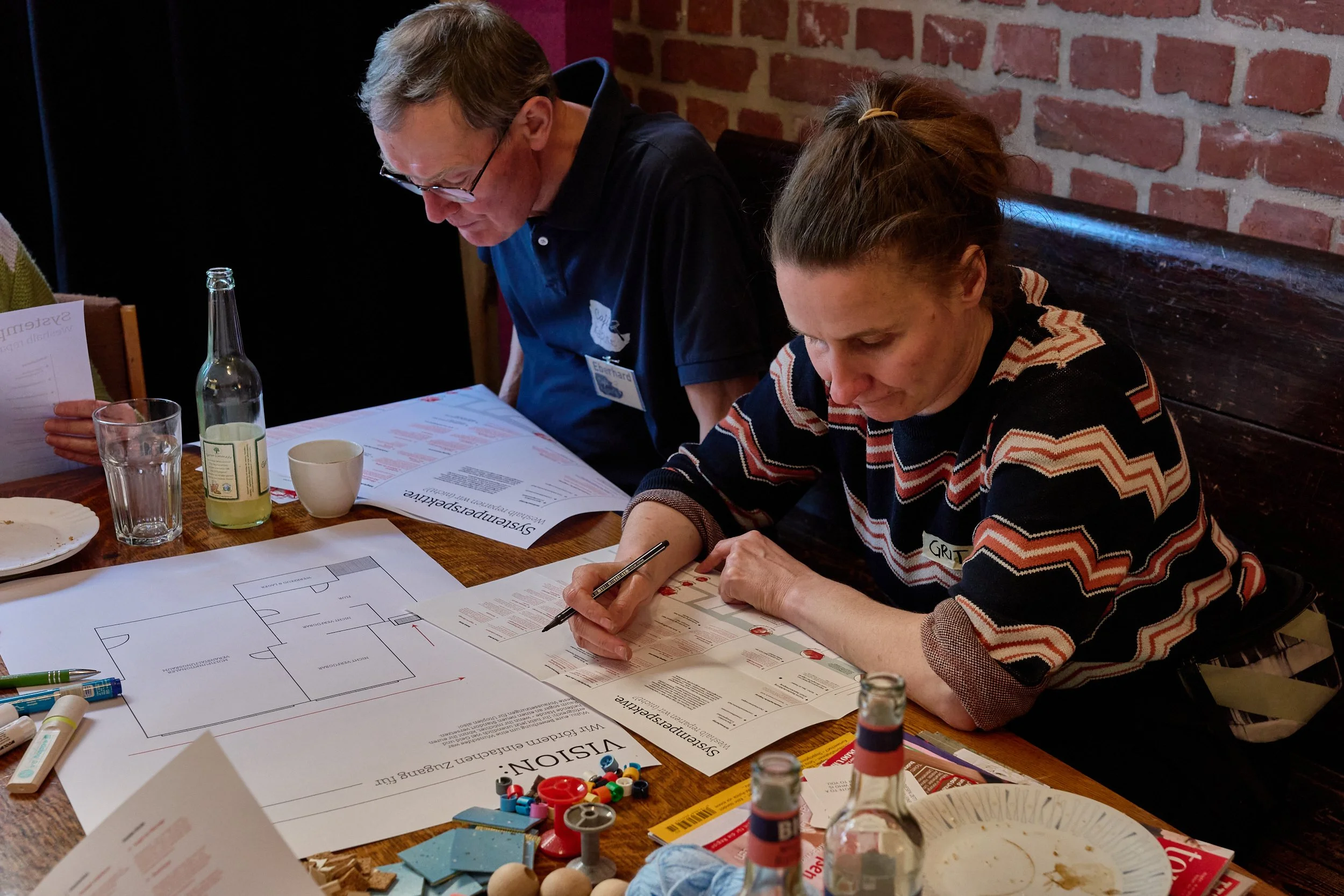
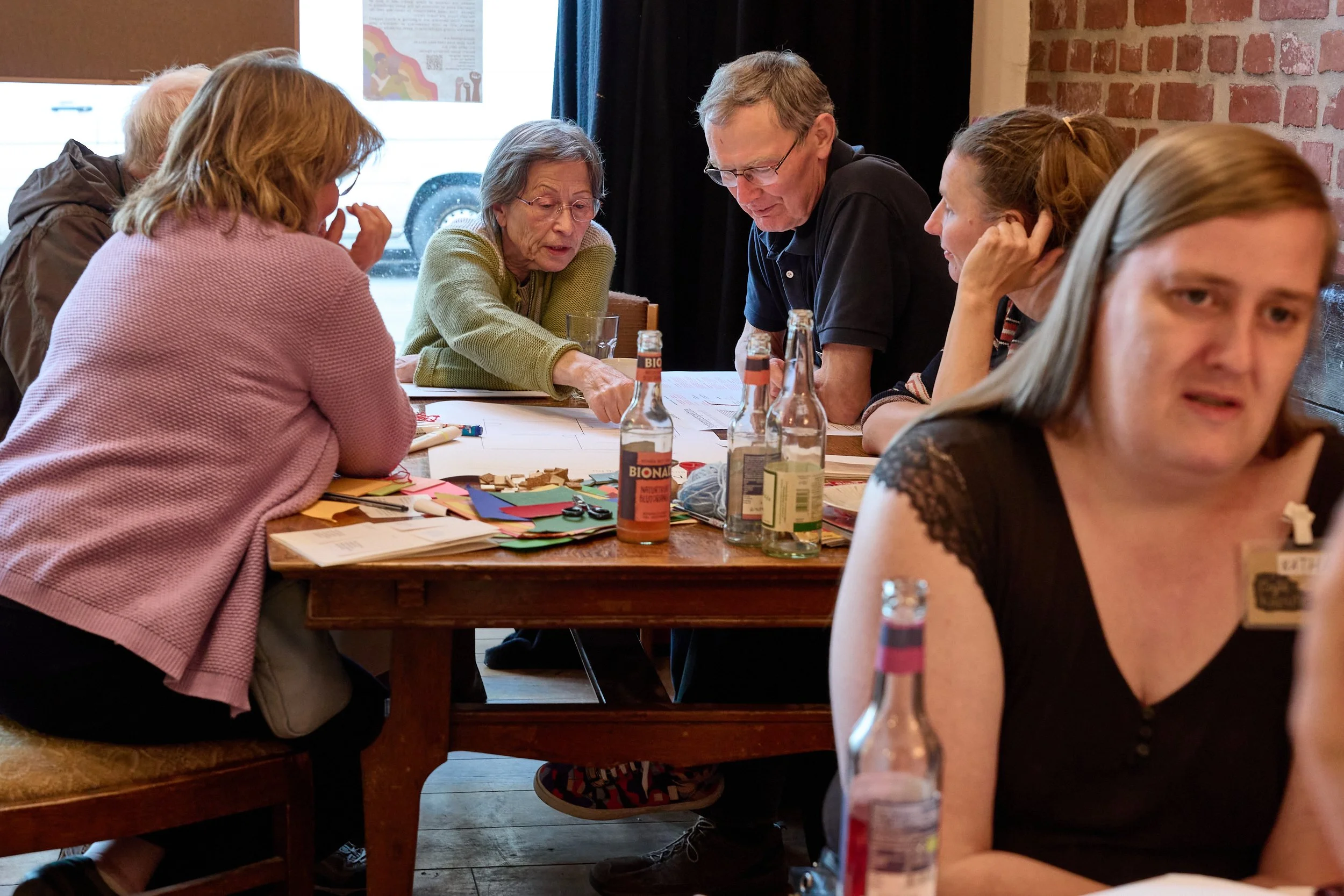
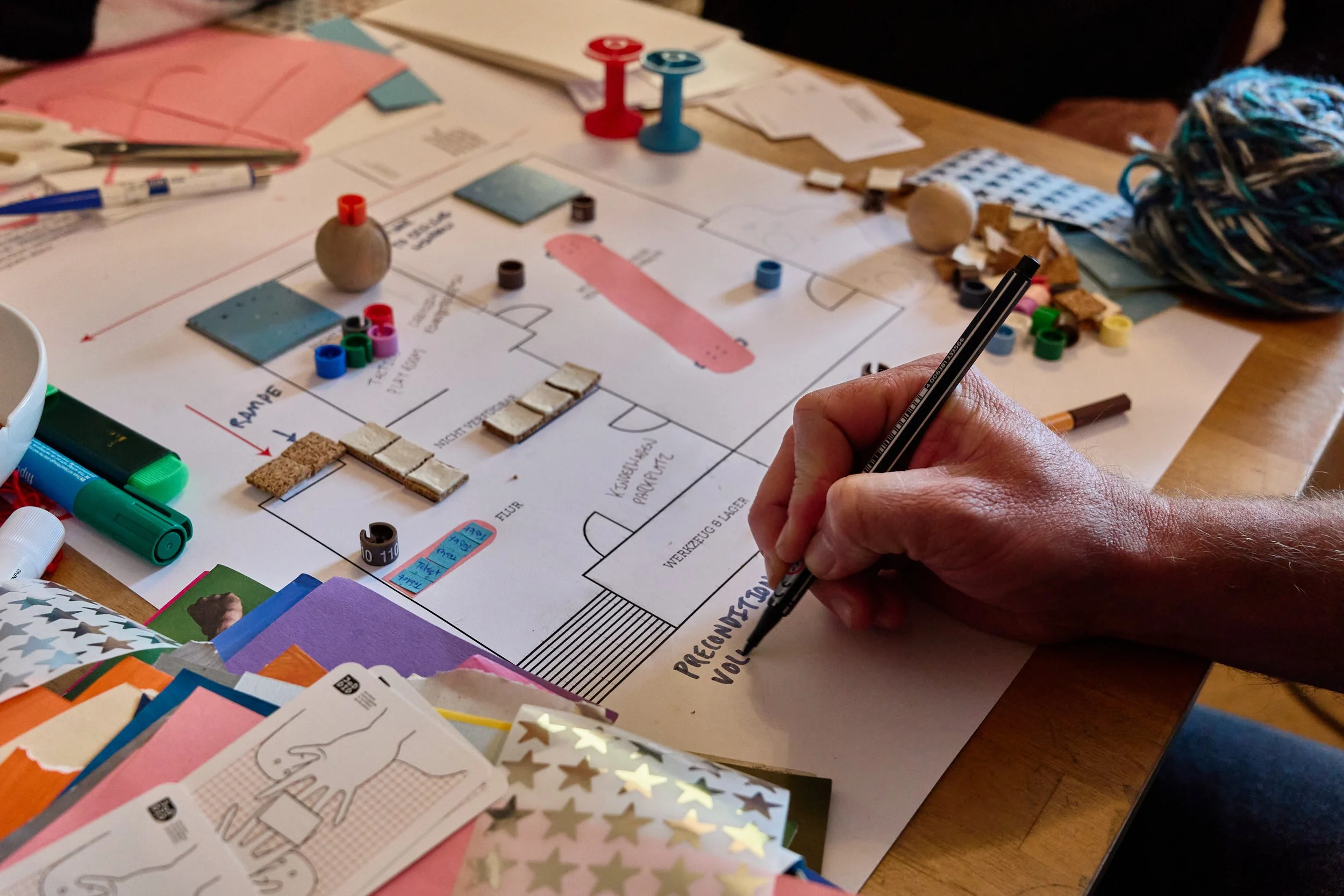
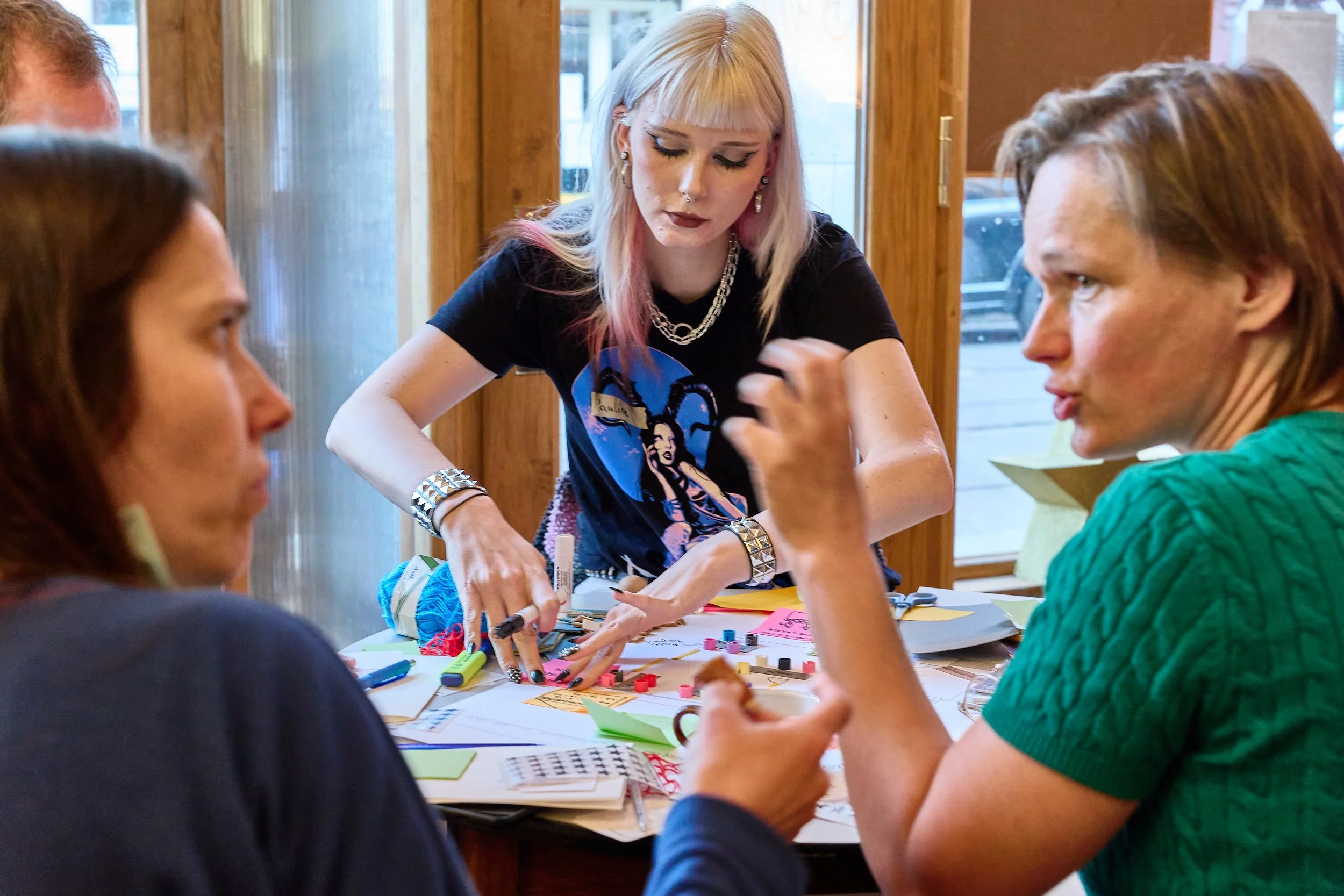
Design prototyping workshop: Co-visualisation of inclusive repair spaces on floor plans in small groups, based on an take-home overview of the research results from the first phase.
Facilitation of three workshops with overall 24 participants, producing 7 floor plans.
Thematic mapping and qualitative content analysis of workshop outputs.
Methods:
The floor plans highlighted ways to reduce social and convenience-related barriers, while leaving strategies for long-term organizational change and visibility open, possibly due to the restrictions of the chosen methods.
Results:
Reflection Set



Design Prototyping Workshop
Step 3. Testing in practice.
„We need MORE of this! This is exactly what we need!"“
– feedback card
Testing the applicability and impact on social inclusion of some of the ideas developed in the workshop as interventions in a real-life setting.
Goals Phase 3:
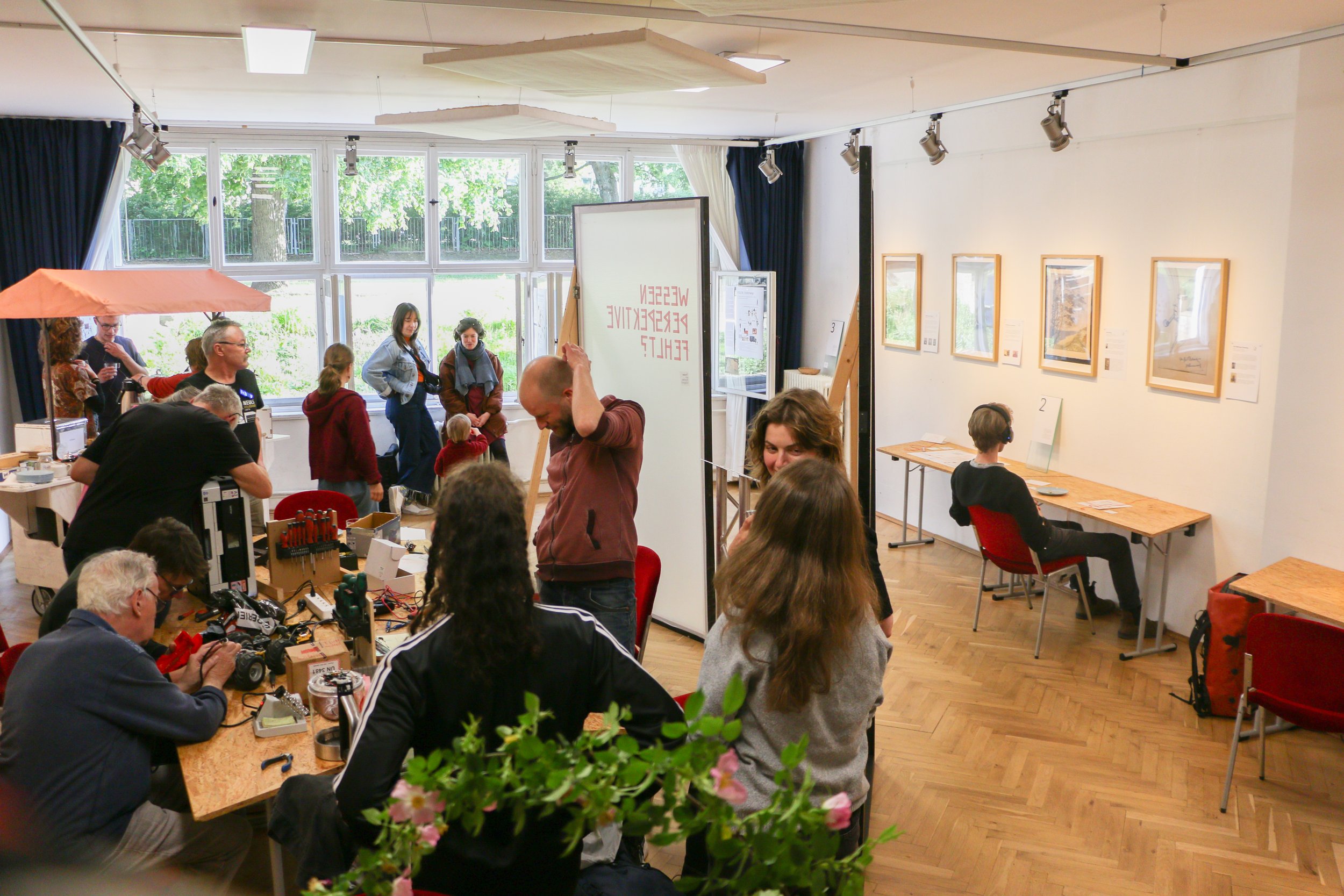
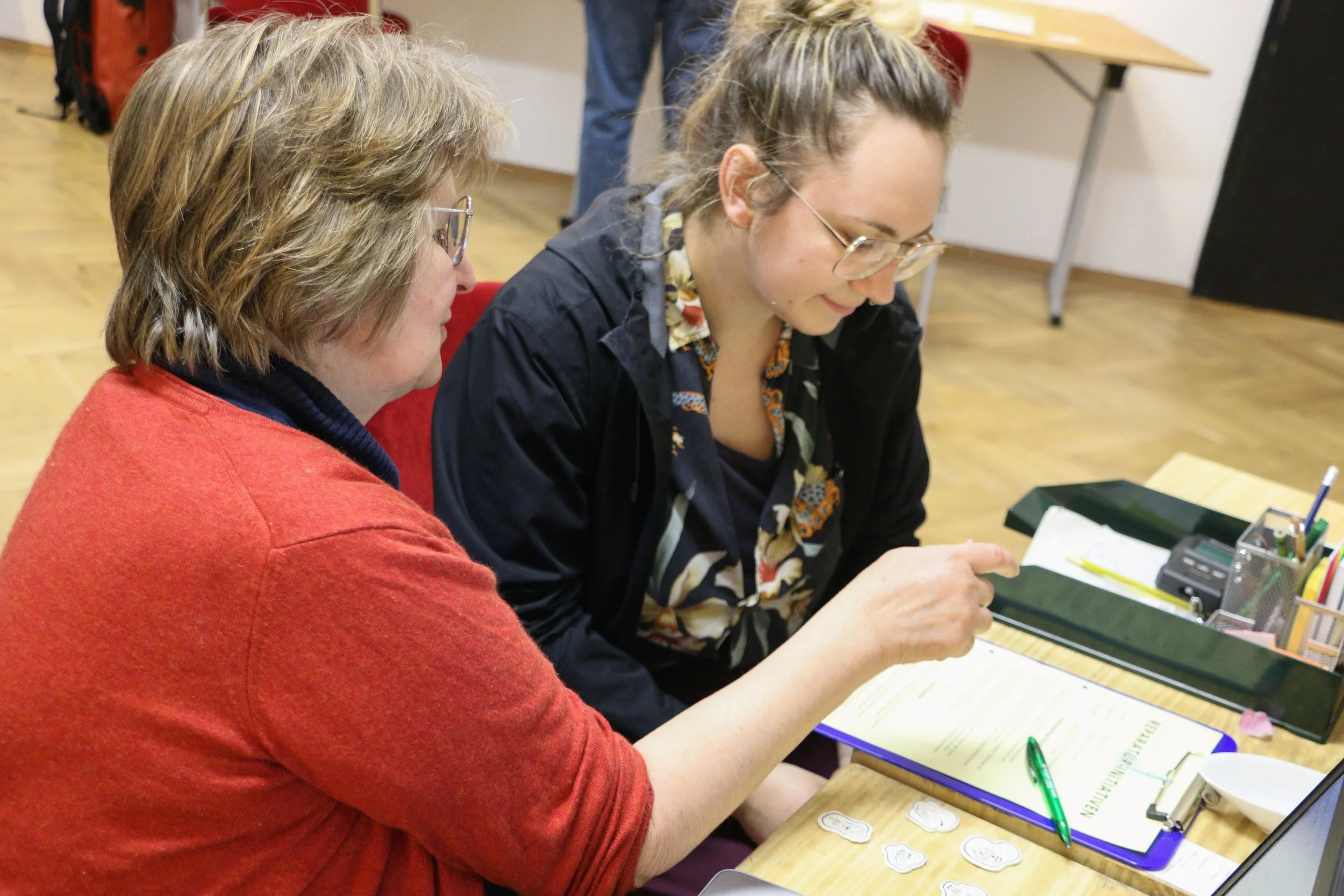
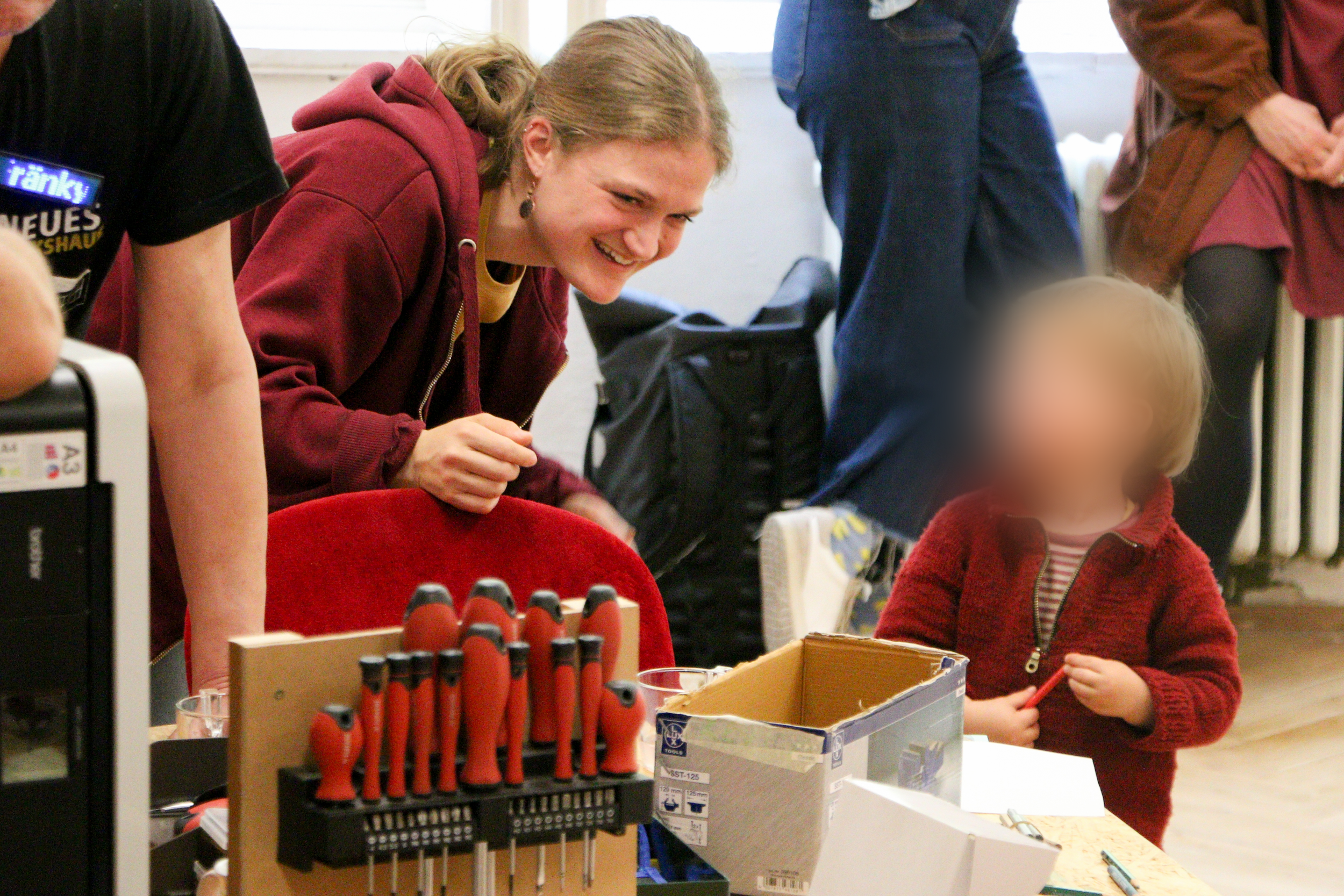
Organization of the “Utopian Repair Café” in collaboration with a partner initiative to conduct an open “real-life-experiment”. Around 50 participants.
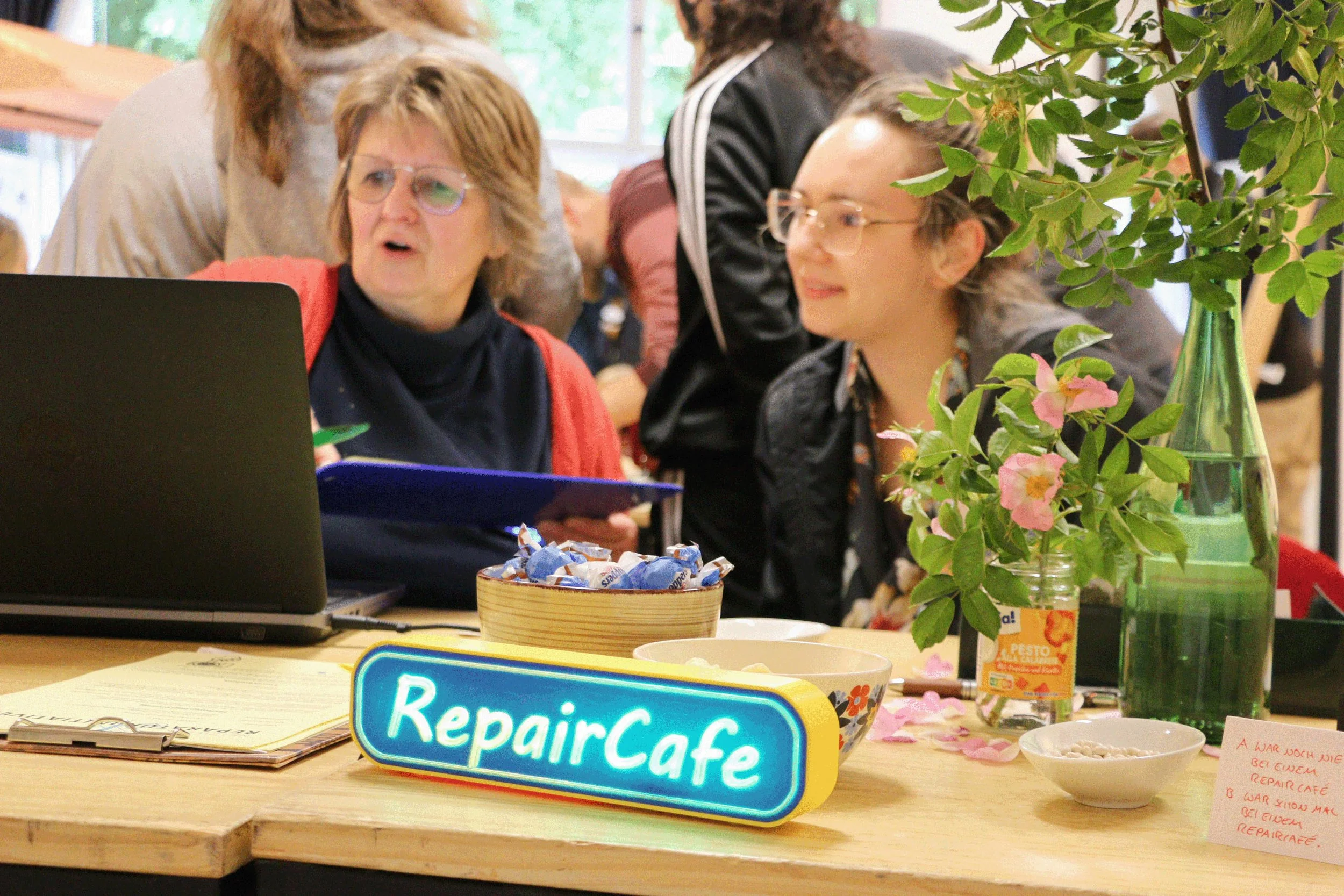
In-depth case study of the partner initiative using participatory observations and unstructured interviews.
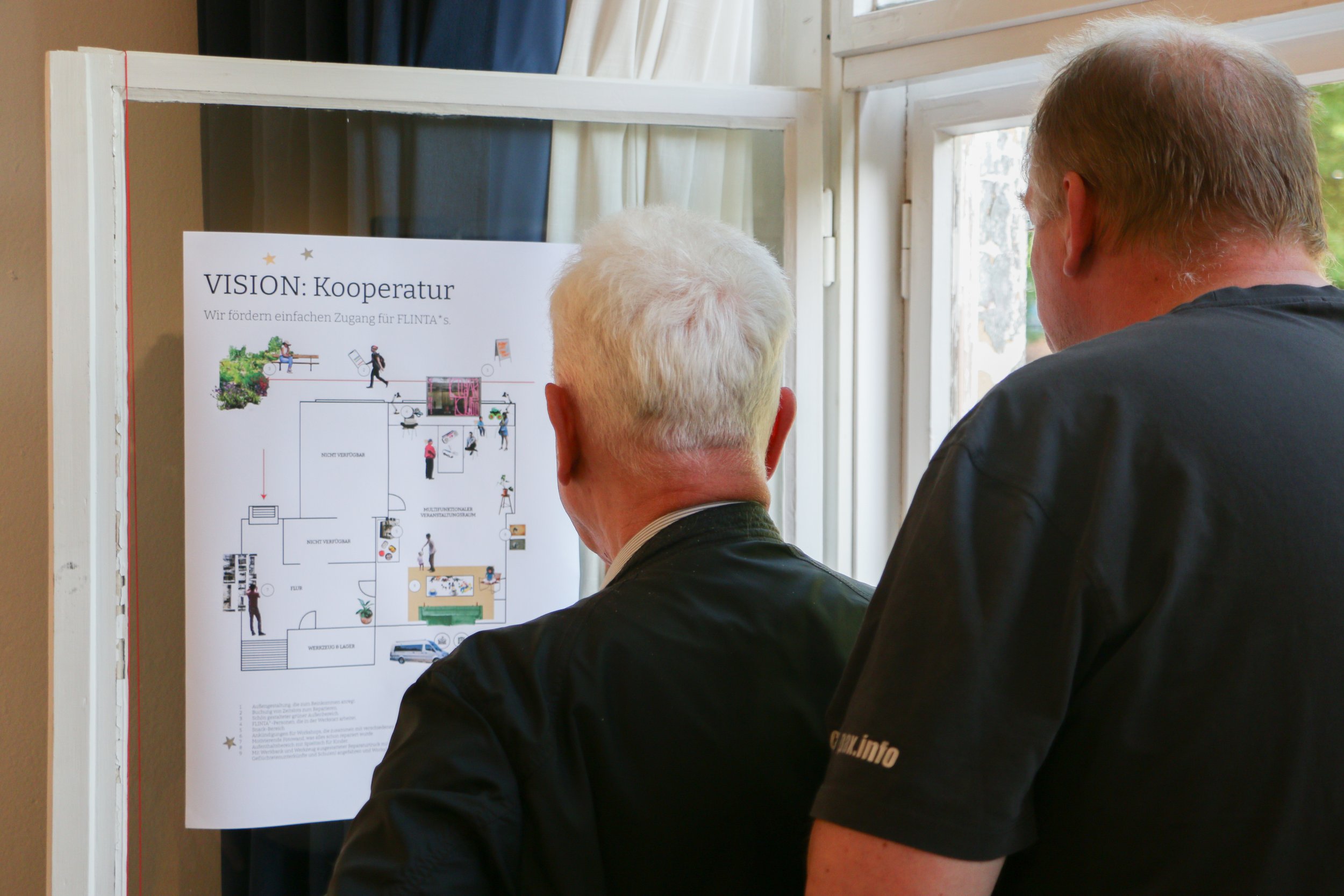
Development of tailored interventions, including an exhibition showcasing the research process.
Securing funding for the event through “Zukunftswege Ost”.
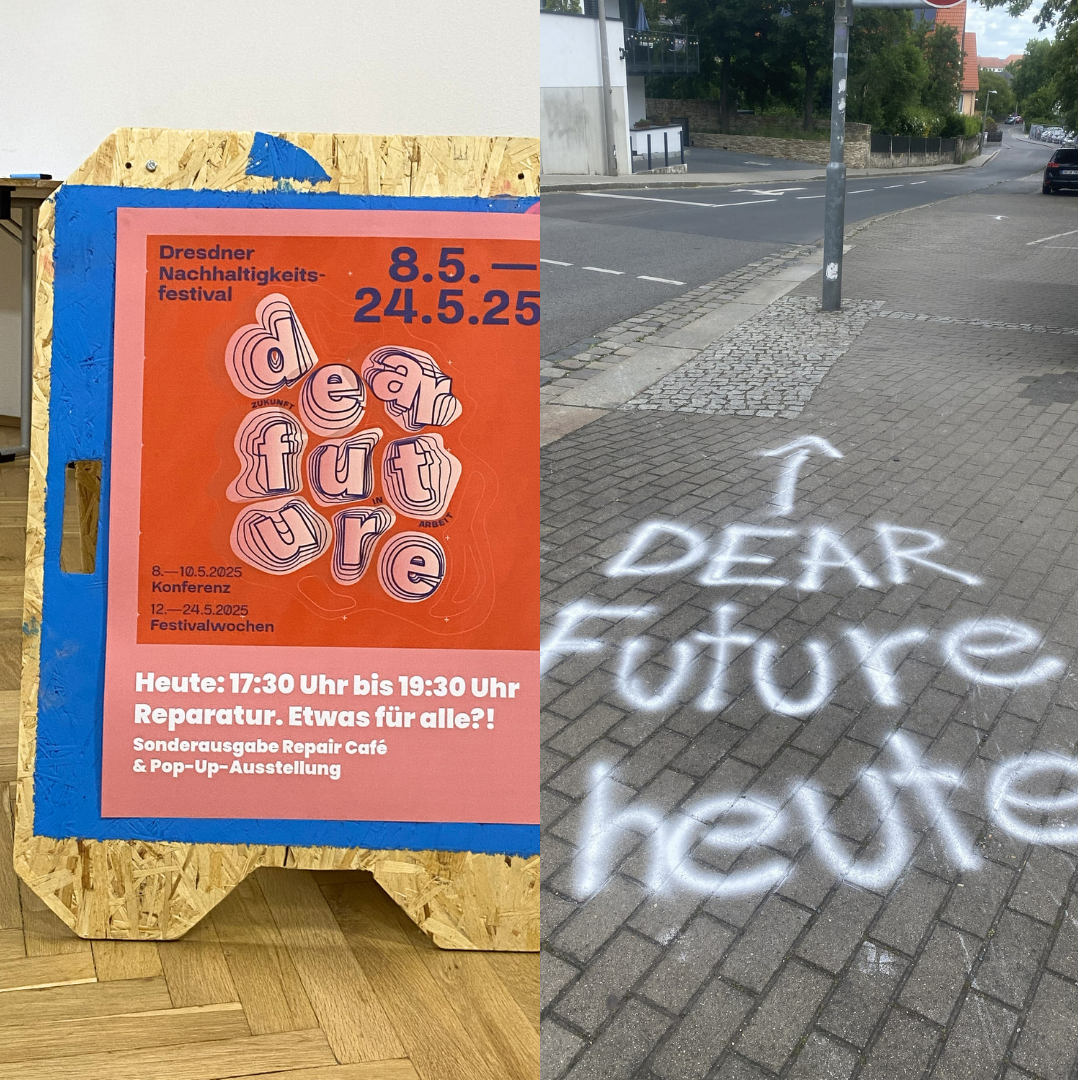
Successful application to feature the event at the Dear Future Festival Dresden 2026.
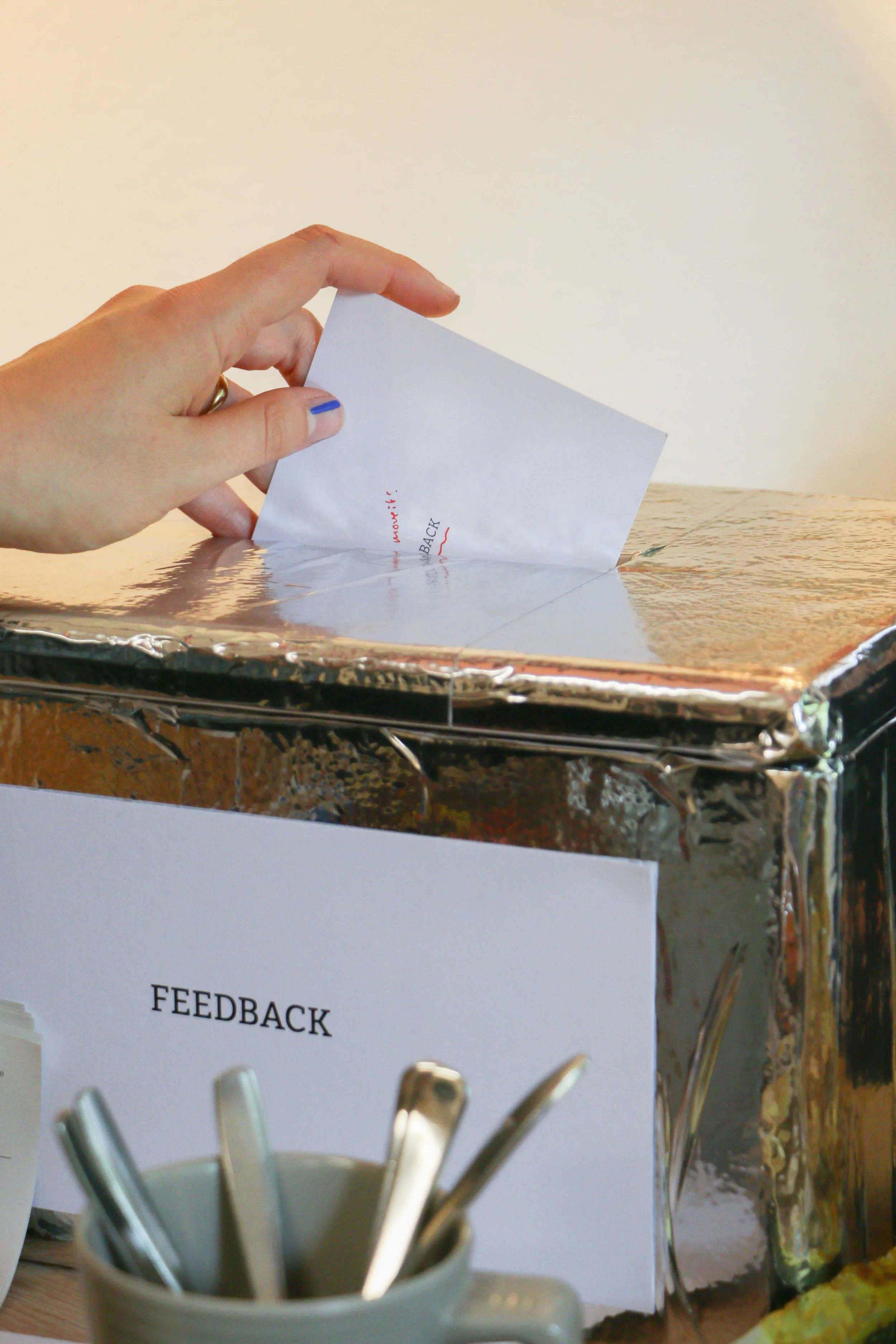
Evaluation of the event through open feedback cards
Methods:
Increasing the visibility of the initiative and creating other incentives to visit and get to know the initiative apart from repair showed the most immediate impact on increasing social inclusion.
Results:
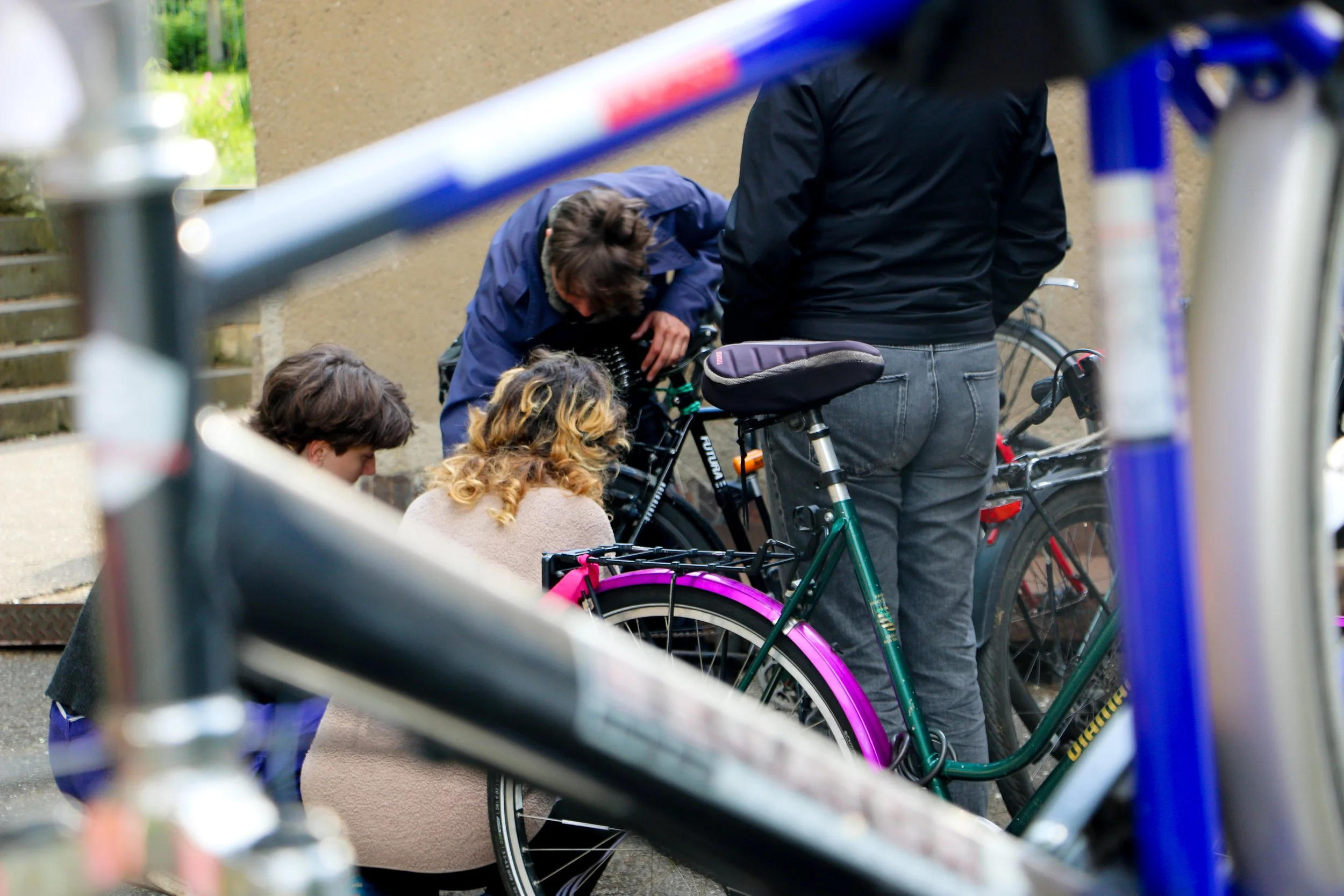
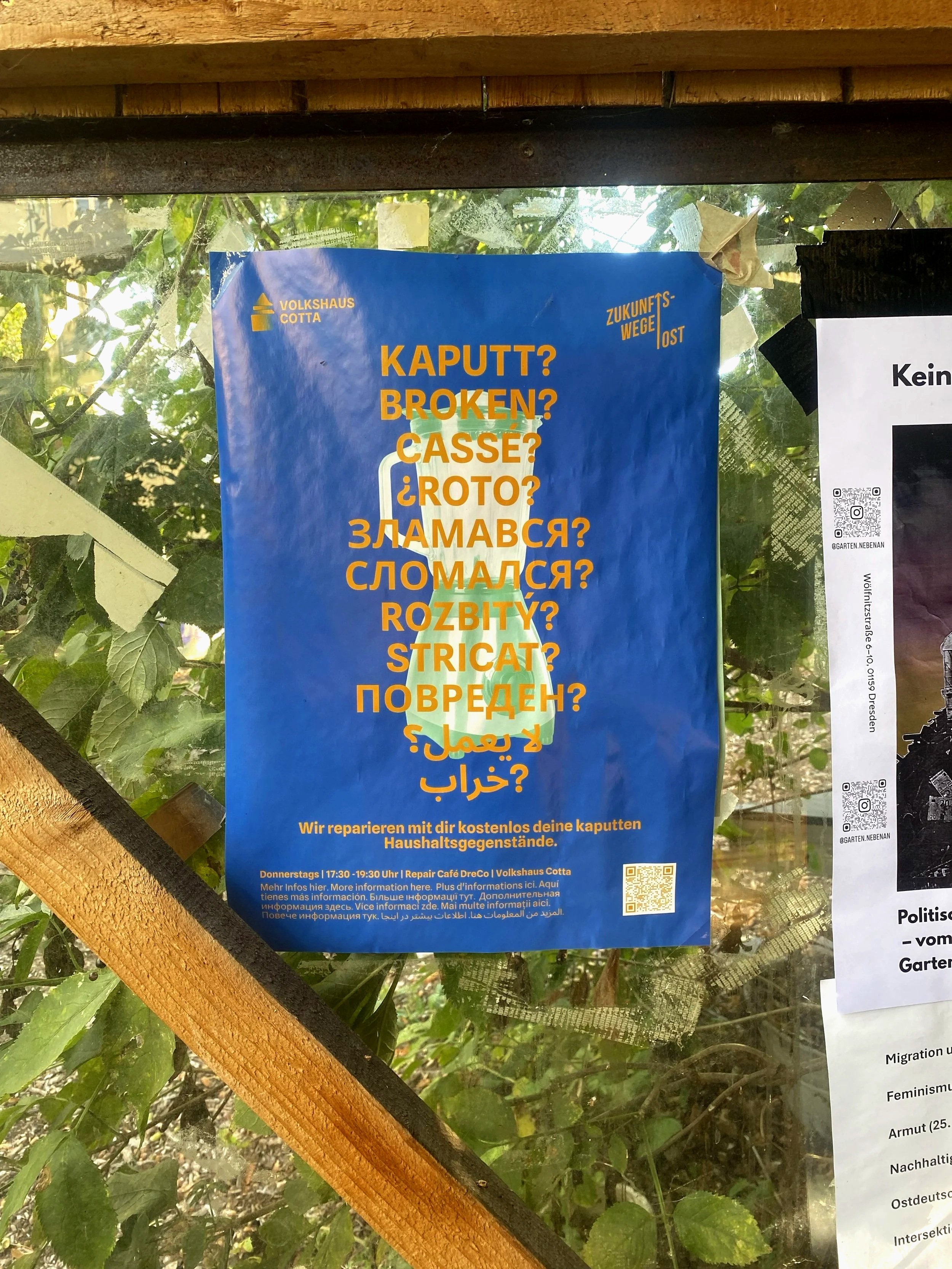
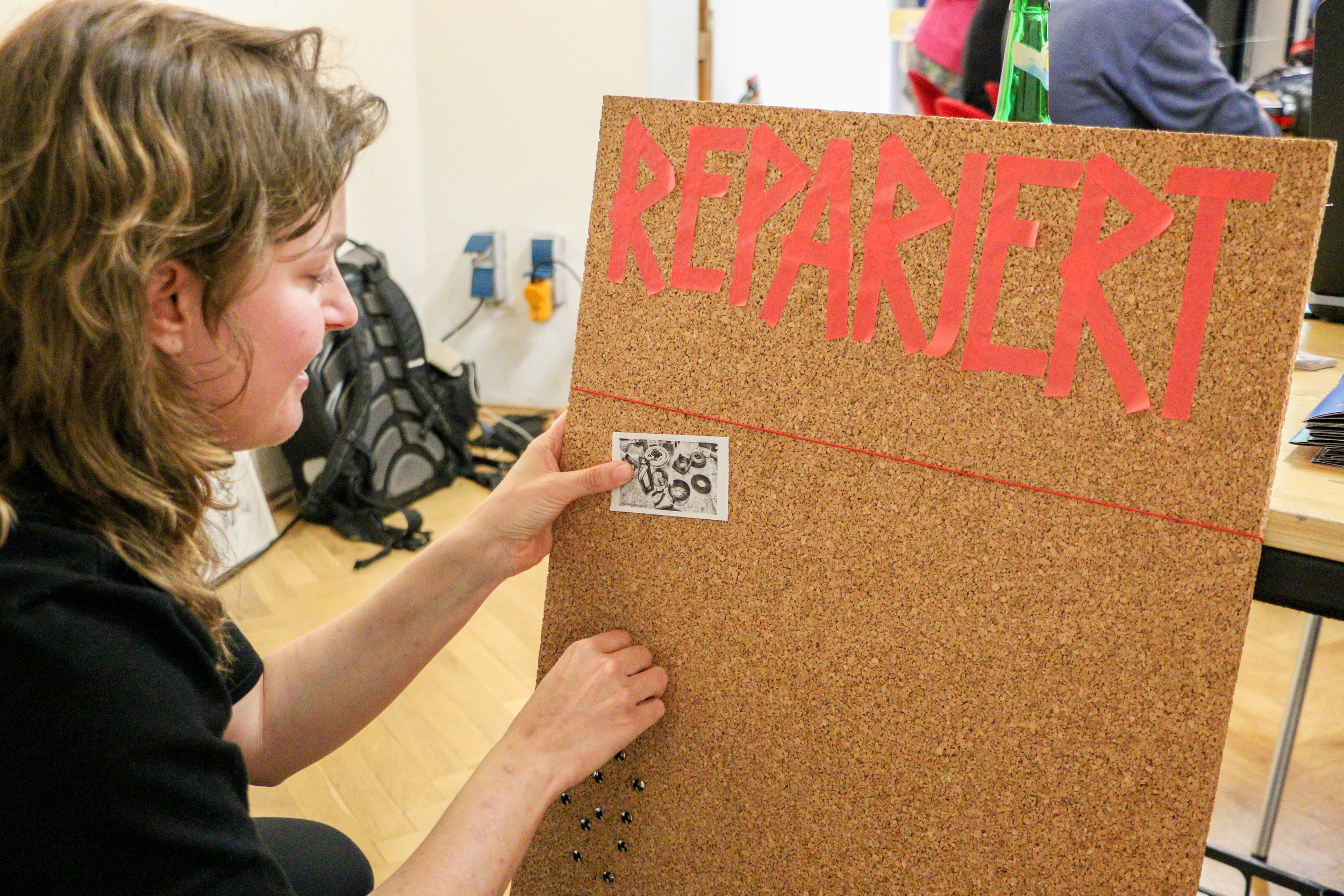
Implemented Interventions
-
![]()
Bike Repair Workshop for Marginalized Genders
-
![]()
Multilingual Communication Material
-
![]()
Exhibition of the Research Process
-
![]()
Tokens for Needs Communication
-
![]()
Care Giver for Children
-
![]()
Role Model Gallery
-
![]()
Increasing Visibility in Urban Space
-
![]()
Anonymous Feedback System
To be continued…
Let’s get in touch!
Excited to explore this theme further. Open to collaborations, would love to hear from you!