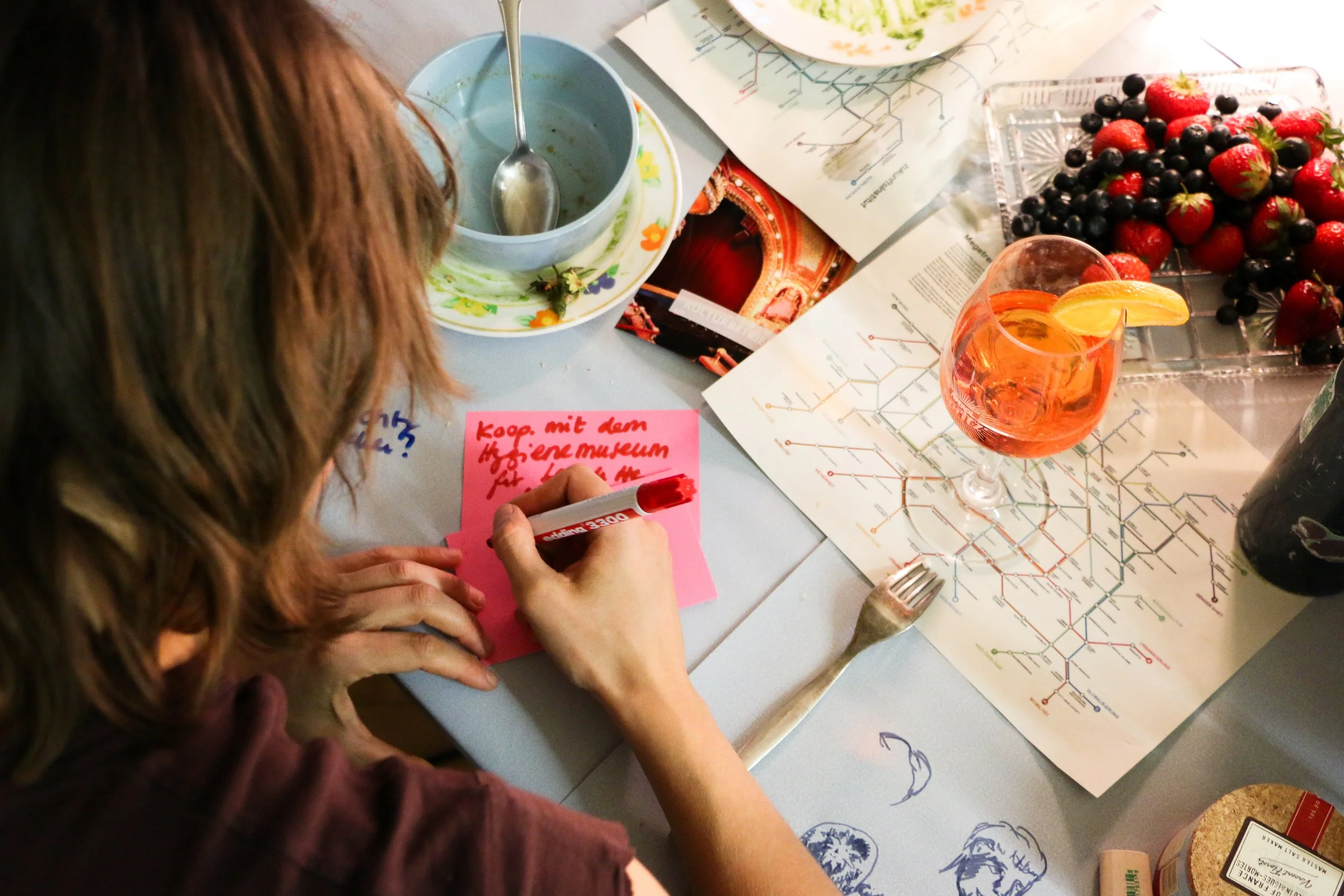
the future of material circulation in cities
Project Type: Subject-Related Internship Thesis
Project Period: 10/2023 - 8/2024
Project Partners:
HolyPoly, Zündstoffe Dresden, Konglomerat e.V., tuuwi (TU Dresden Umwelt Initiative), Slub Makerspace
A key challenge of the circular economy is closing resource loops by motivating consumers to return products once they have finished using them.
This project analyses successful industry take-back systems to develop a take-back design toolkit. This toolkit then guides the co-design of a mobile sharing shelf for the non-profit resource circulation initiative Zündstoffe Dresden.
Project Highlights:
-
![]()
Warehouse Surveys
Collaborative surveys on user experience during the opening hours of Zündstoffe.
-
![]()
Co-Mapping
Uncovering hidden urban stocks of suitable secondary material in Dresden in two workshops.
-
![]()
User Workshops
Co-developing ideas for more material recirculation in Dresden .
-
![]()
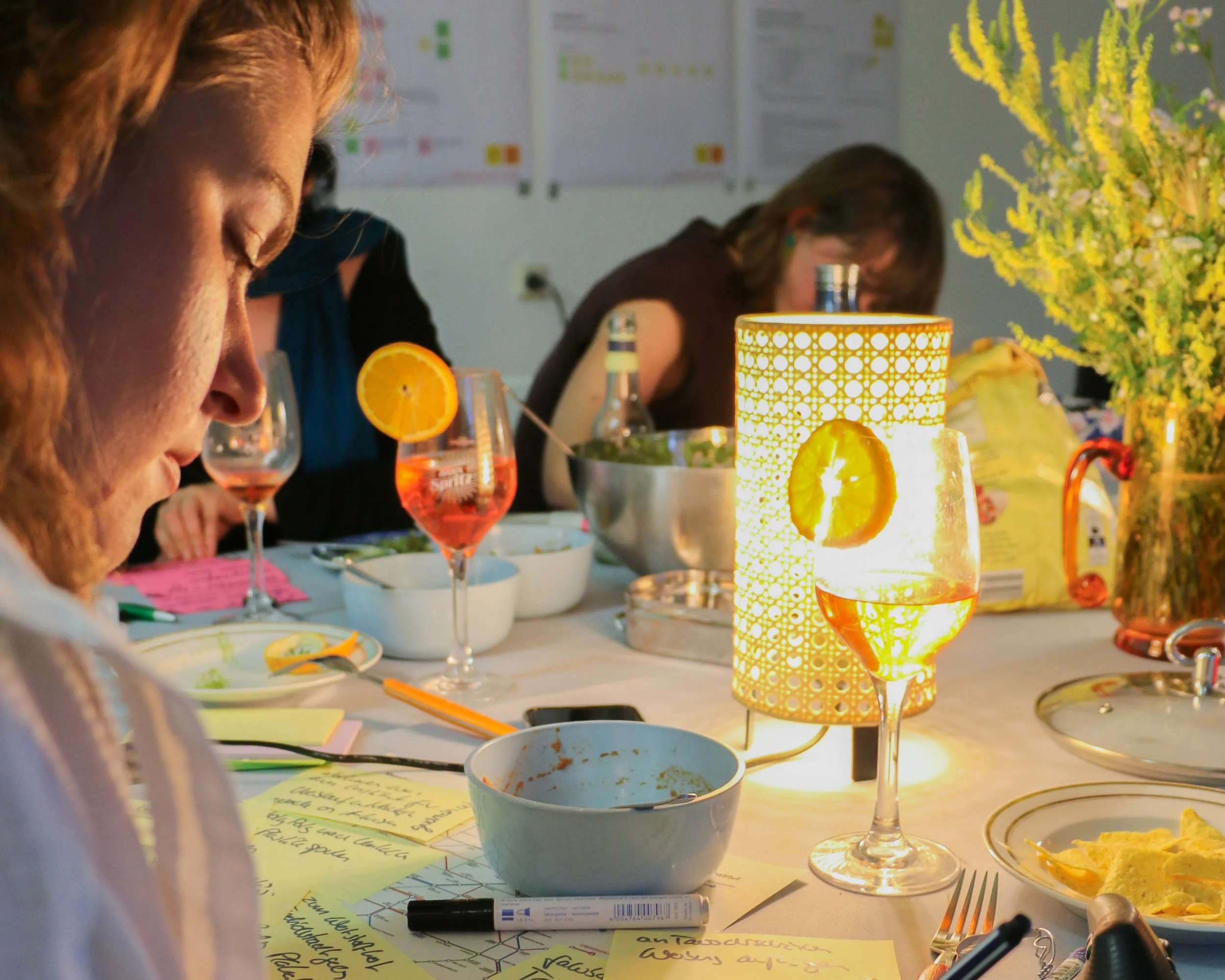
Vision Dinner
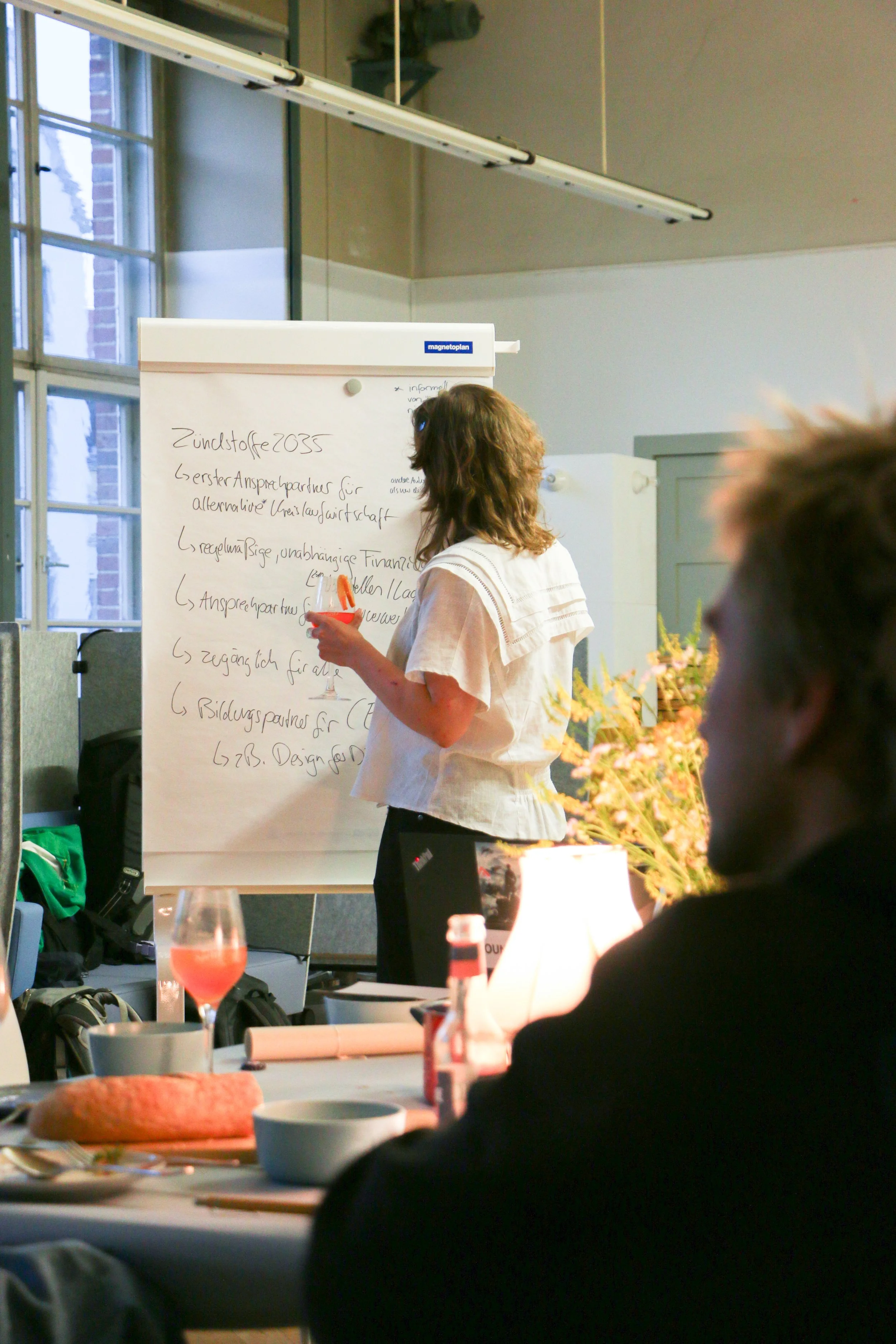
Development of a shared goal within the Zündstoffe team for 2035 to guide the design process.
-
![]()
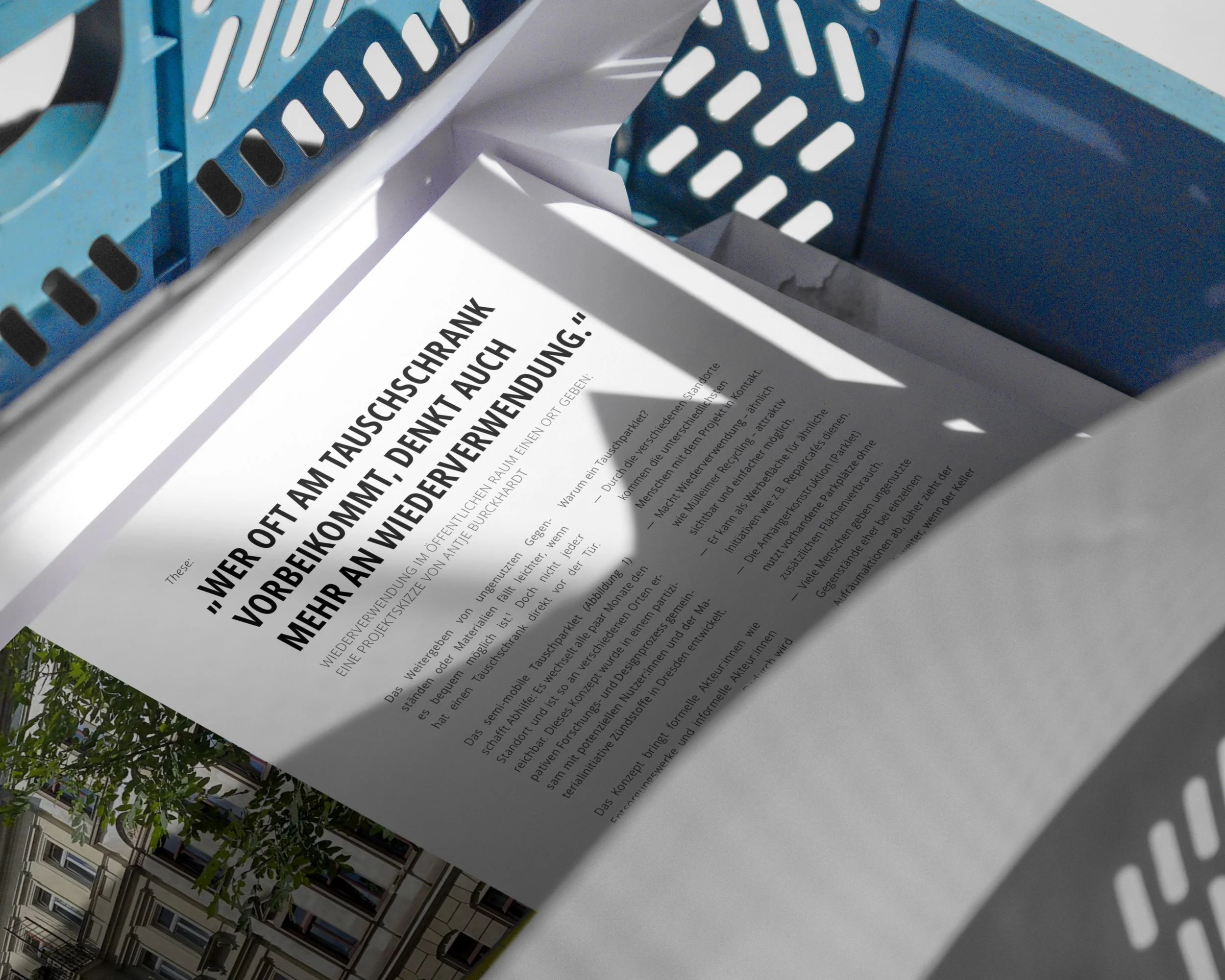
Project Proposal
Outreach material for Zündstoffe to explain the project to potential collaborators.
In-Depth-Process
overall approach
social design research
Guiding research question:
How can industrial take-back design strategies inform socially beneficial local resource redistribution?
Expert interviews on current industrial best practices.
Facilitate a participatory system analysis of Zündstoffe.
Develop a take-back system for Zündstoffe.
Step 1. Looking into best practices.
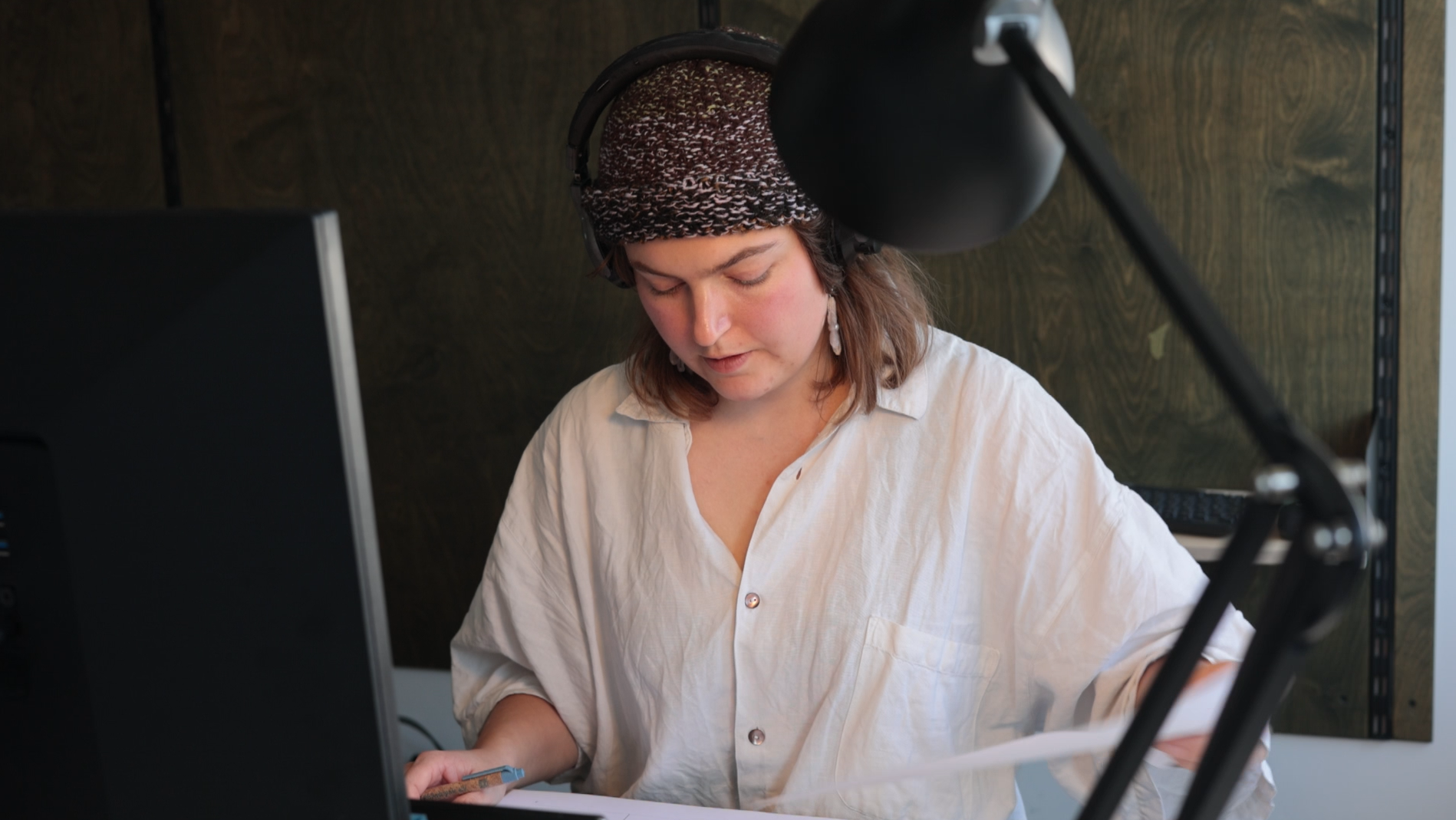
„My task […] is to create a user experience that is enjoyable and easy, so that people are motivated to not simply throw their items in the trash, which is much quicker, much less costly, and much easier, but rather to pack a parcel and send it to us..“
– take-back-expert
Increasingly, companies are implementing their own take-back programmes in order to collect high-quality secondary raw materials. These programmes offer a nearly untapped library of tried-and-tested design strategies that I wanted to make available for wider use.
Motivation:
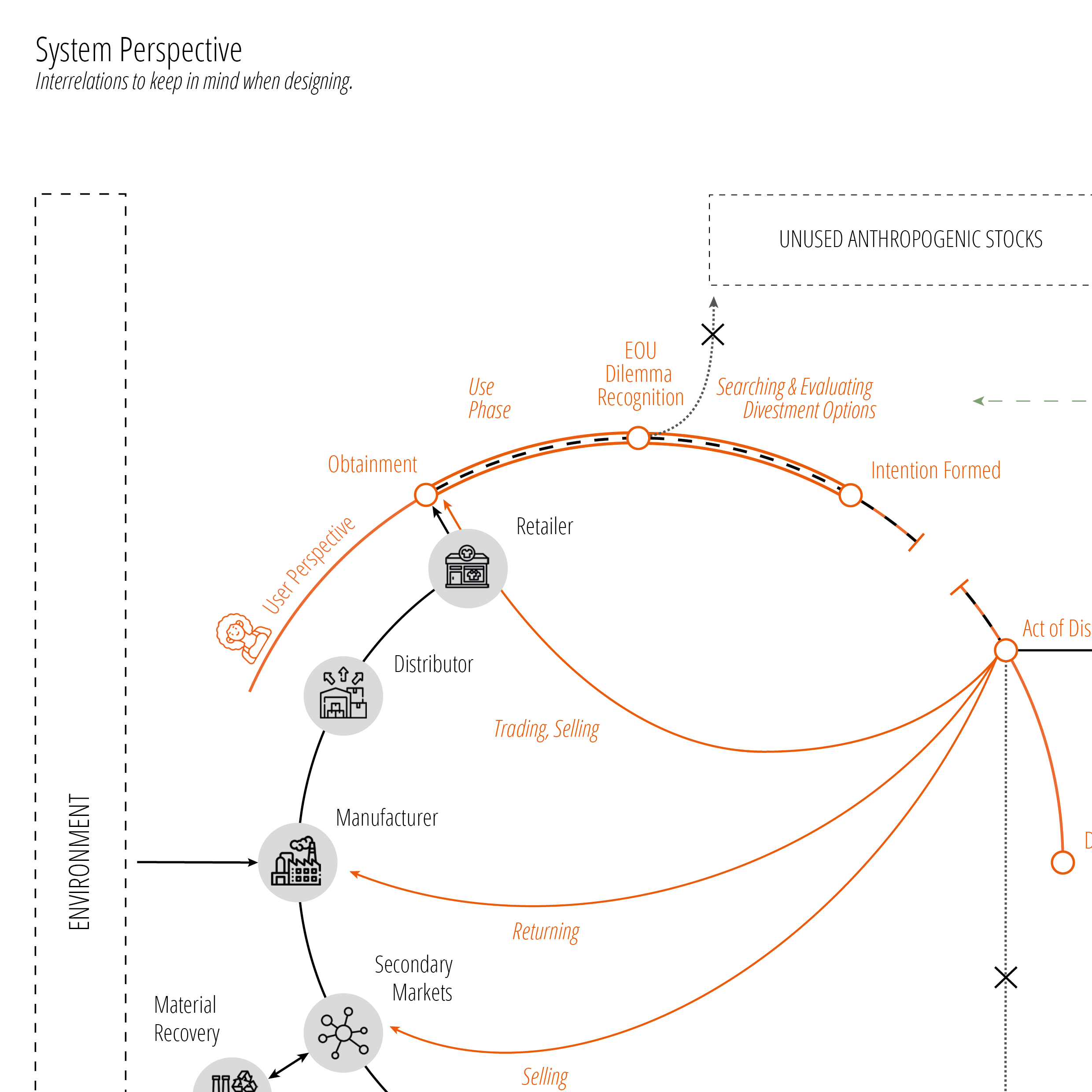
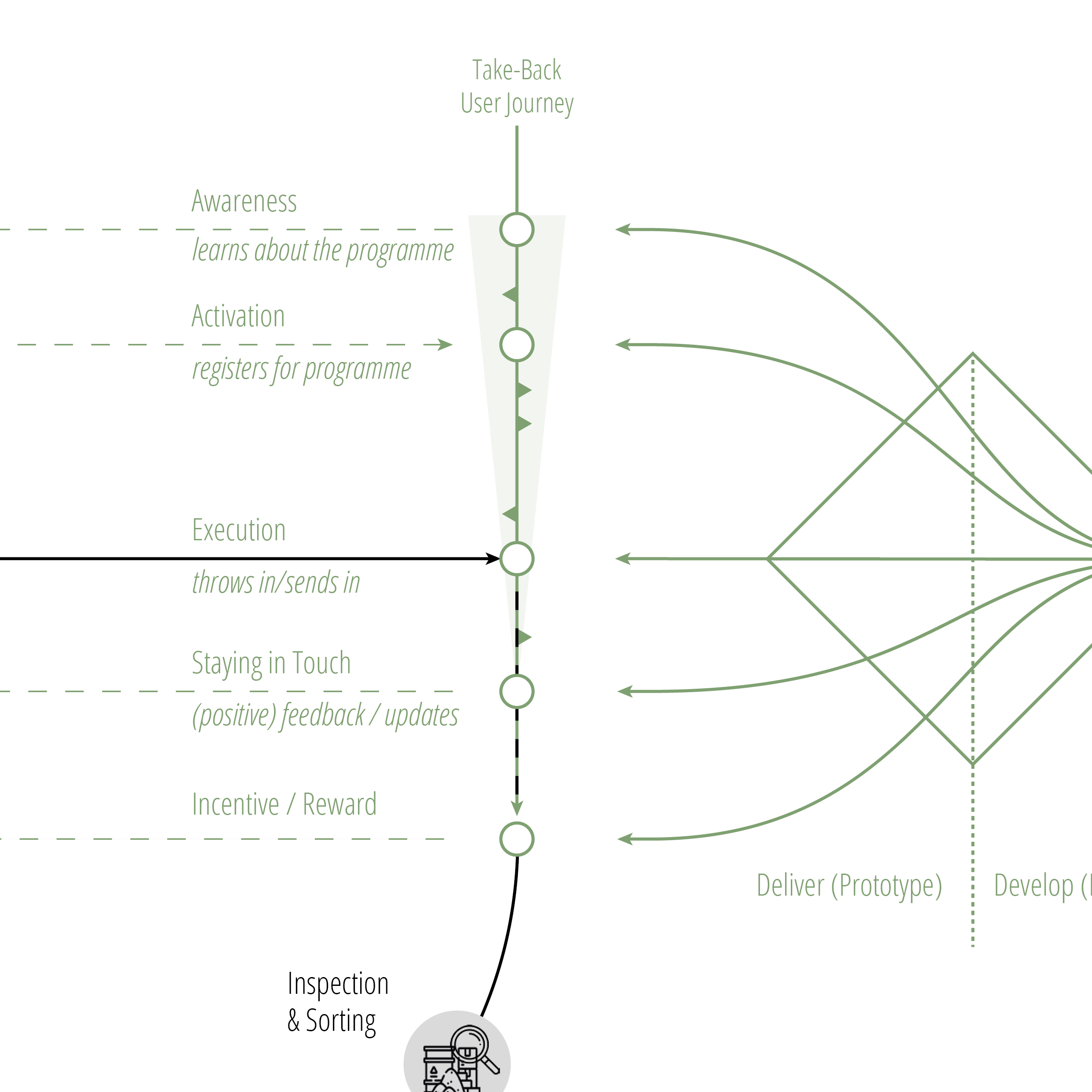
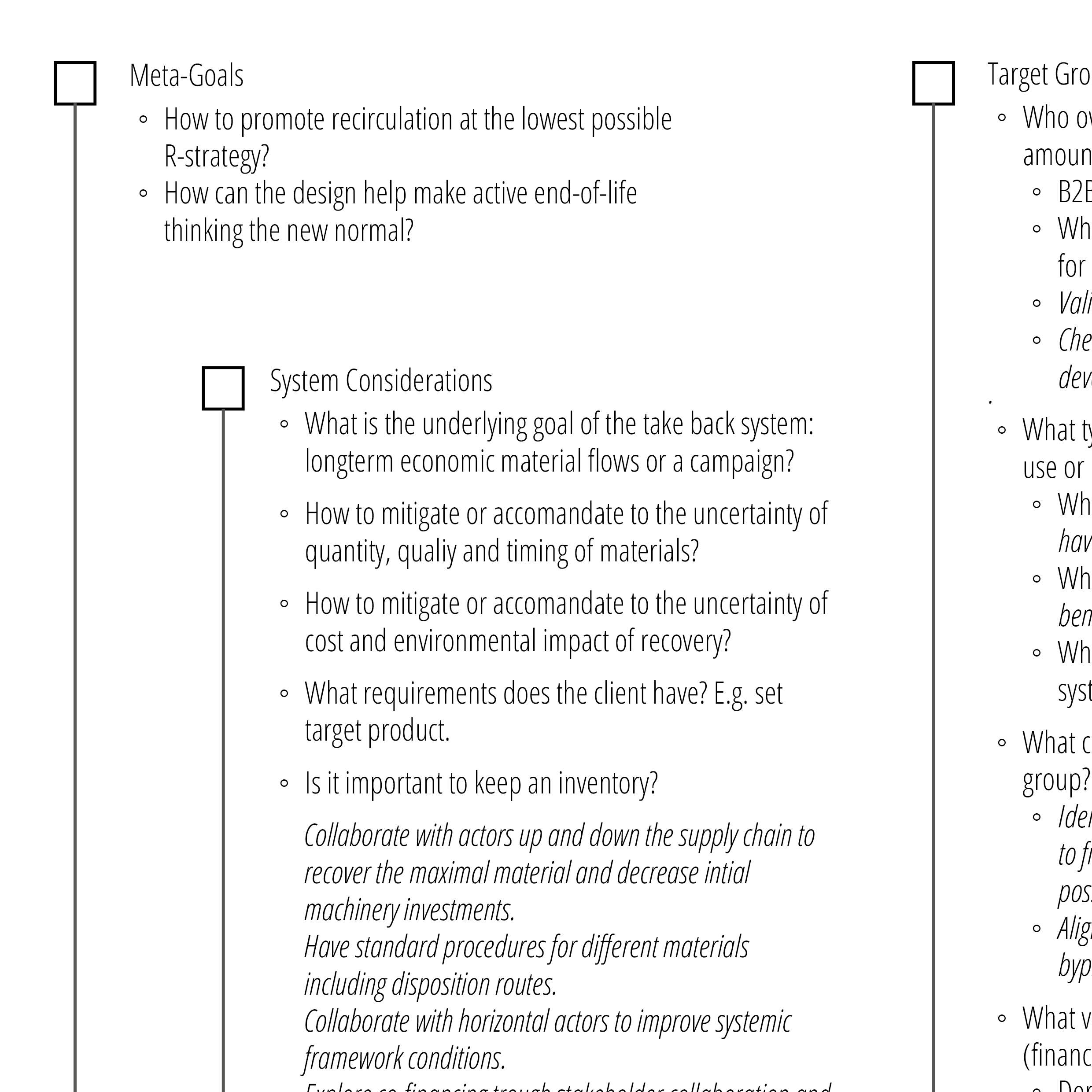
Develop a toolkit for designing take-back systems that summarises key elements and provides guiding questions and recommendations.
Goals Phase 1:
literature review on take-back-system design including design for sustainable behaviour
2 semi-structured expert interviews with take-back designers on their design process
5 semi-structured user interviews on perceived success factors in existing take-back system designs
Methods:
Currently, research into take-back systems mostly focuses on back-end processes. Adopting a design perspective shifts the focus to the front end, highlighting convenience and incentives.
Results:
Excerpts from the Take-Back Toolkit
Step 2. Co-Developing A System Understanding.
„We want to be the first point of contact for the alternative circular economy in town. We raise awareness of unused materials before they are even considered waste.“
– vision statement Zündstoffe
Understand Zündstoffe as design context.
Assess current obstacles to material donations to Zündstoffe.
Identify new potential customers and donors for pre-used resources.
Develop a new shared goal that the take-back-system can support.
Goals Phase 2:
2 open warehouse surveys exploring current donation experience and desired materials.
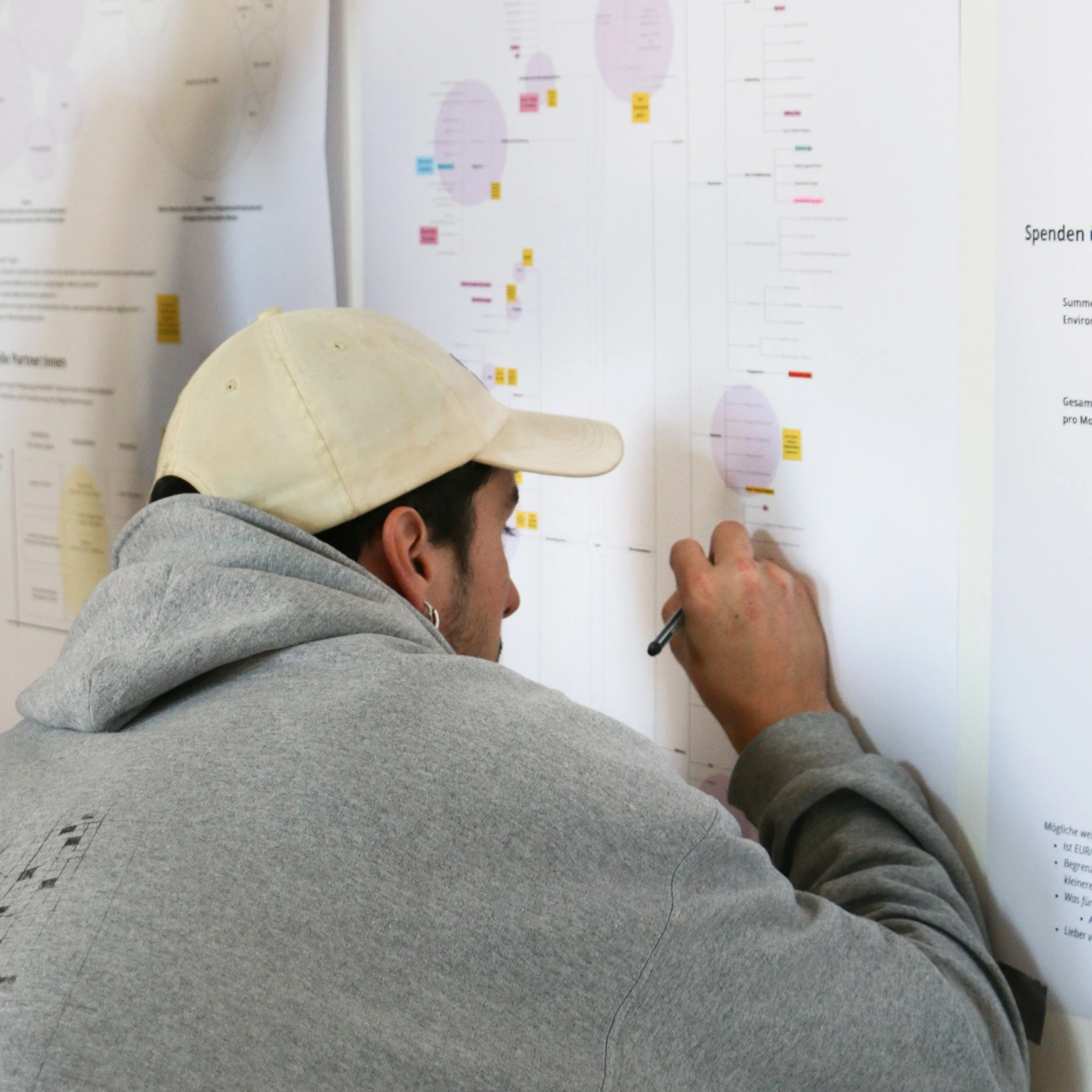
2 workshops focusing on hidden urban resource stocks to identify new potential collaboration partners.
1 co-design workshop “How could Zündstoffe support the recirculation of material in Dresden?” with current and potential users.
Analysis of donation, sales and CO₂-equivalent savings data to inform strategic decision.
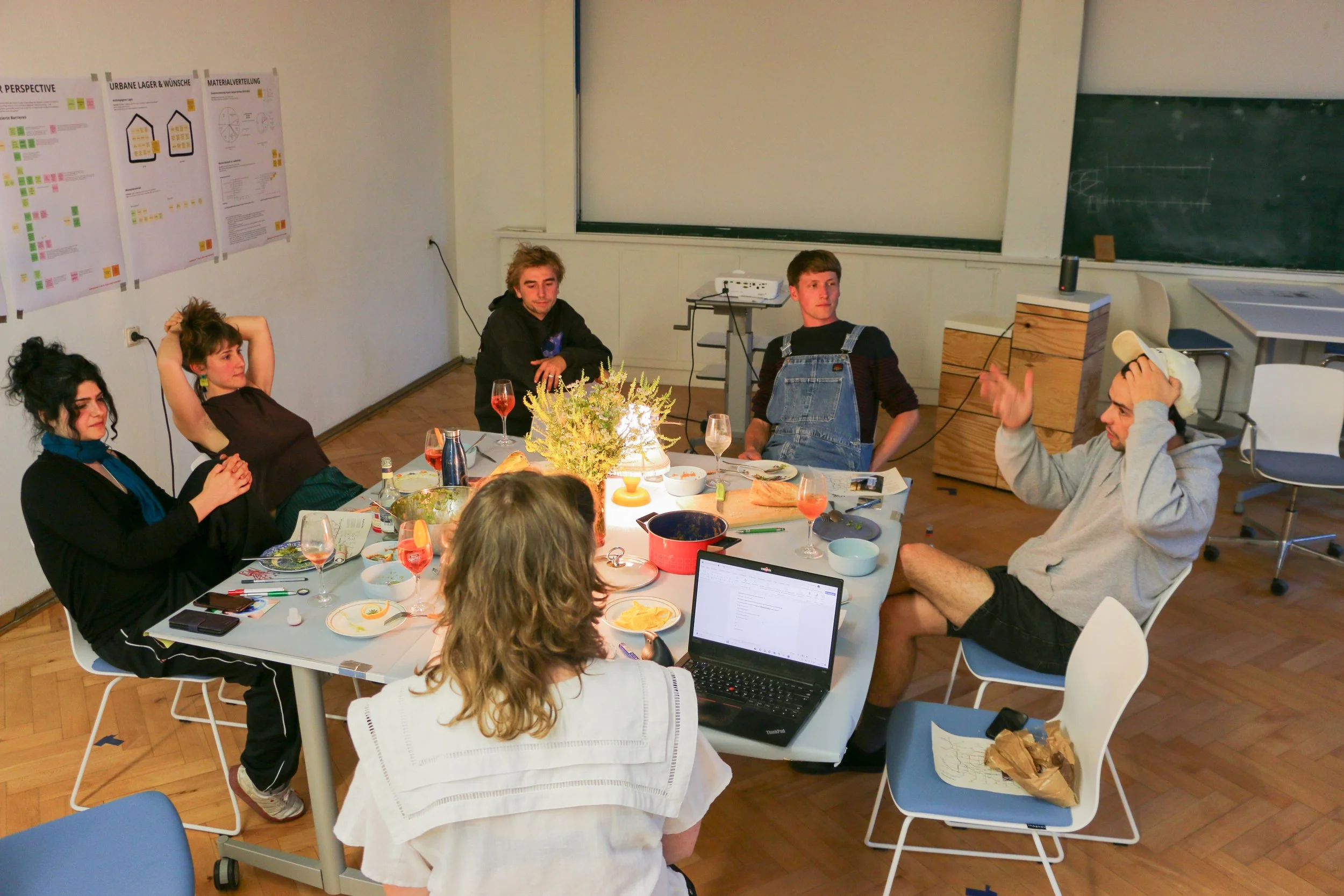
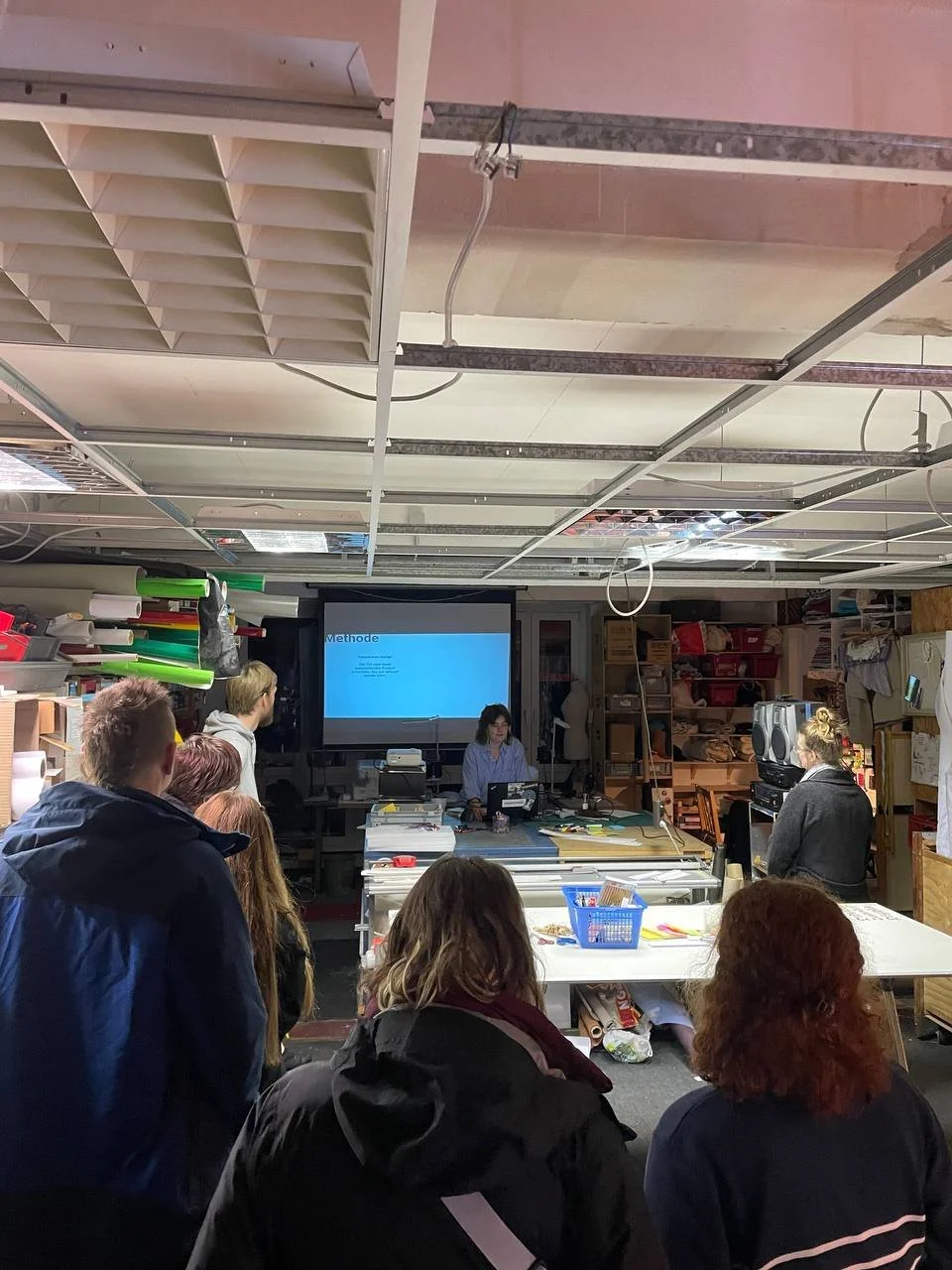
Initiation and facilitation of a vision dinner for the Zündstoffe team to share research results and develop a shared strategic vision.
Methods:
The current system is inconvenient for donors and customers. There demand for simple base materials such as wood and textiles is high. Strategically, Zündstoffe wants to focus less on the volume of materials and more on sharing knowledge. Therefore, raising awareness of unused material stocks and increasing the visibility of the initiative going forward is key.
Results:
Impressions of the Process
-
![]()
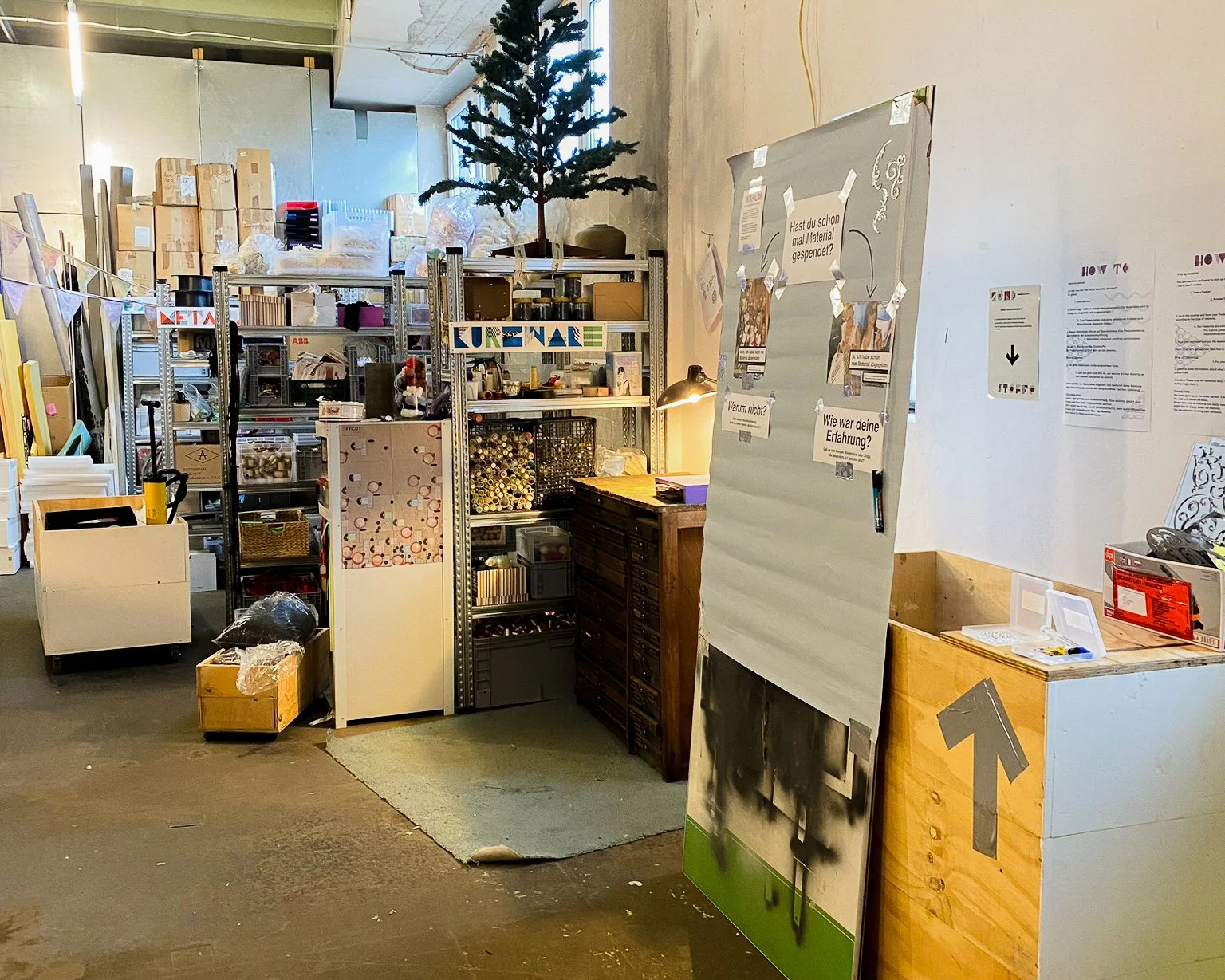
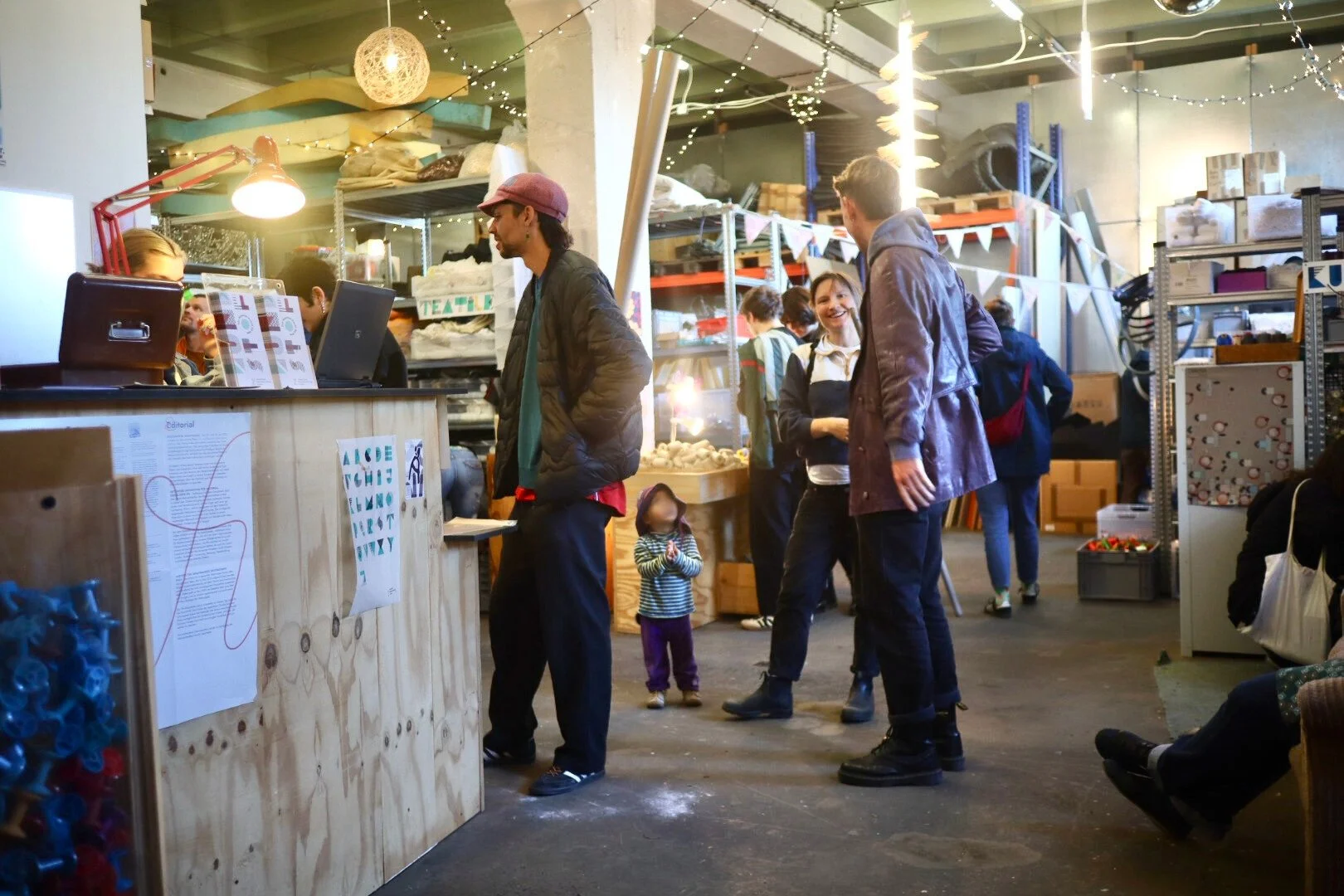
Warehouse Zündstoffe Dresden
-
![]()
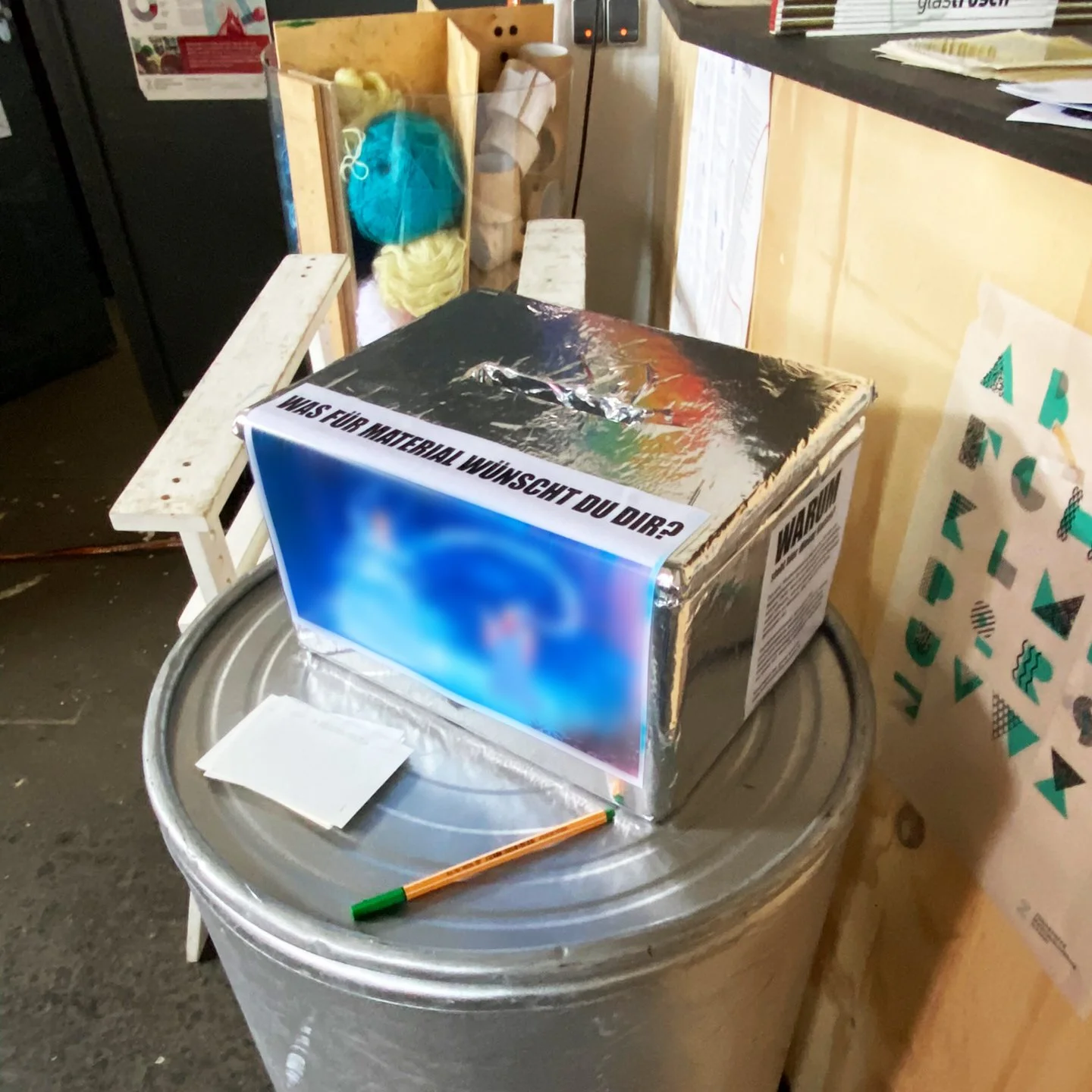
Open Warehouse Survey "Wish Material"
-
![]()
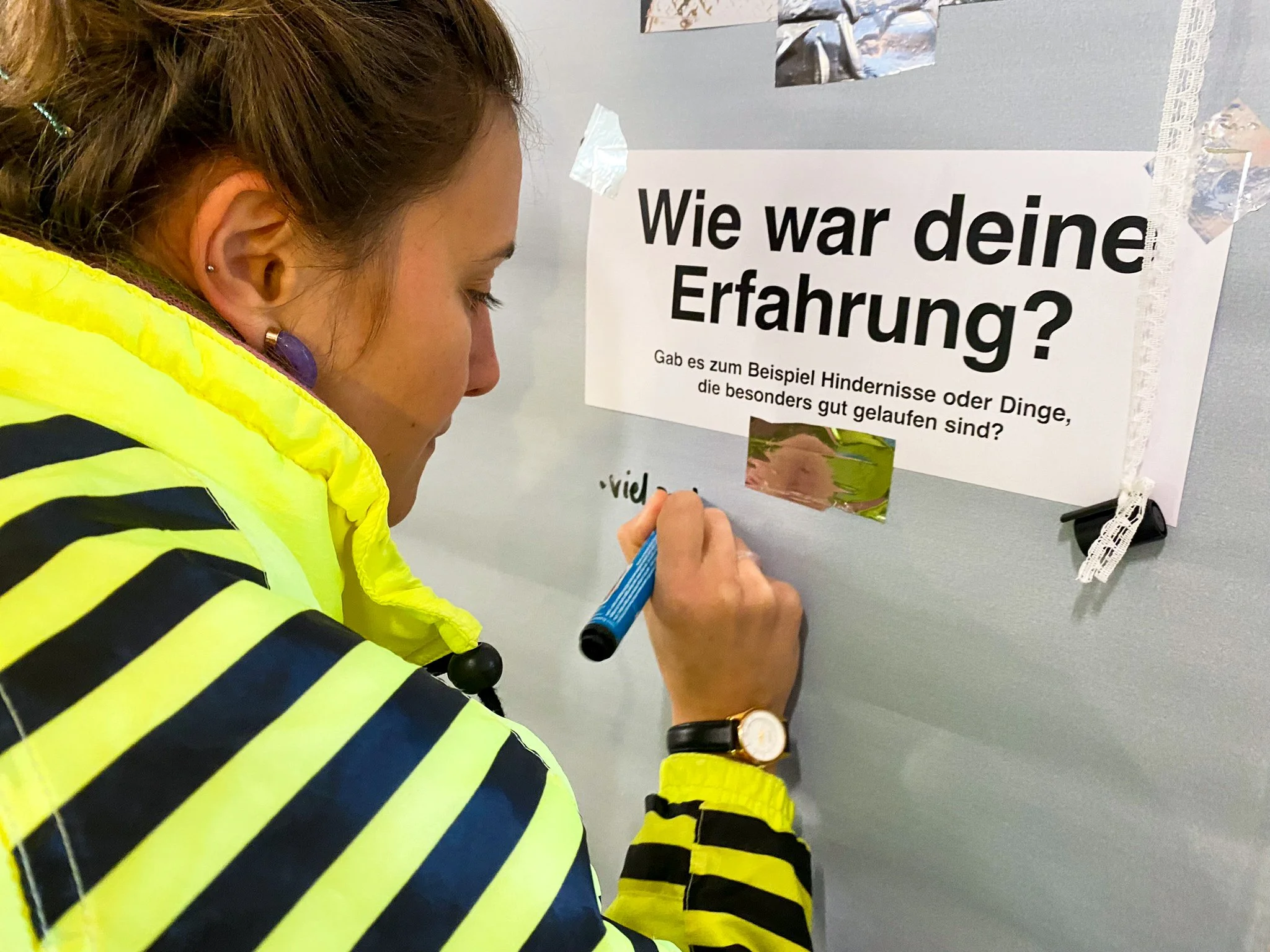
Open Warehouse Survey "Donation Experience"
-
![]()
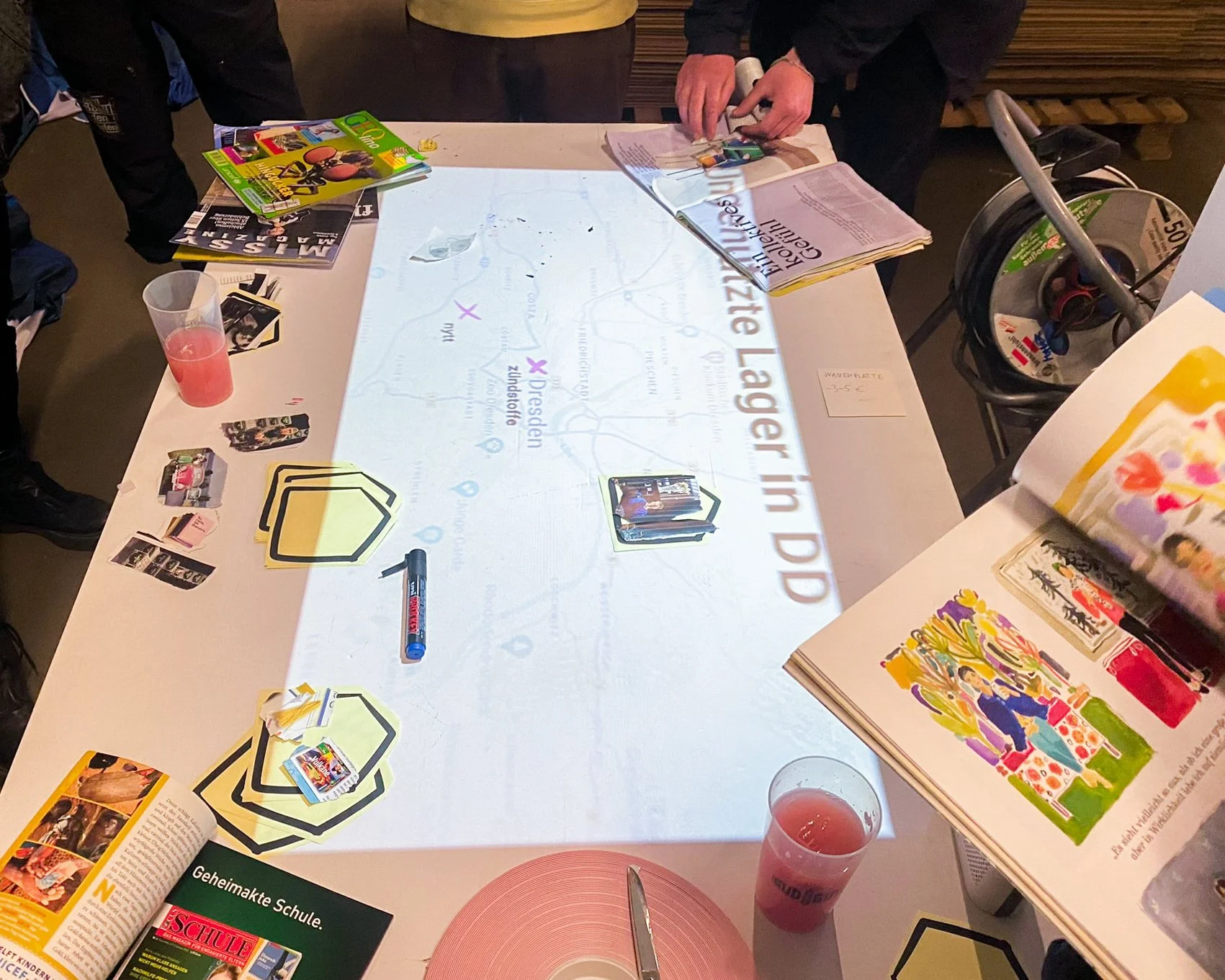
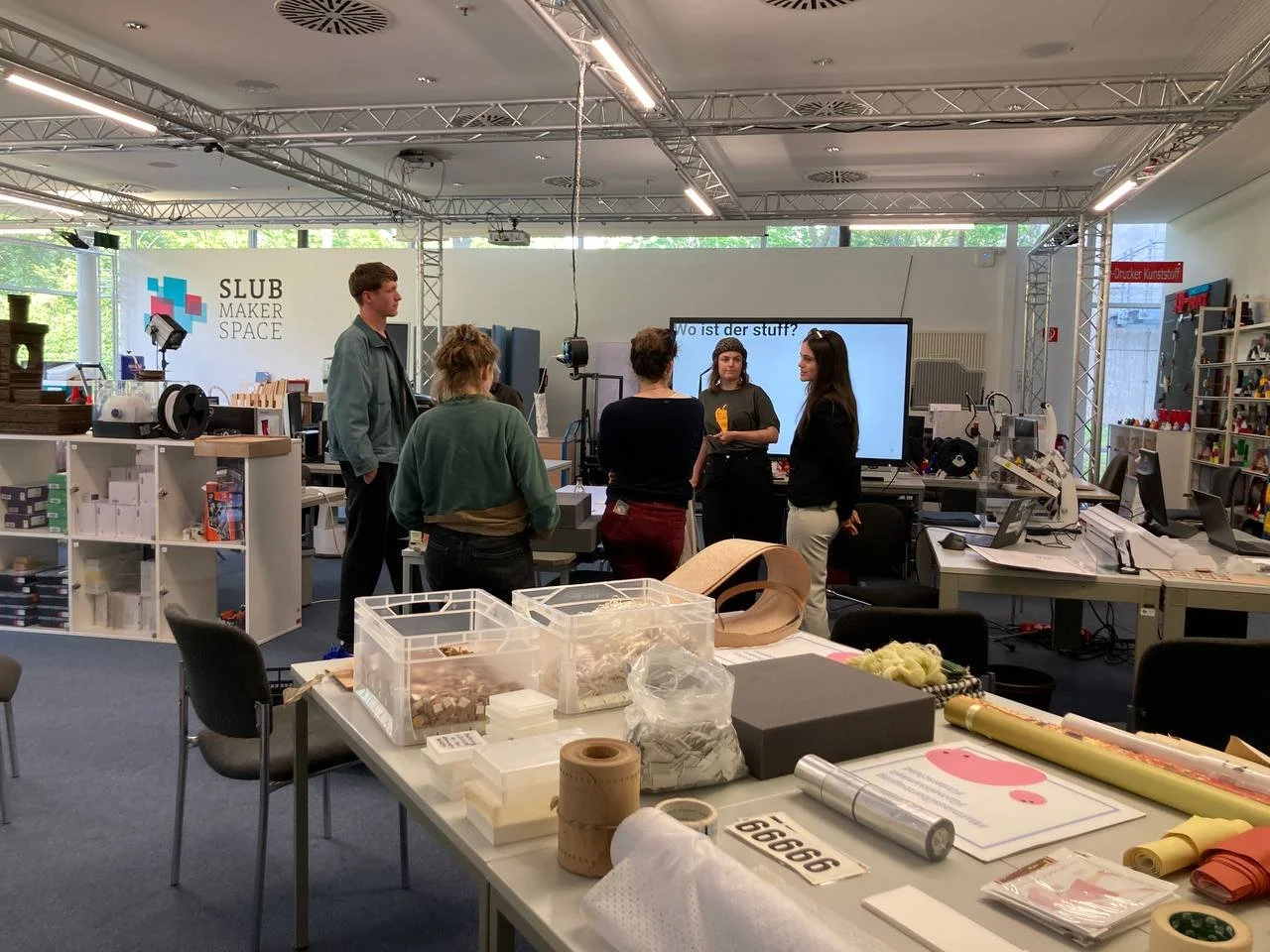
Workshop 1 "Hidden Urban Stocks"
-
![]()
Workshop 2 "Hidden Urban Stocks"
-
![]()
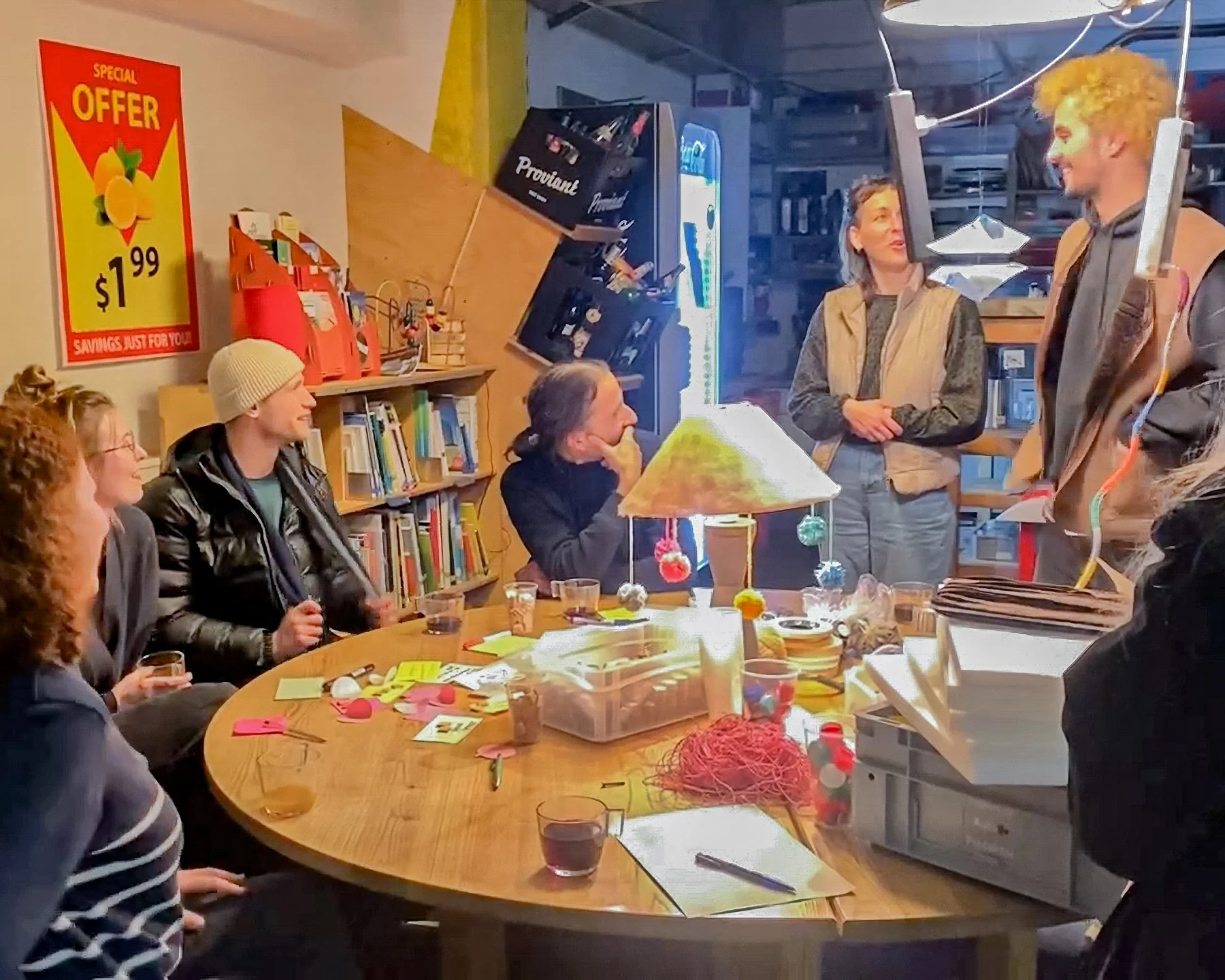
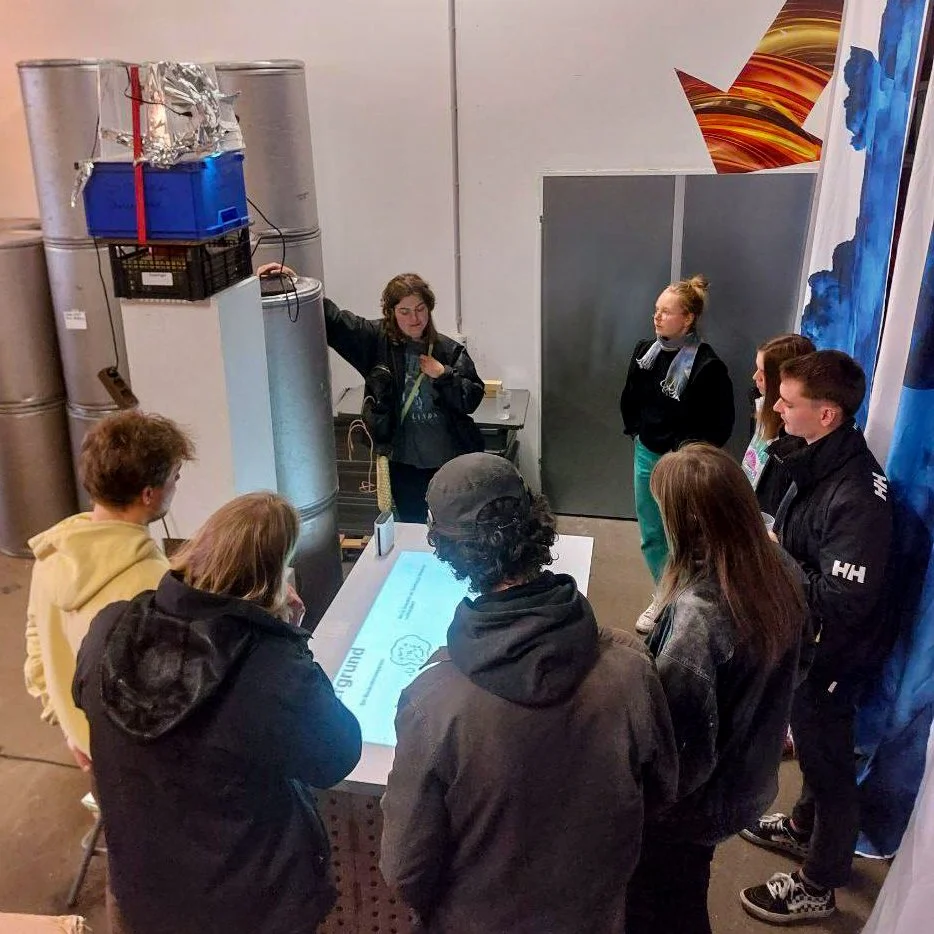
Co-Design Workshop With Users
-
![]()
Vision Dinner: Jointly Completing the Analysis
-
![]()
Vision Dinner: Thinking About 2035
Step 3. Visualizing possibilities.
„Creating a reminder for material reuse in daily life."“
– project proposal
Develop a concept for local redistribution of materials that can be realised by Zündstoffe within the next two years.
Provide an opportunity to experience resource flows more consciously for a wide variety of people.
Increase outreach and turnover of Zündstoffe.
Goals Phase 3:
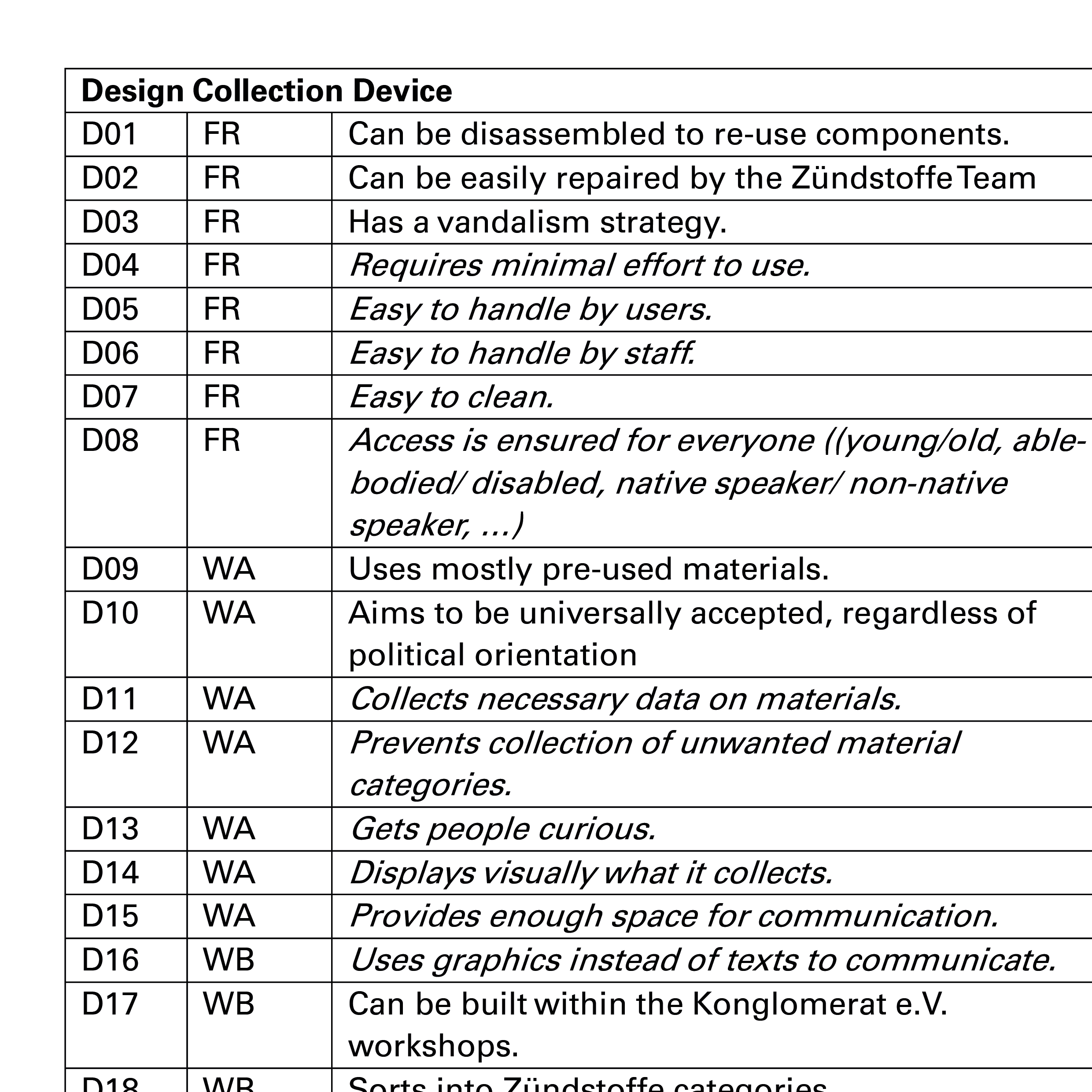
Derive the requirements for the take-back system from the toolkit and the vision dinner.
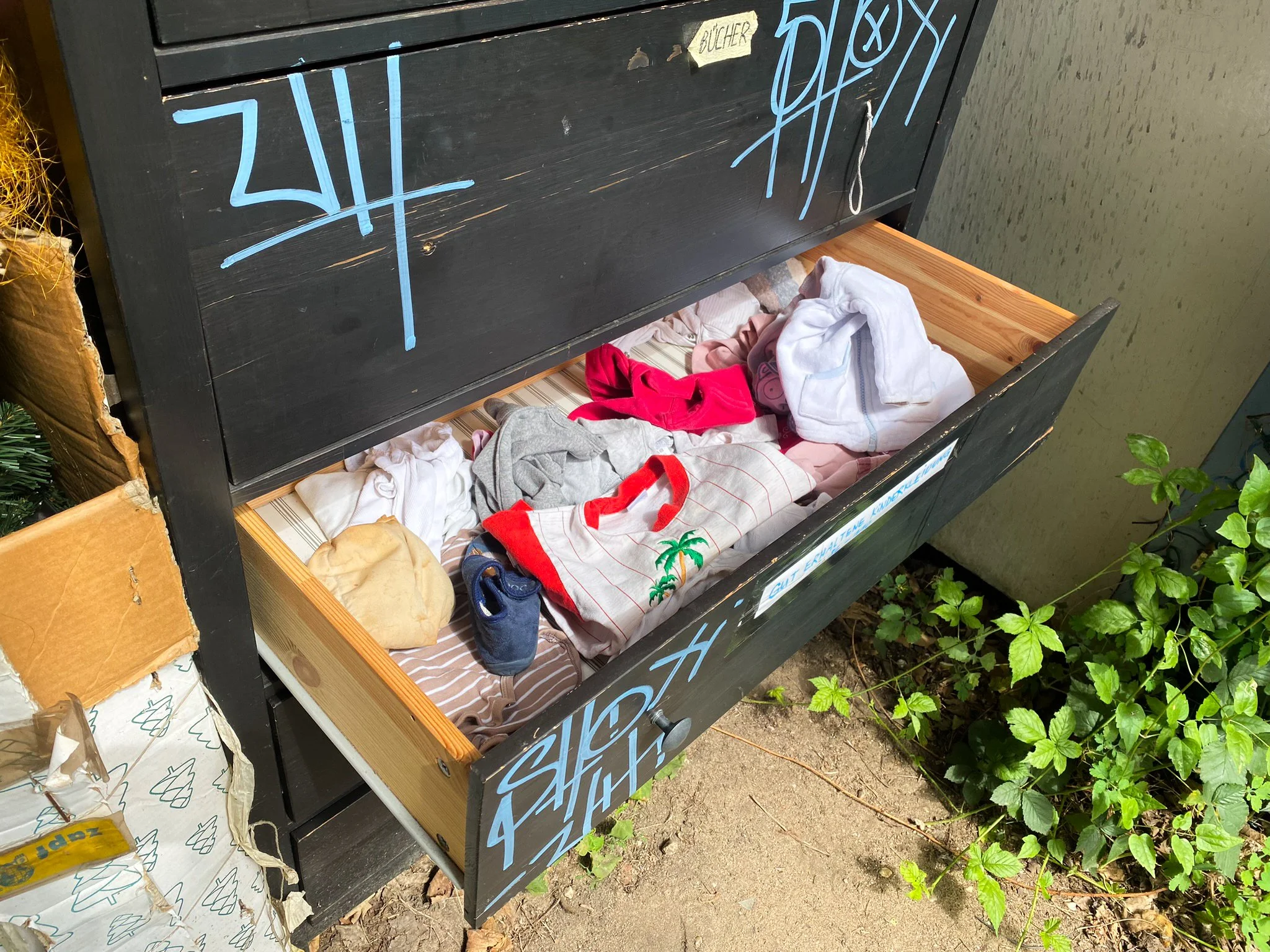
Investigate the user experience of existing sharing shelves in Dresden.
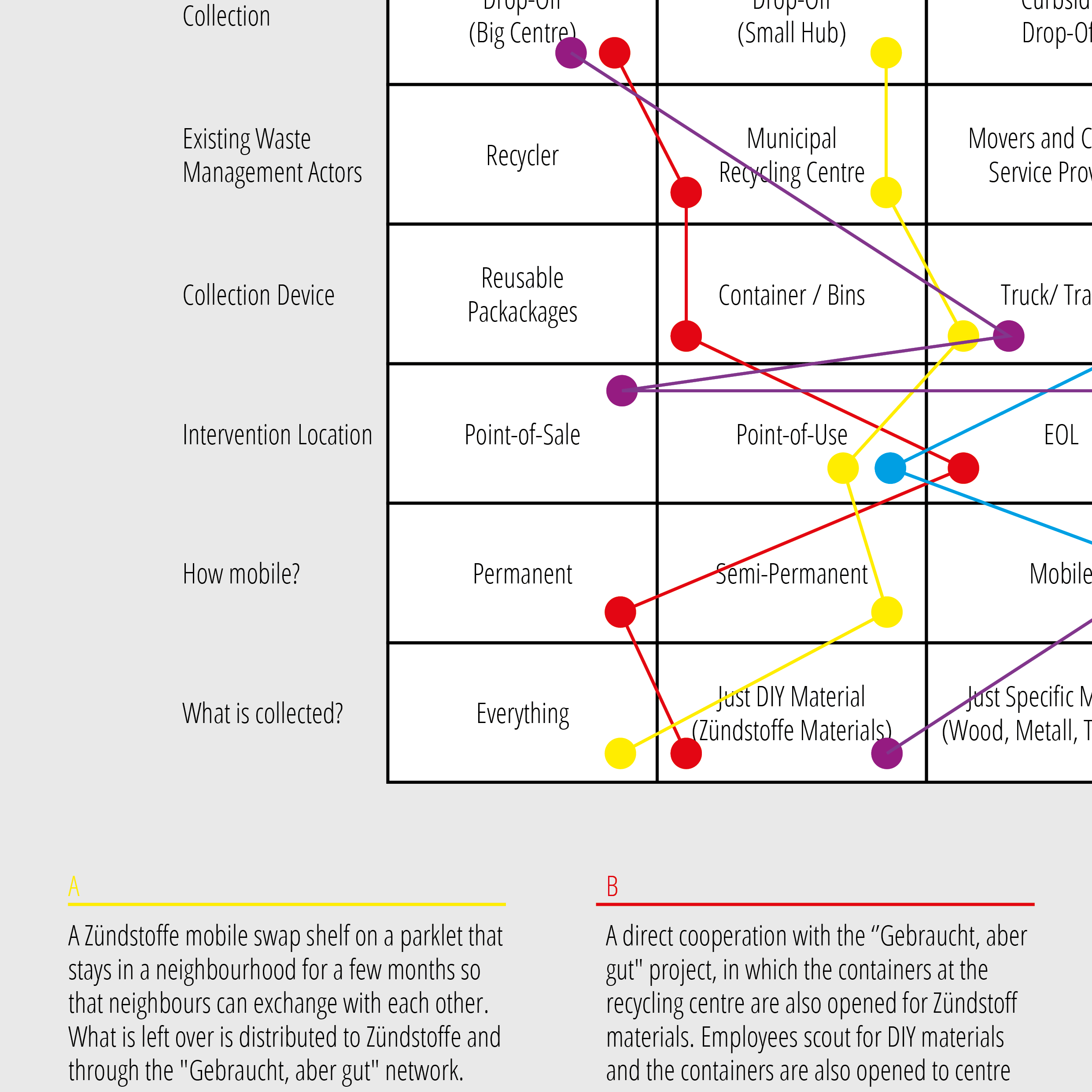
Use morphological analysis to explore different concepts.
Create 3D renderings and concept sketches to visualise the final concept.
Project proposal for attracting collaboration partners.
Methods:
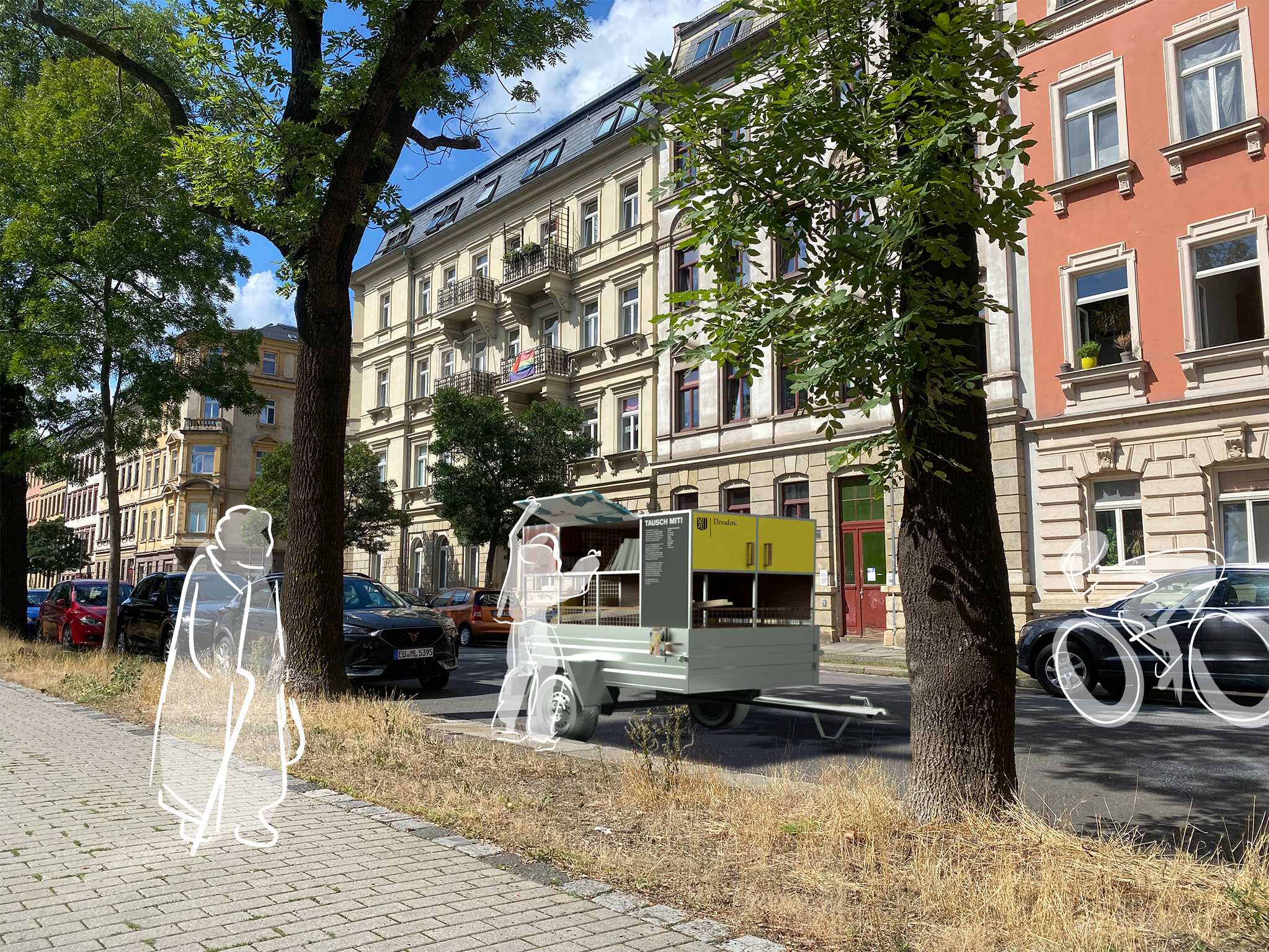
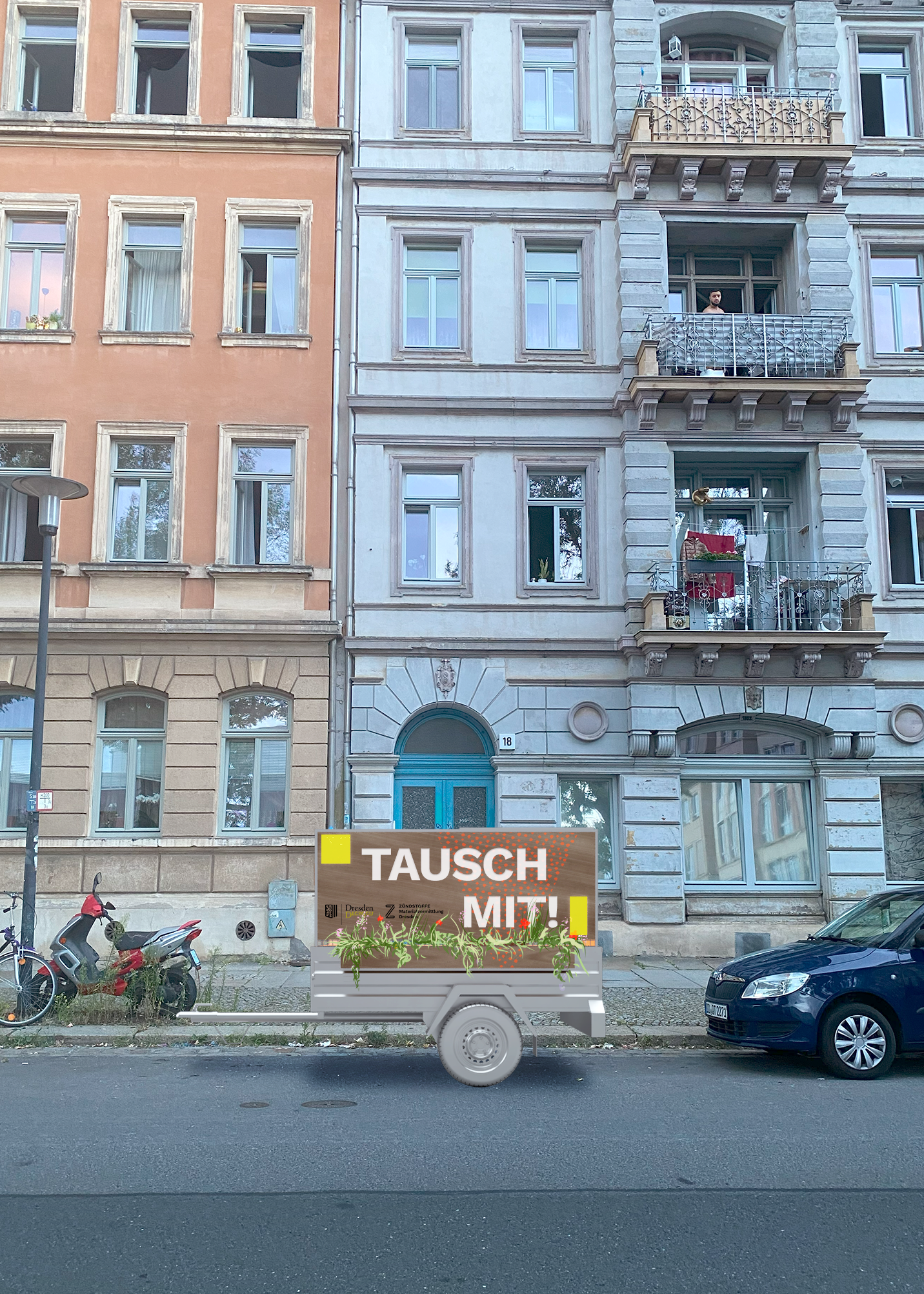
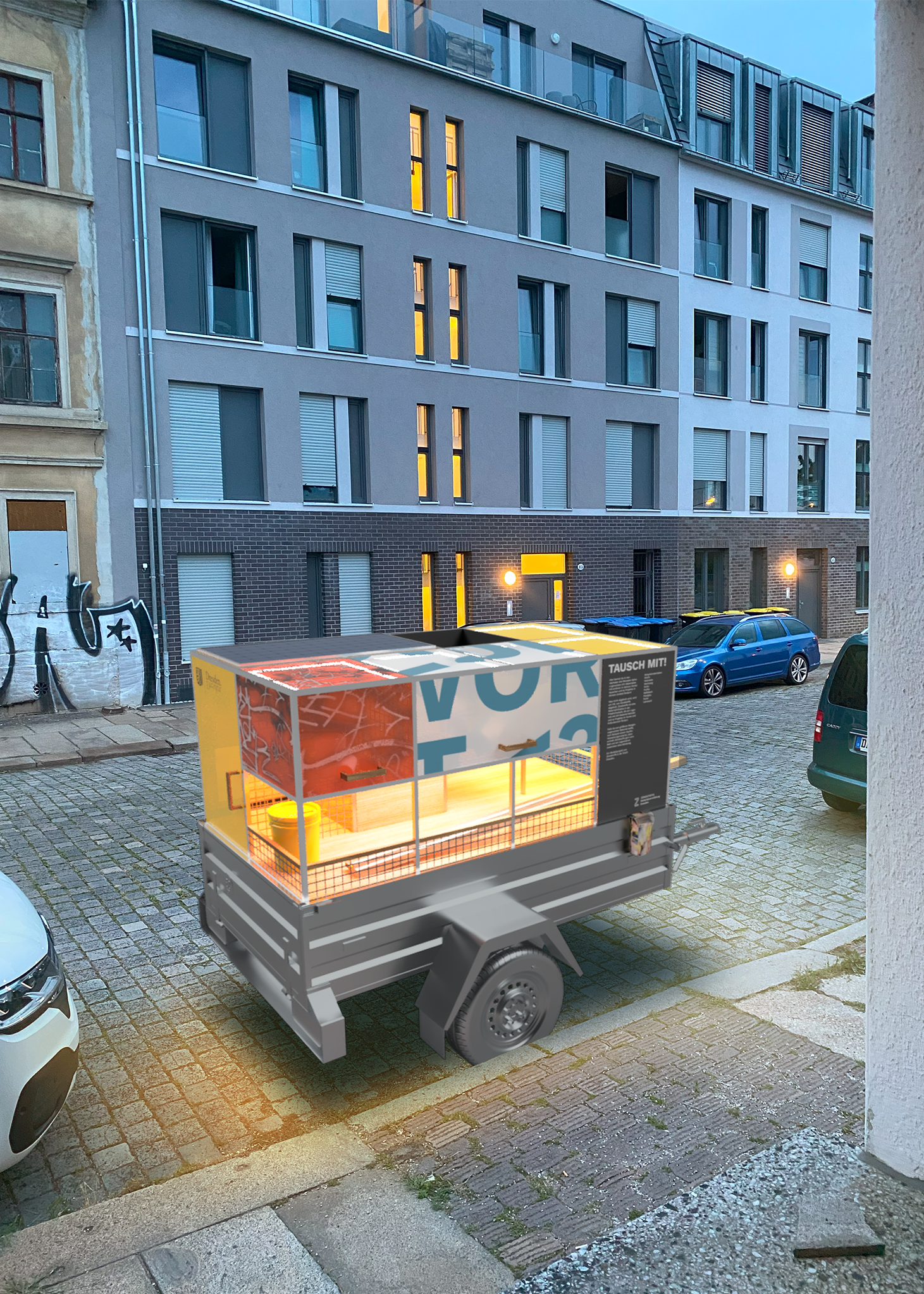
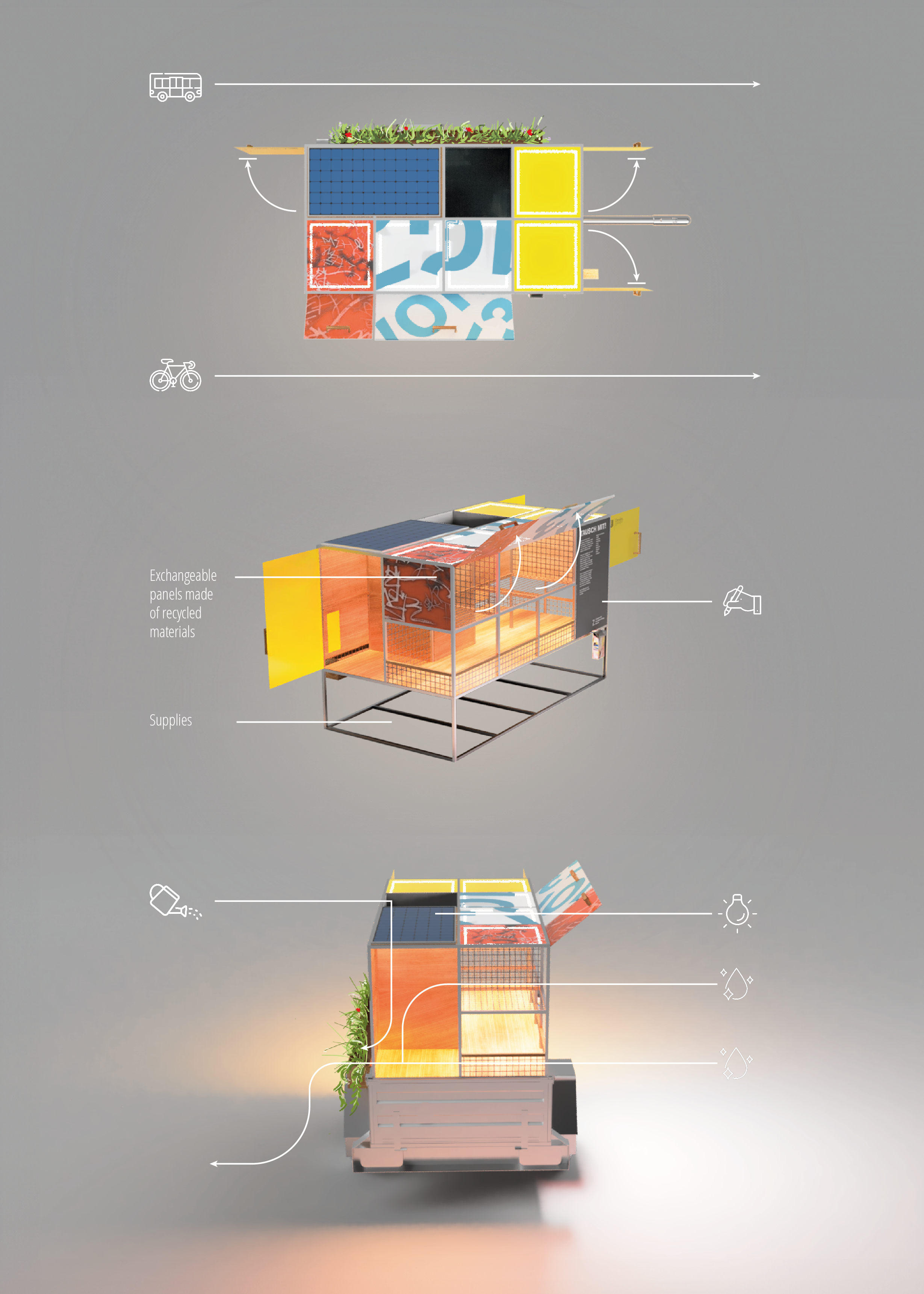
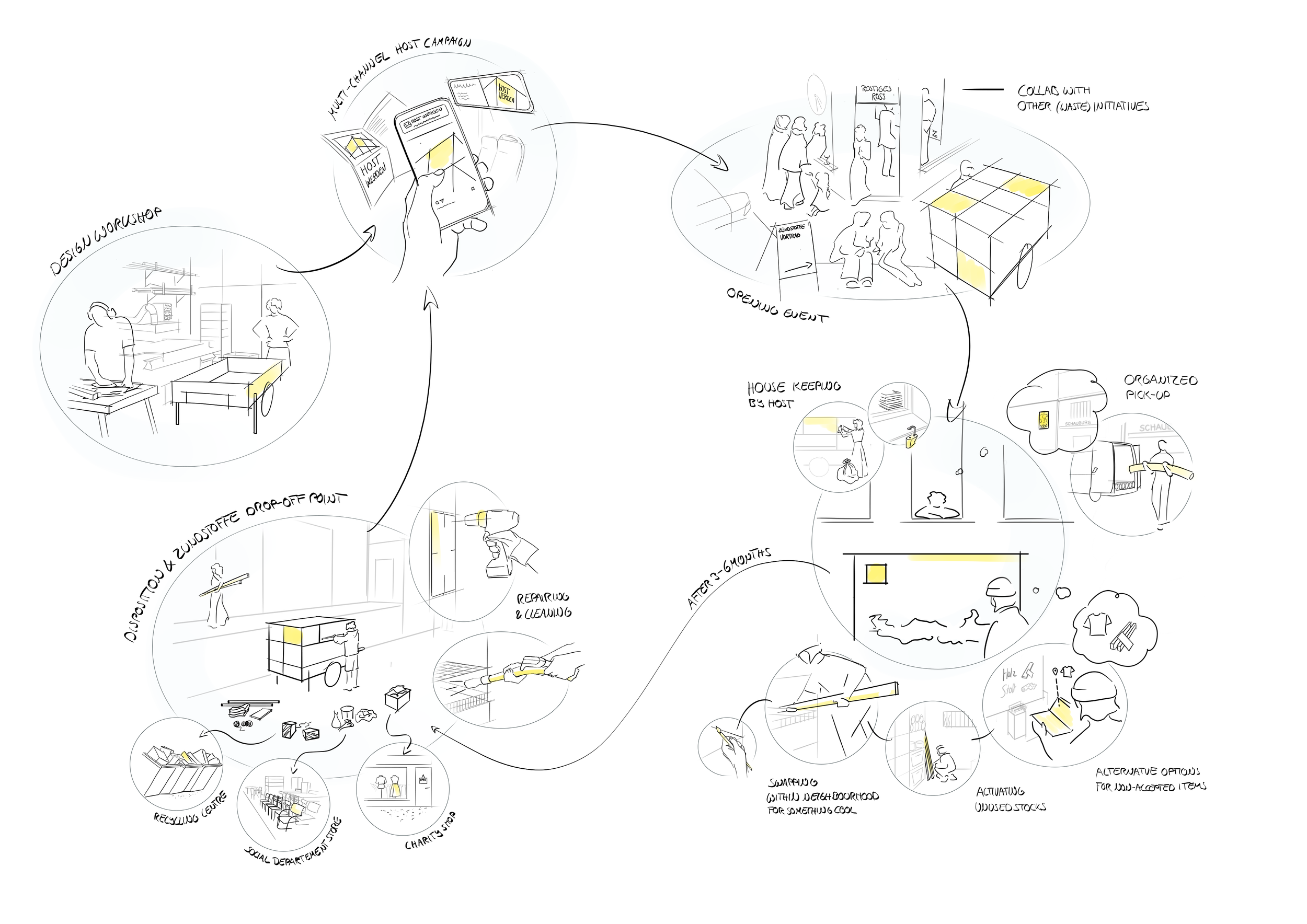
The mobile sharing shelf is designed to reach a broad audience. Constructed from reused materials in a circular design workshop with Zündstoffe and local education partners, it can be rented by organisations or residents for three to six months. While in a neighbourhood, it offers daily opportunities to swap materials in existing parking spaces. At the end of the rental period, Zündstoffe and the municipal waste service collect any remaining items and prepare the shelf for its next location, raising awareness of their work and exploring sites for more permanent solutions.
Results:
Design Process
-
![]()
Requirements List
-
![]()
Morphological Analysis
-
![]()
User Experience Sharing Shelfs Dresden
Mobile Sharing Shelf
To be continued…
Let’s get in touch!
Excited to explore this theme further. Open to collaborations, would love to hear from you!