Encouraging Reuse in Cities
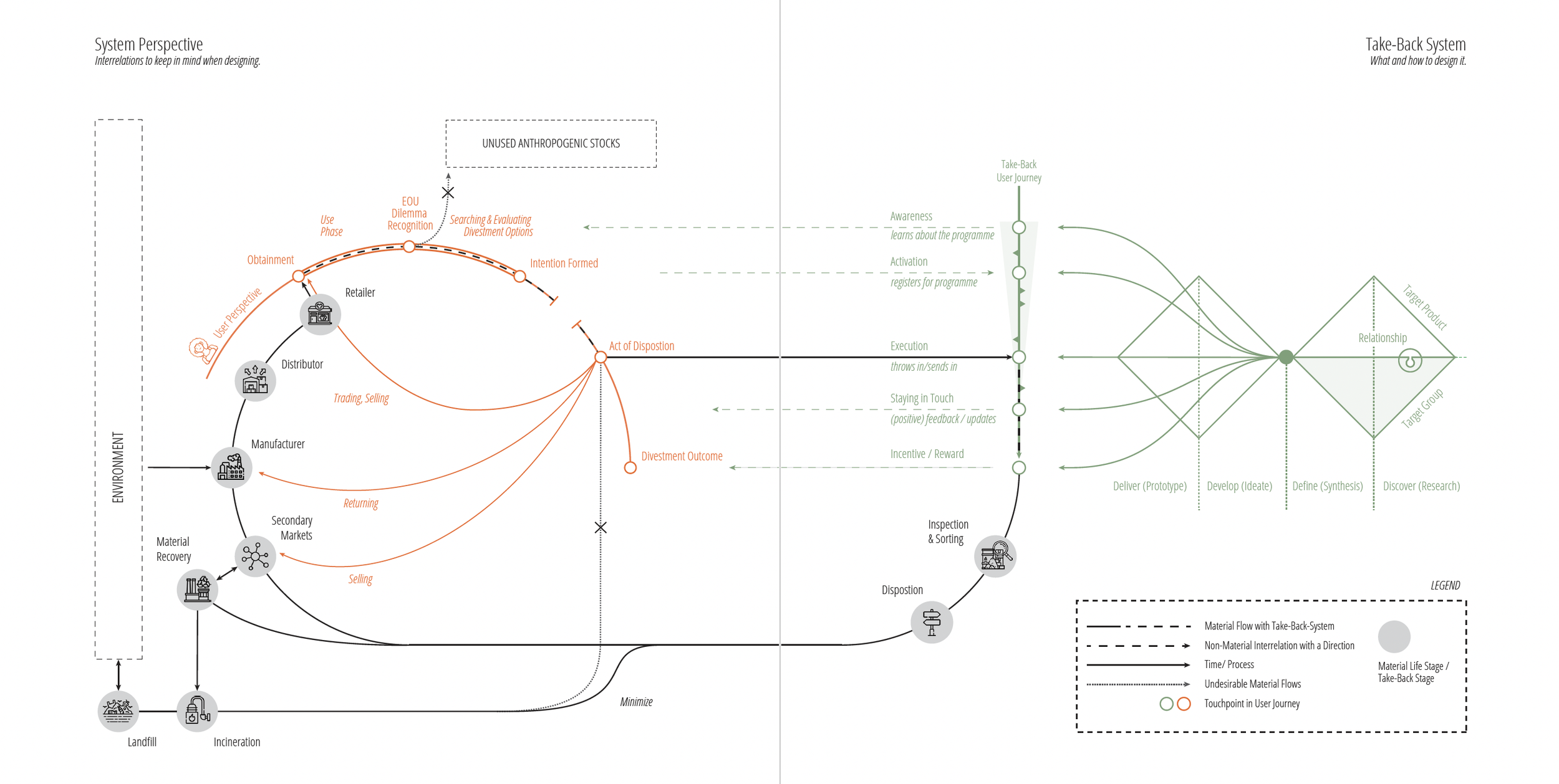
A key challenge of a more sustainable economy is to motivate consumers to feed products back into circulation. Increasingly, companies establish take-back programs to secure access to high-quality secondary material.
This project analyses successful industry take-back systems to develop a take-back design toolkit. This toolkit then guides the co-design of a mobile sharing shelf for the non-profit resource circulation initiative Zündstoffe Dresden.
Project Type: Internship Thesis
Project Period: 10/2023 - 8/2024
Project Partners:
HolyPoly, Zündstoffe Dresden, Konglomerat e.V., tuuwi (TU Dresden Umwelt Initiative), Slub Makerspace
-
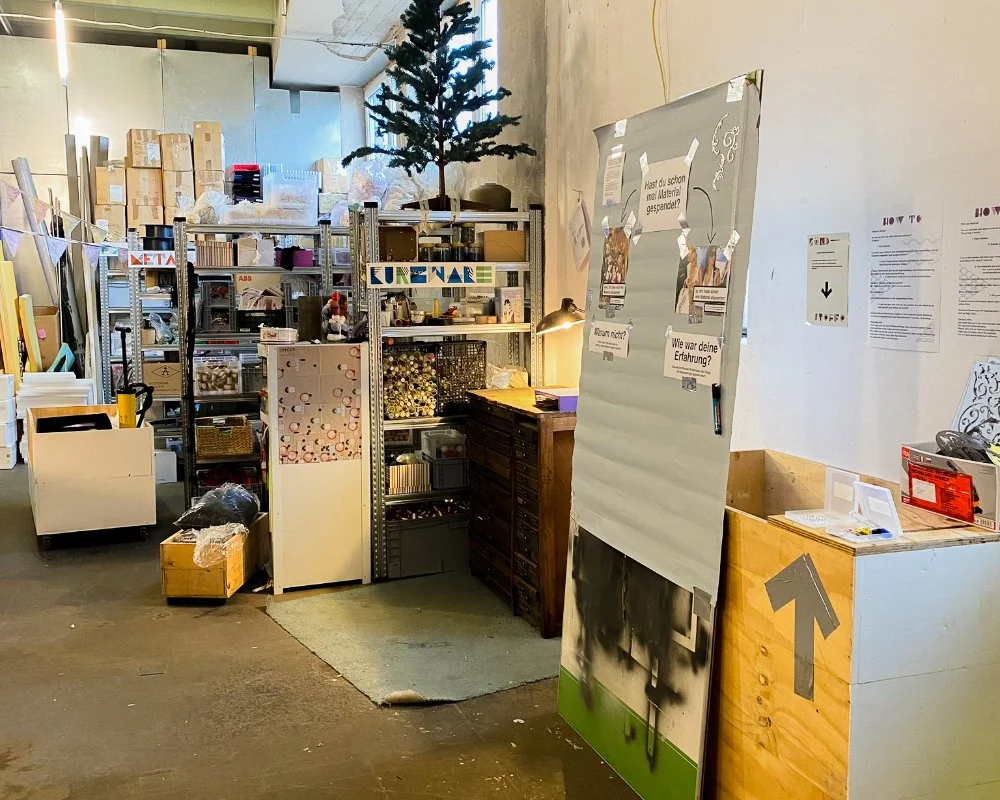
![Warehouse with used materials and a pinboard with a survey]()
Warehouse Surveys
Collaborative surveys on user experience circulating materials through Zündstoffe.
-
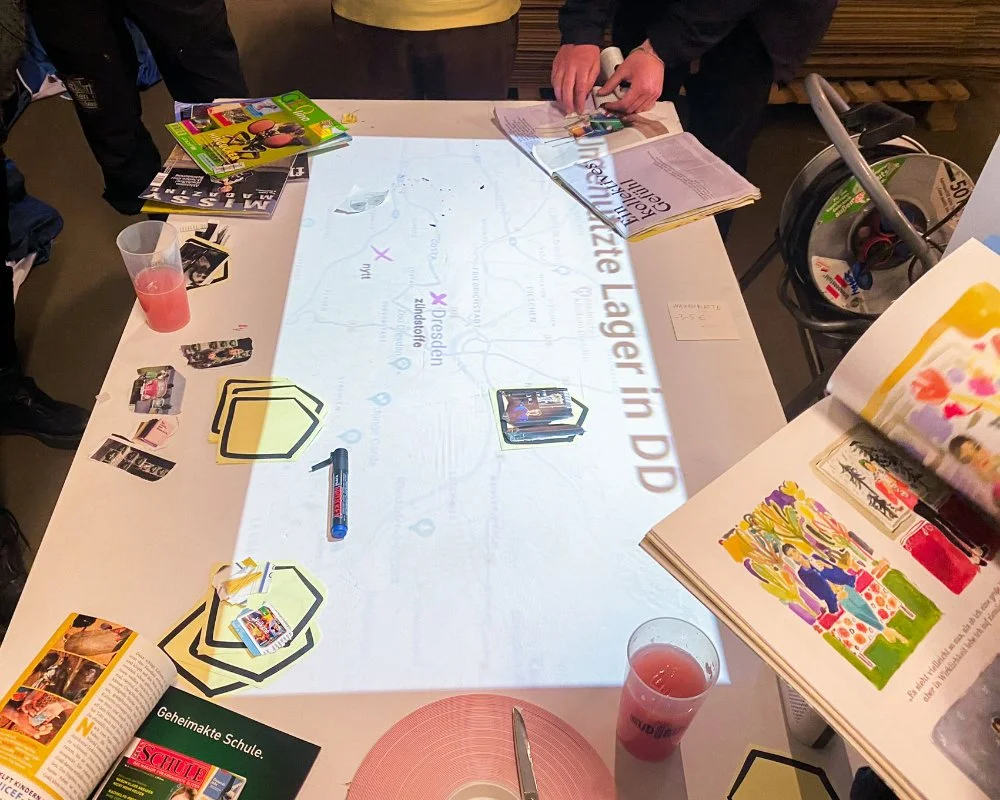
![Projected map with cut-out houses identifying stocks.]()
Co-Mapping Workshops
Identifying used material for reuse in Dresden through collective knowledge
-
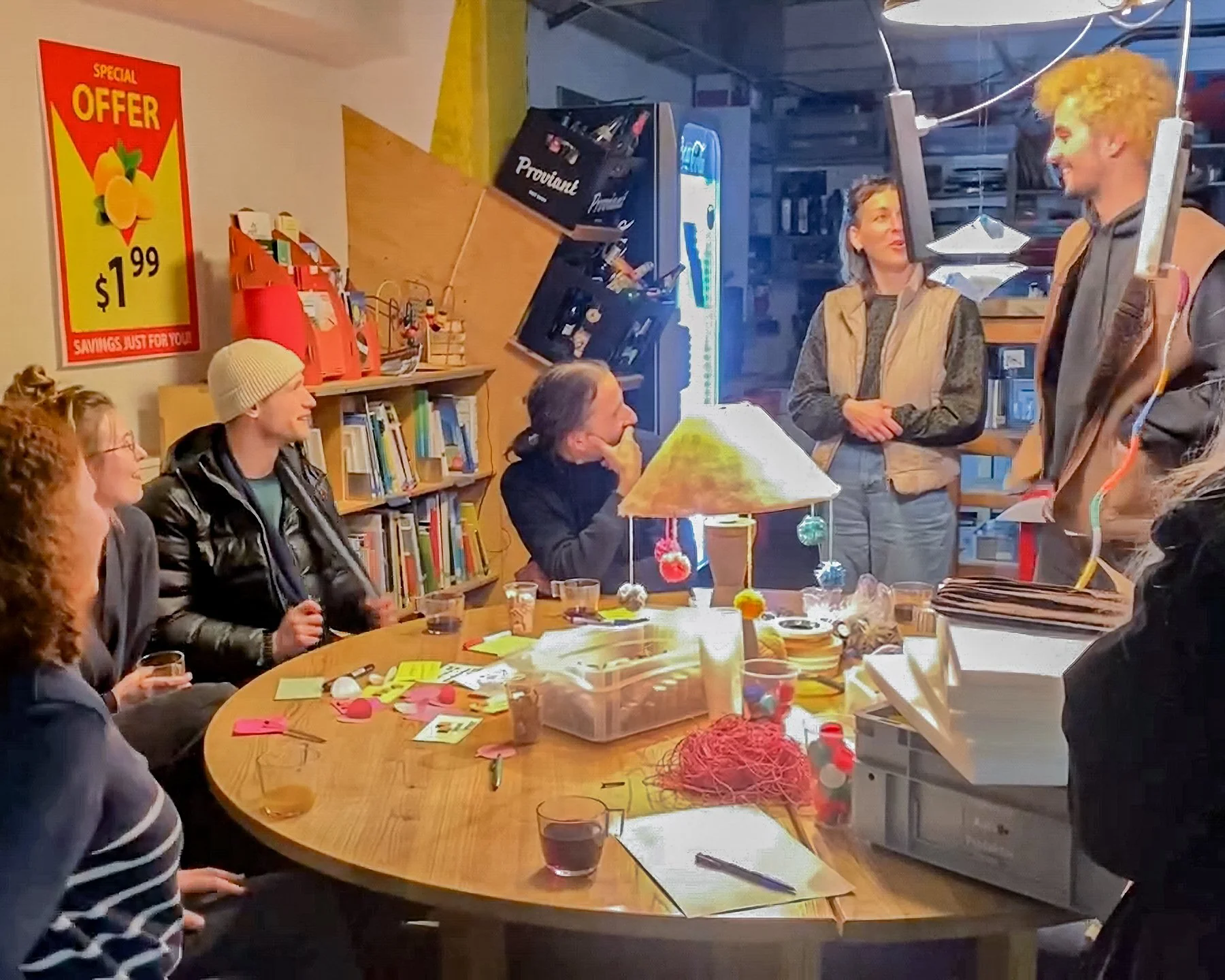
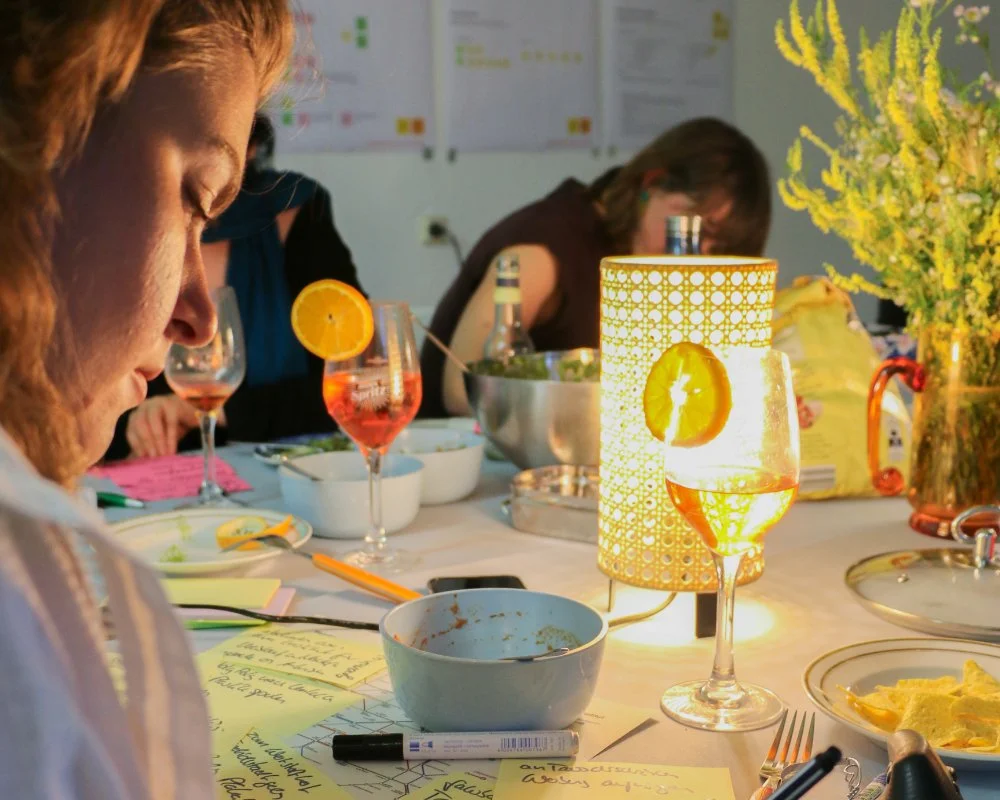
![People around a table with sticky notes]()
User Workshops
Co-developing ideas how Zündstoffe could support more material recirculation in Dresden .
-
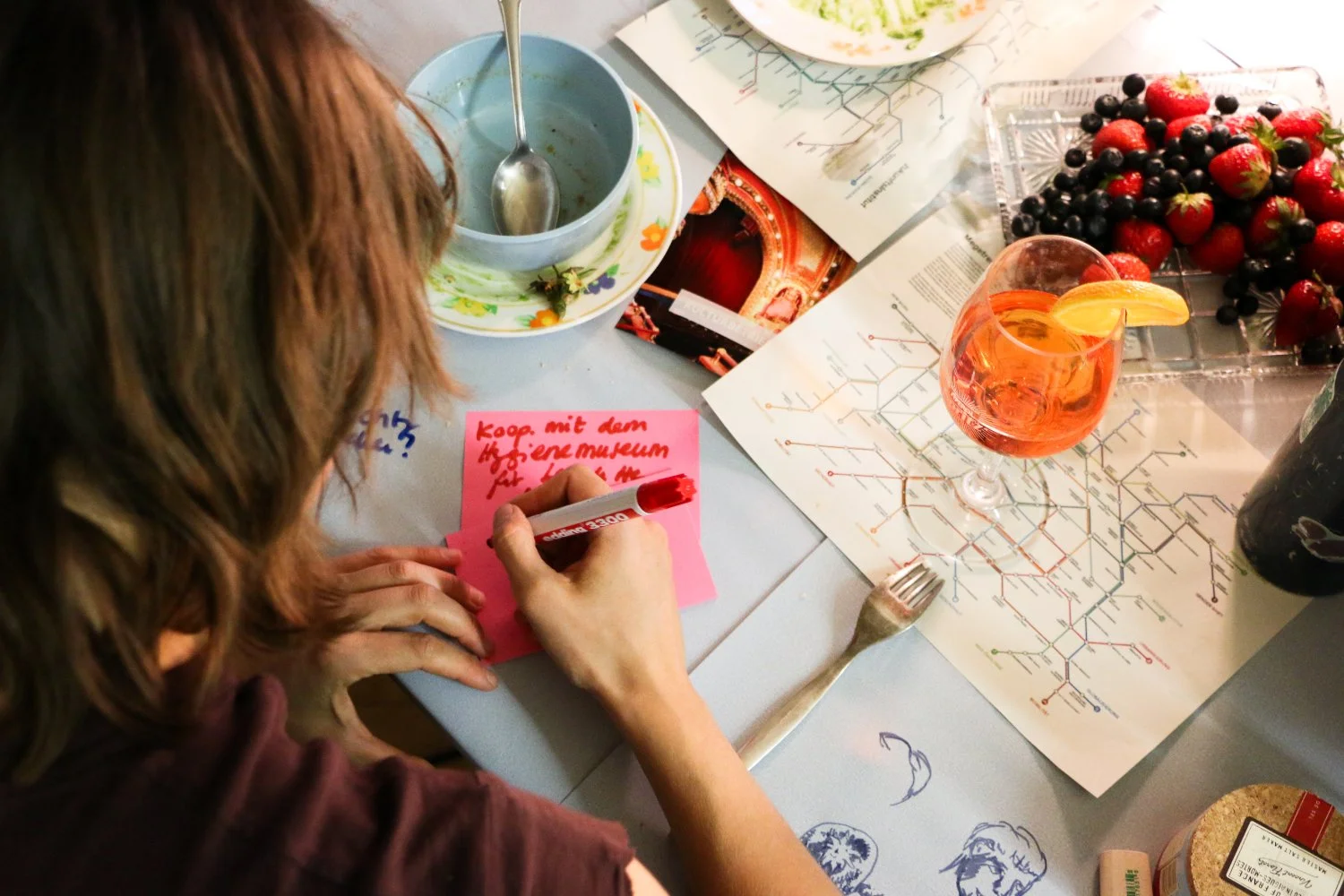
![Close-up of a person writing down on a sticky note on a dinner table]()
Vision Dinner Zündstoffe
Develop a shared vision for material circulation based on research results.
In-Depth-Process
How can industrial take-back design strategies
inform local resource reuse?
1
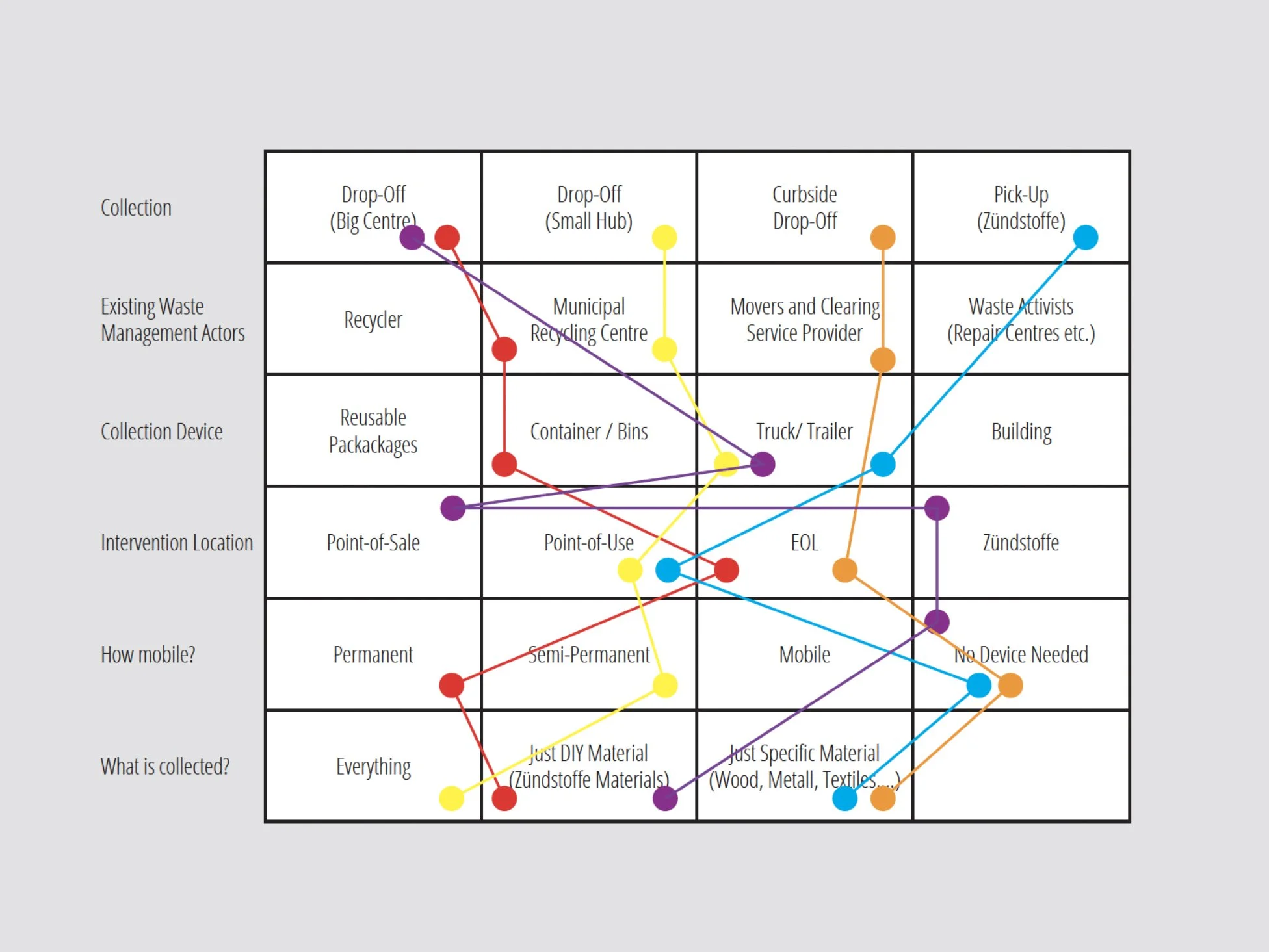
Summarize Best Practices
„My task […] is to create a user experience that is enjoyable and easy, so that people […] not simply throw their items in the trash, which is much quicker, much less costly, and much easier, but rather […] send it to us"
Take-Back Expert
To uncover the nearly untapped library of tried-and-tested design strategies for recirculation of materials the project started with:
a literature review on take-back-systems
2 semi-structured expert interviews with take-back designers on their design process
5 semi-structured user interviews on success factors in existing take-back system designs
Results were summarized in a a toolkit for designing take-back systems that integrates key elements and provides guiding questions and recommendations. The design perspective enables a new focus on the front-end of take-back-systems, highlighting convenience and incentives.
2
Understand Material Recirculation
with Citizen Collectives
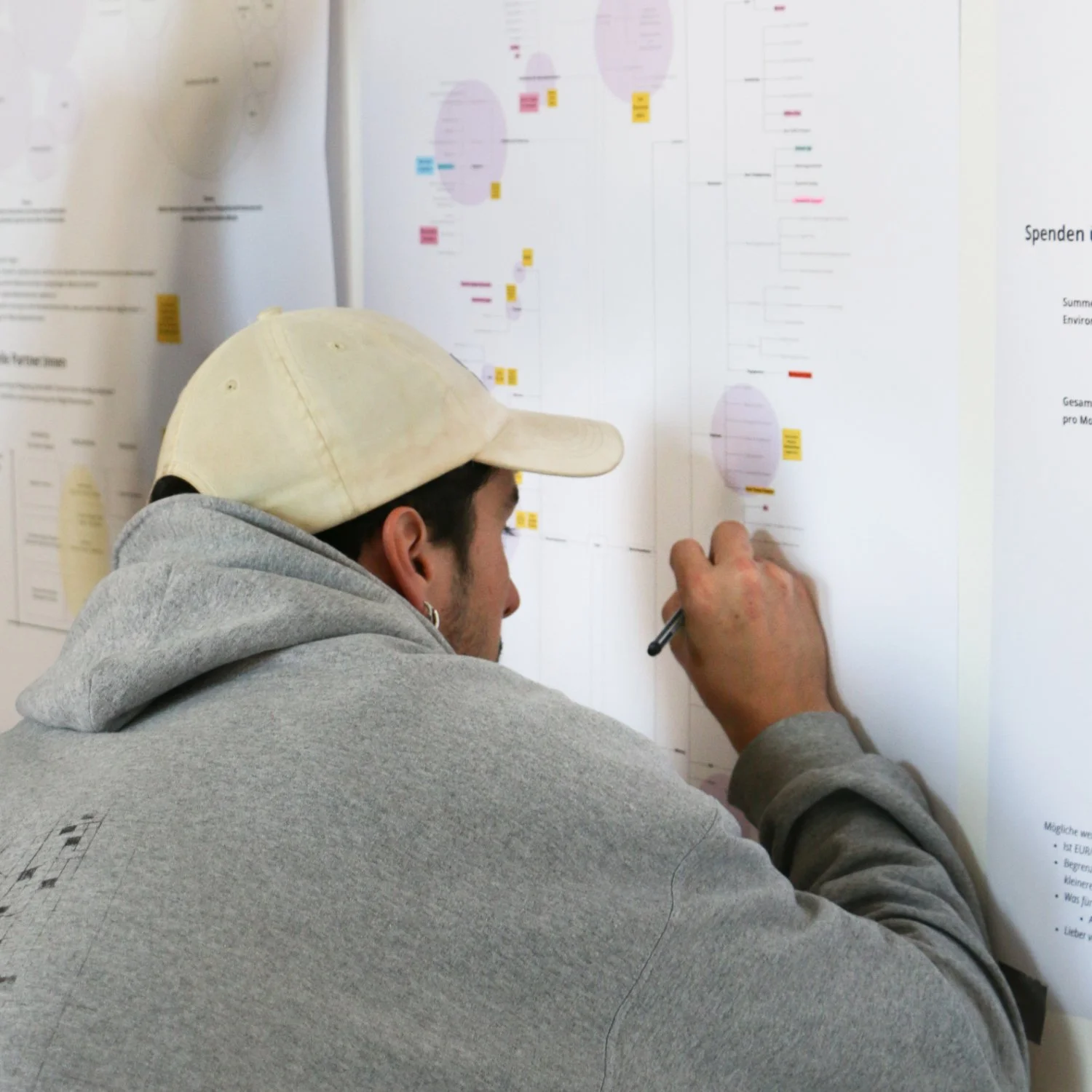
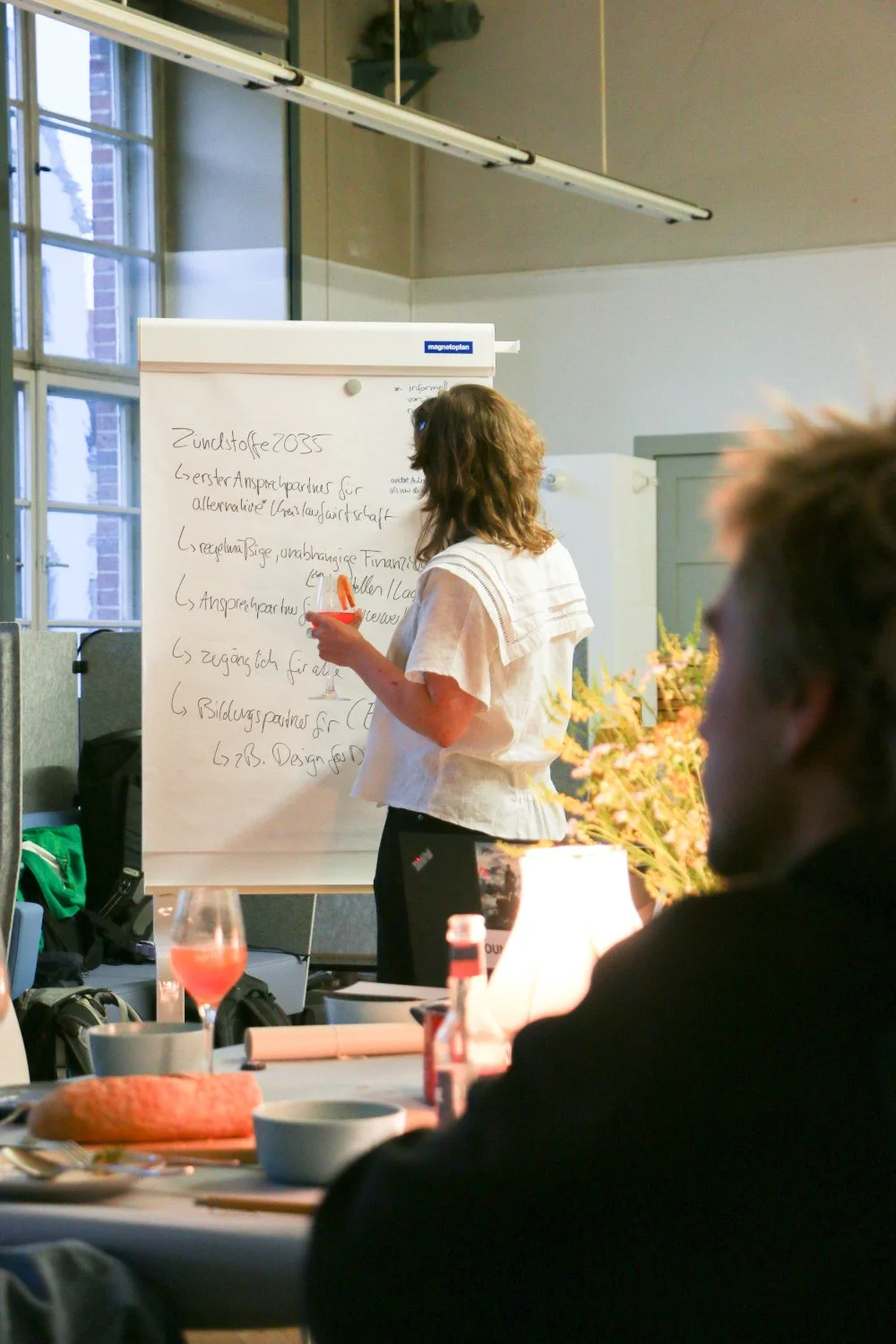
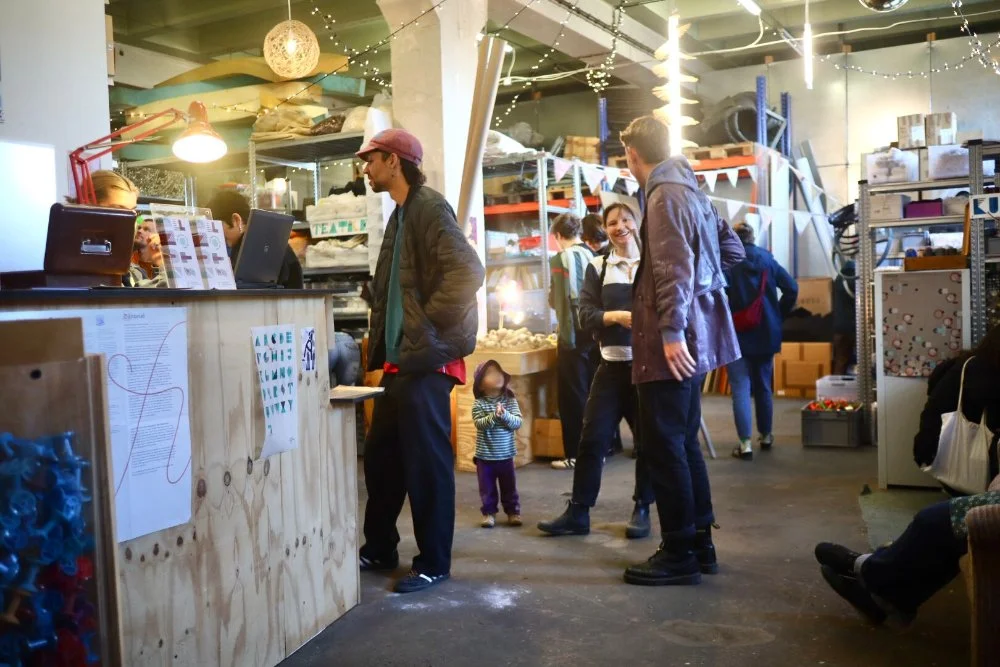
The project partner initiative Zündstoffe recirculates used materials through a warehouse once a week. Opportunities for a Zündstoffe-owned take-back system were scoped through:
Analysis of donations, sales and CO₂-equivalent data
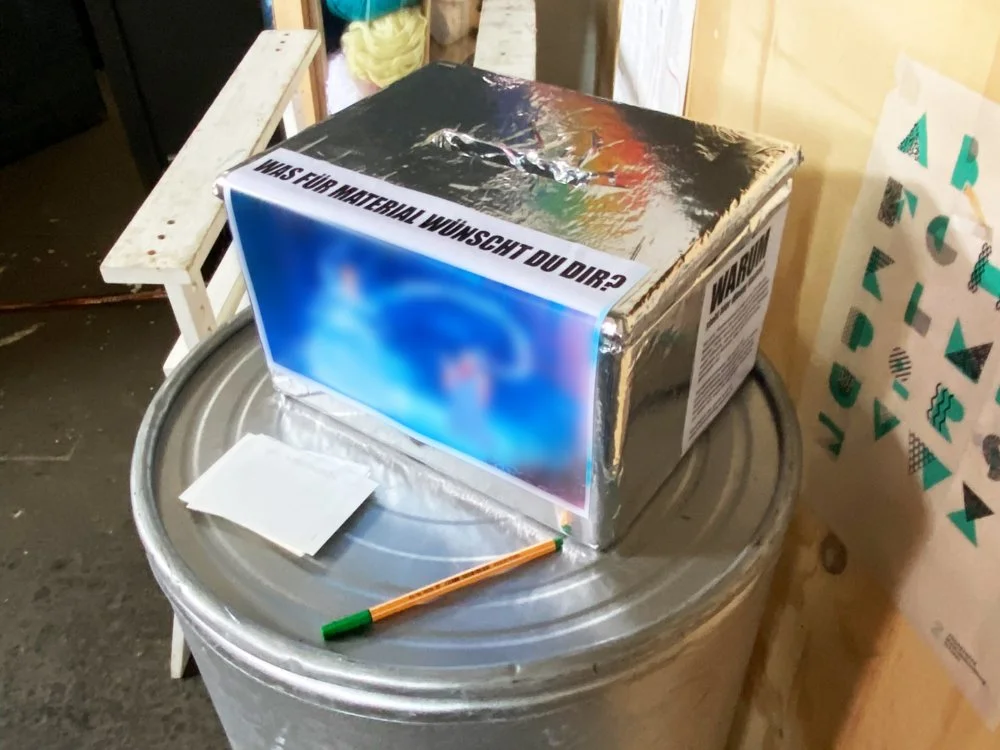
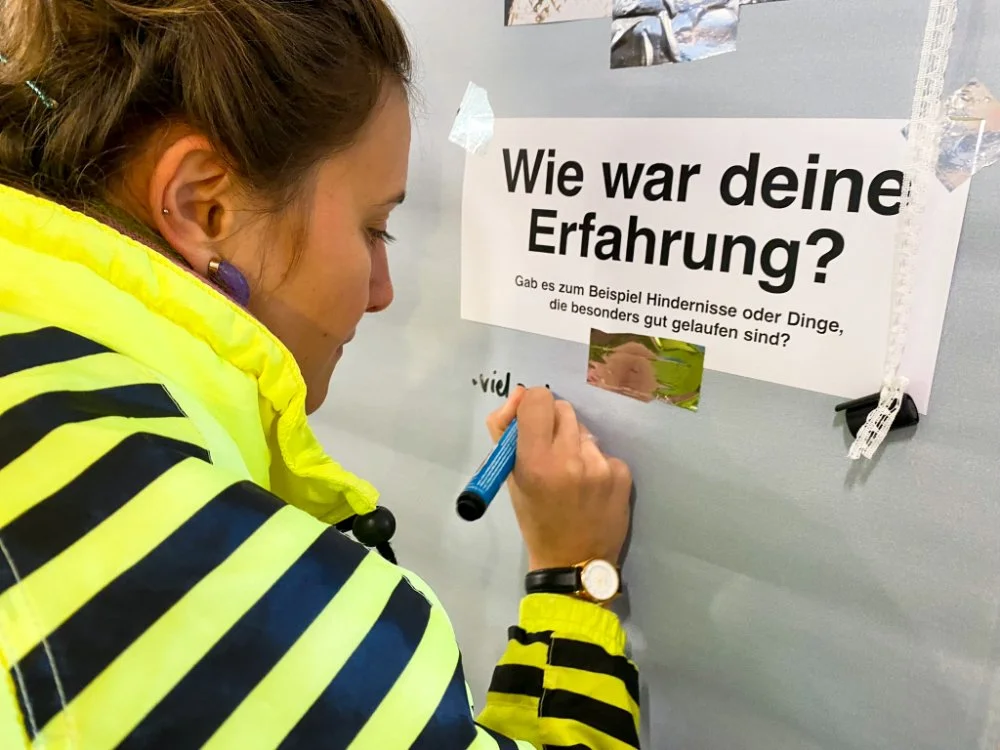
2 warehouse surveys on donation experience and desired materials,
2 workshops on urban stocks to identify collaboration partners and
1 co-design workshop with users.
Discussing the results in a vision dinner with Zündstoffe, the goal for the system was set to primarily raise awareness for unused urban stocks while also encouraging reuse while increasing outreach and turnover for Zündstoffe.
-
![Box on counter with small cards]()
Warehouse Survey “Wish Material”
-
![Person writing down on a poster]()
Warehouse Survey “Donation Experience”
-
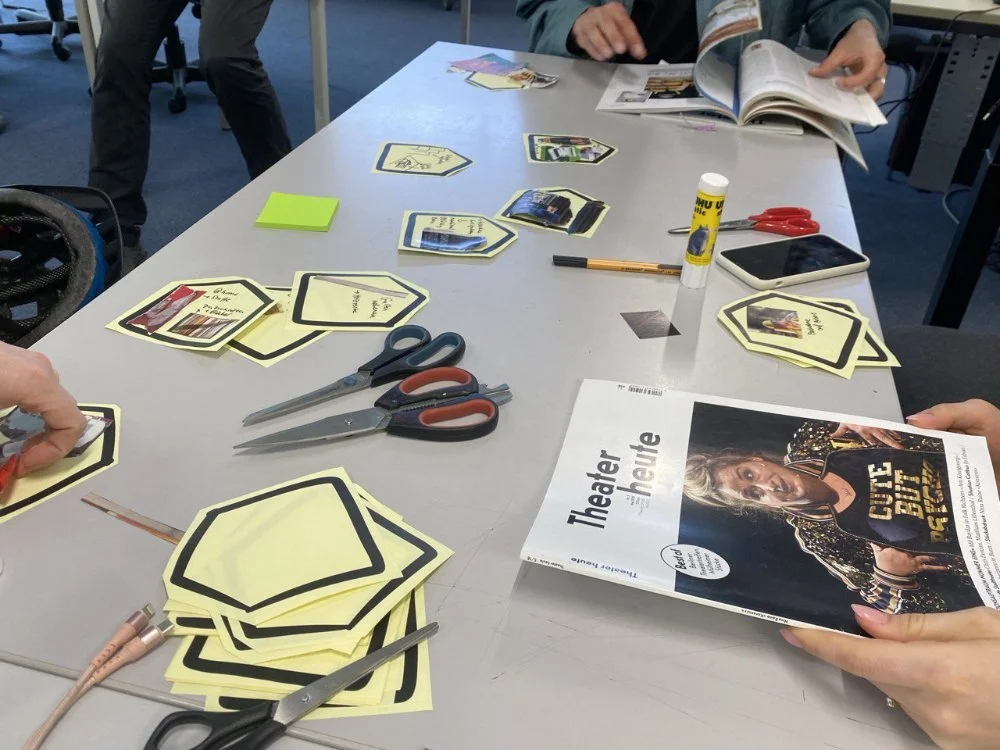
![Close-up of people doing collages on small printed houses]()
Workshop “Hidden Urban Stocks” @SLUB
-
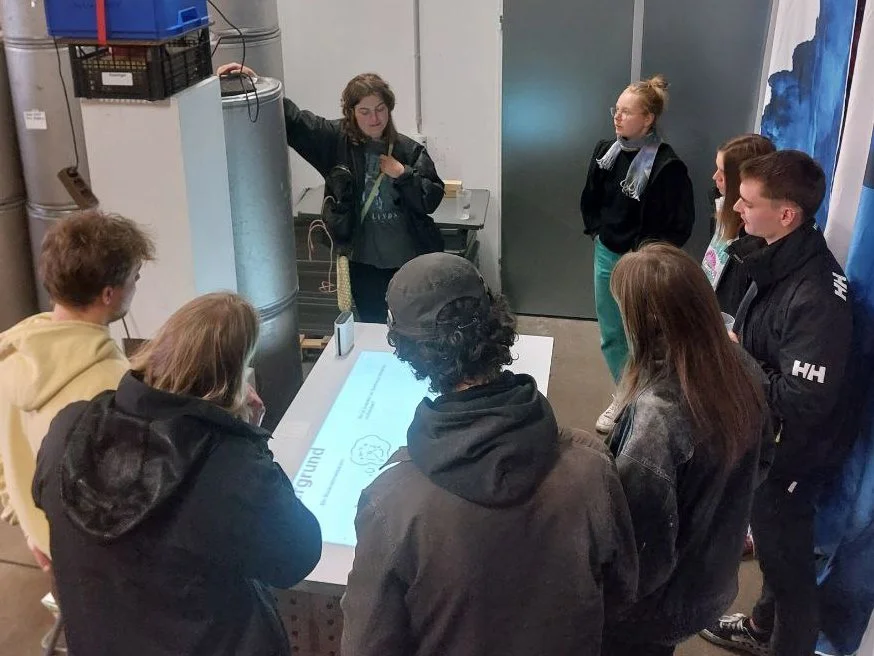
![Overhead shot of people around a projected map on a table]()
Workshop “Hidden Urban Stocks” @Lagersause
-
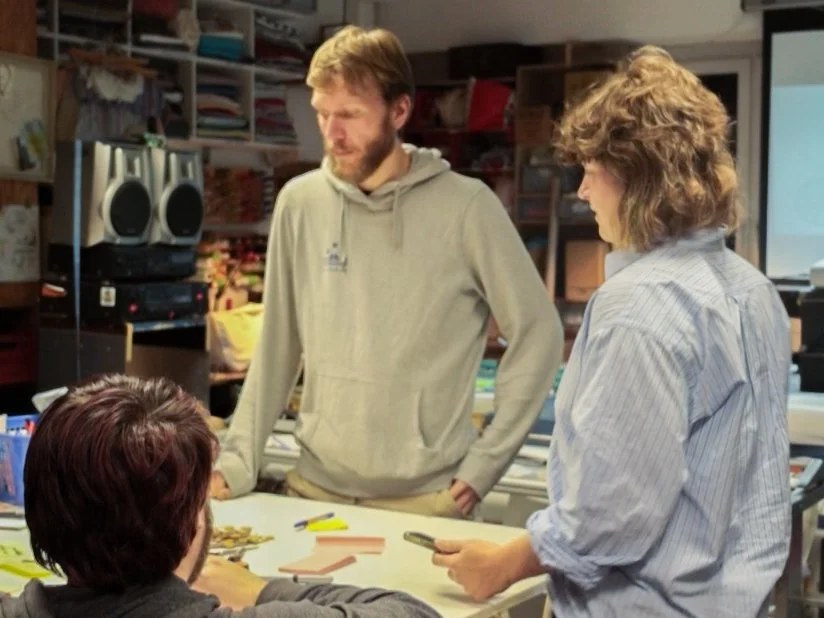
![Three people on a table with sticky notes]()
Co-Design Workshop with Users
-
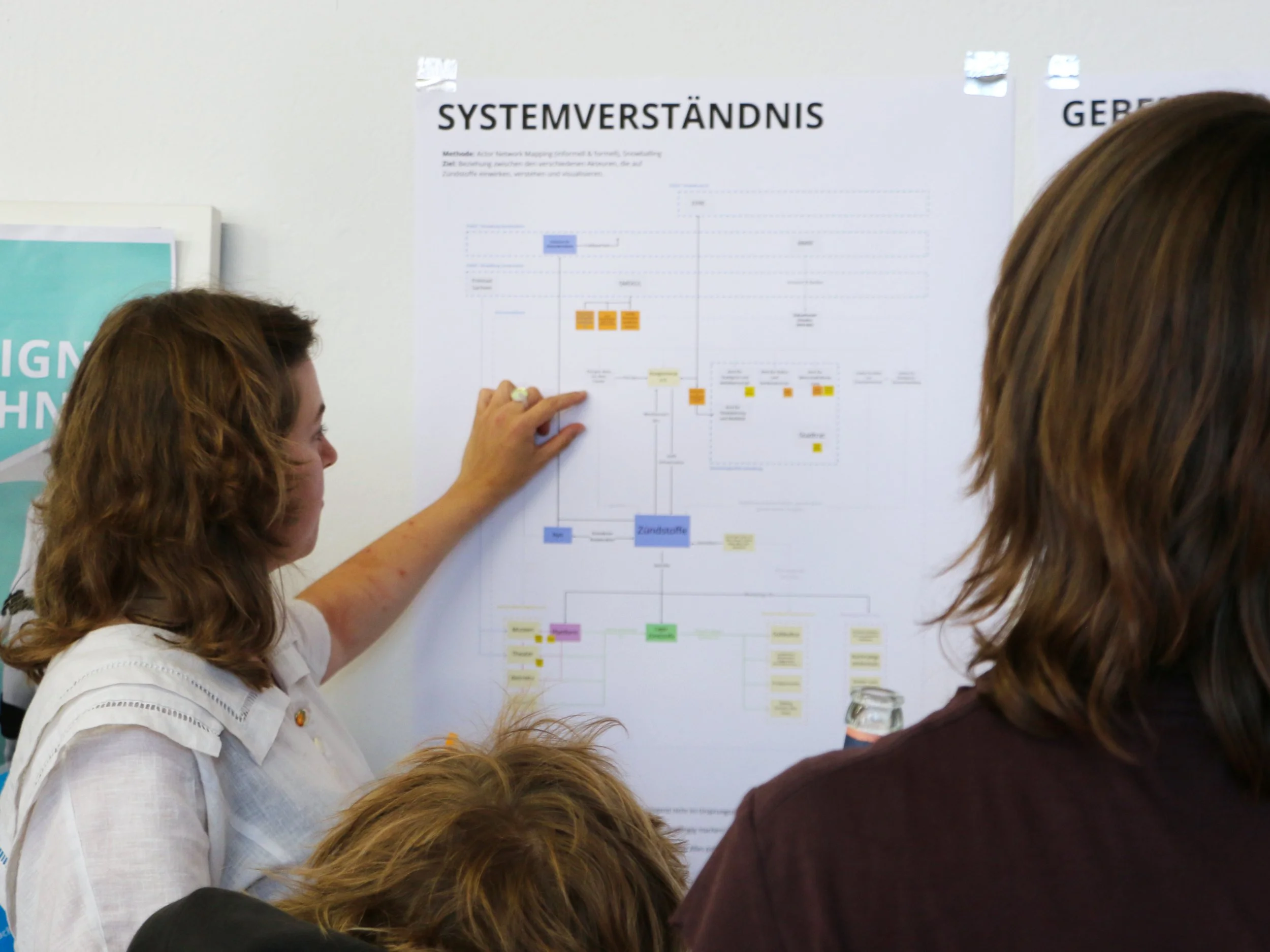
![Person pointing to a poster with an analysis]()
Business Case Analysis
3
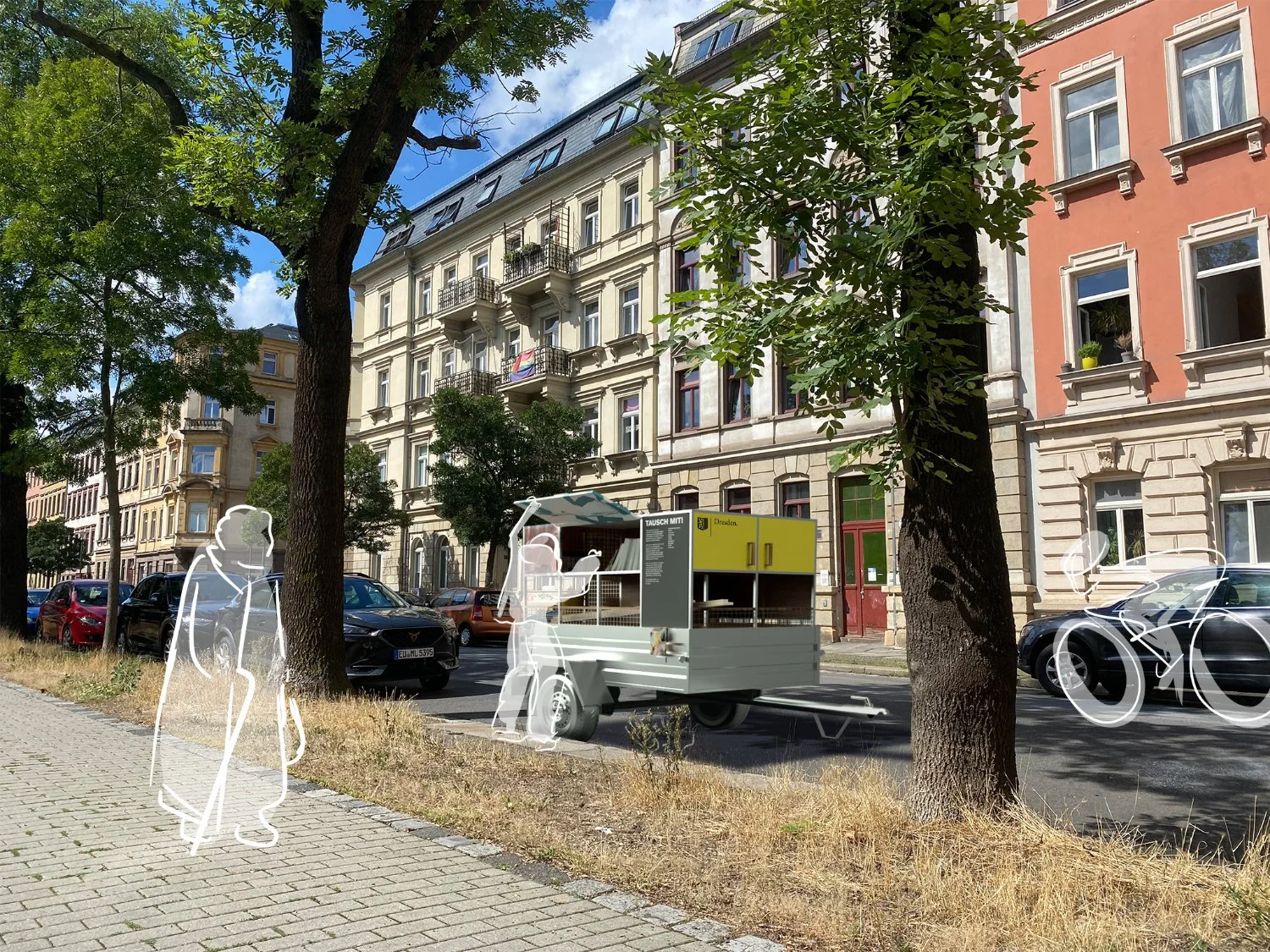
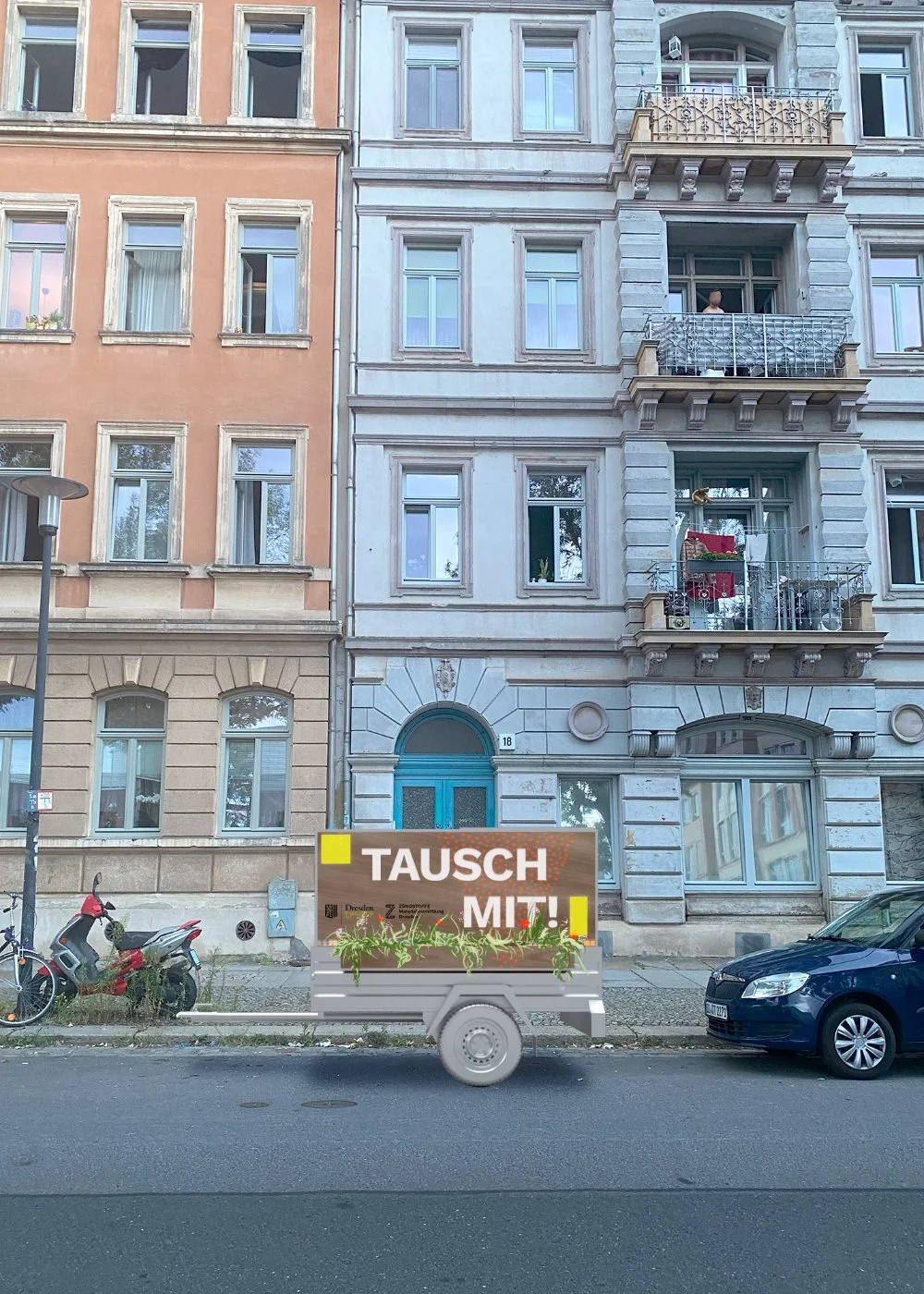
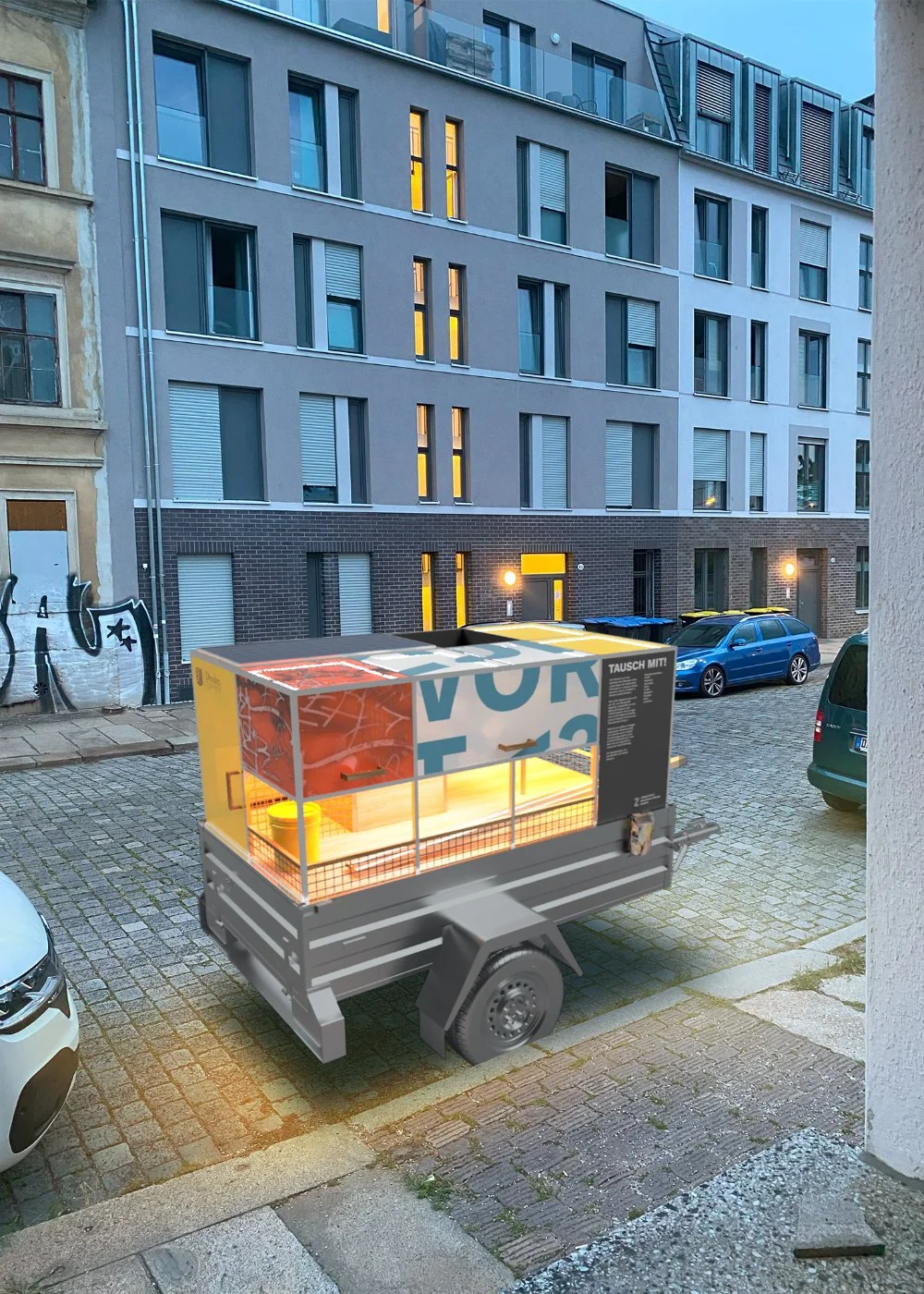
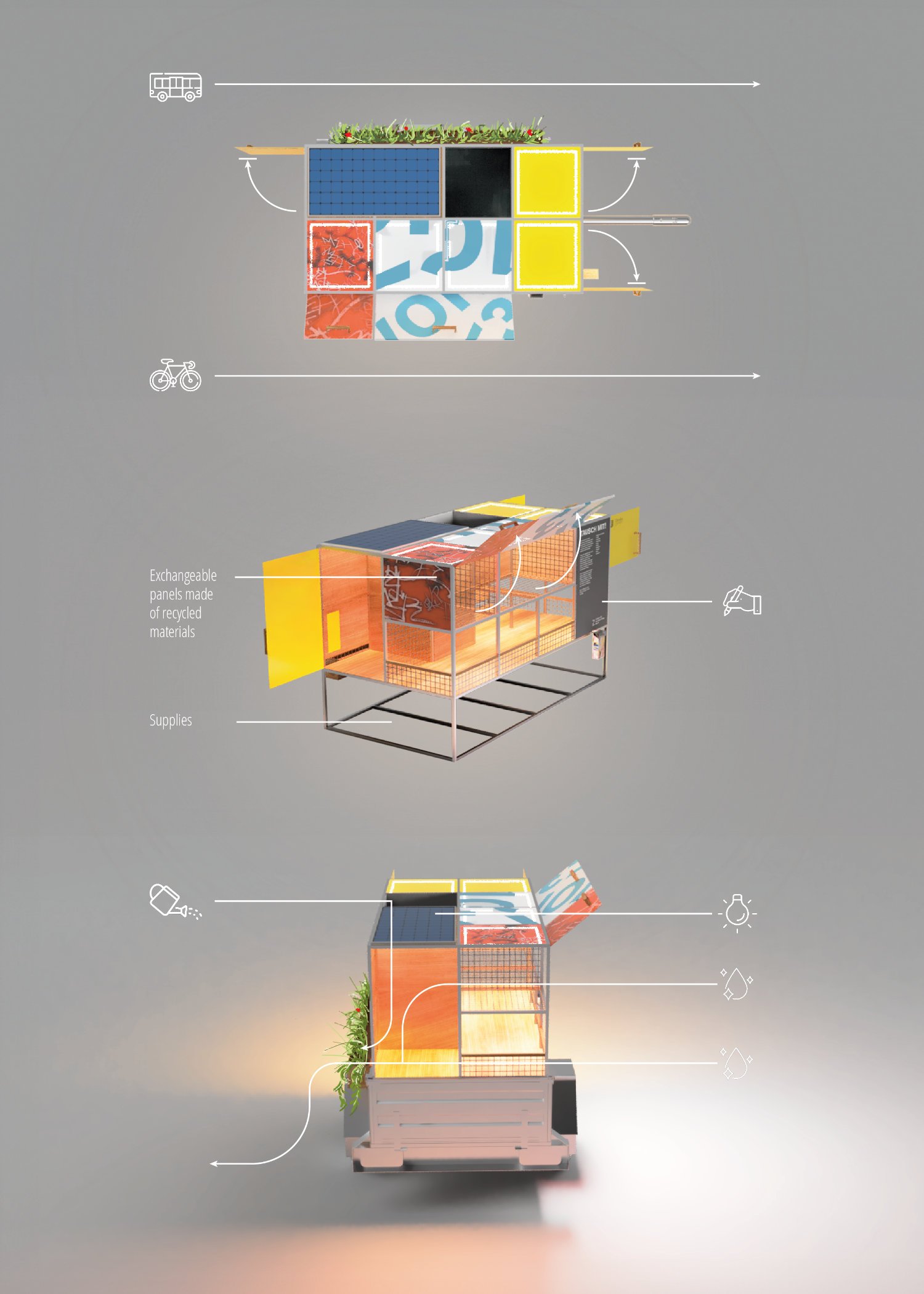
A Mobile Sharing Shelf
to Encourage Resource Reuse
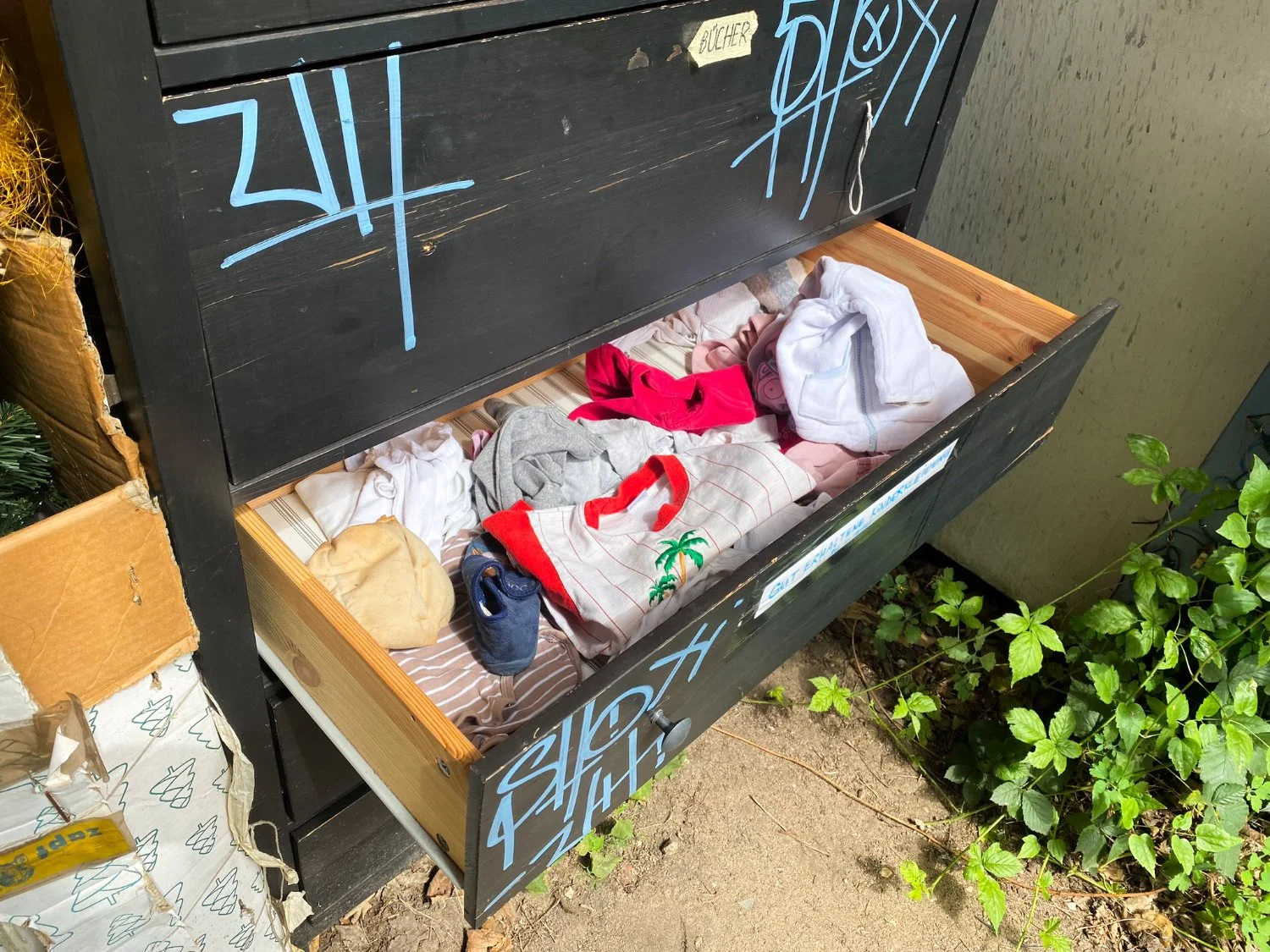
Project insights were then applied to design a take-back system for Zündstoffe, that could be realized by the citizen collective within the next two years.
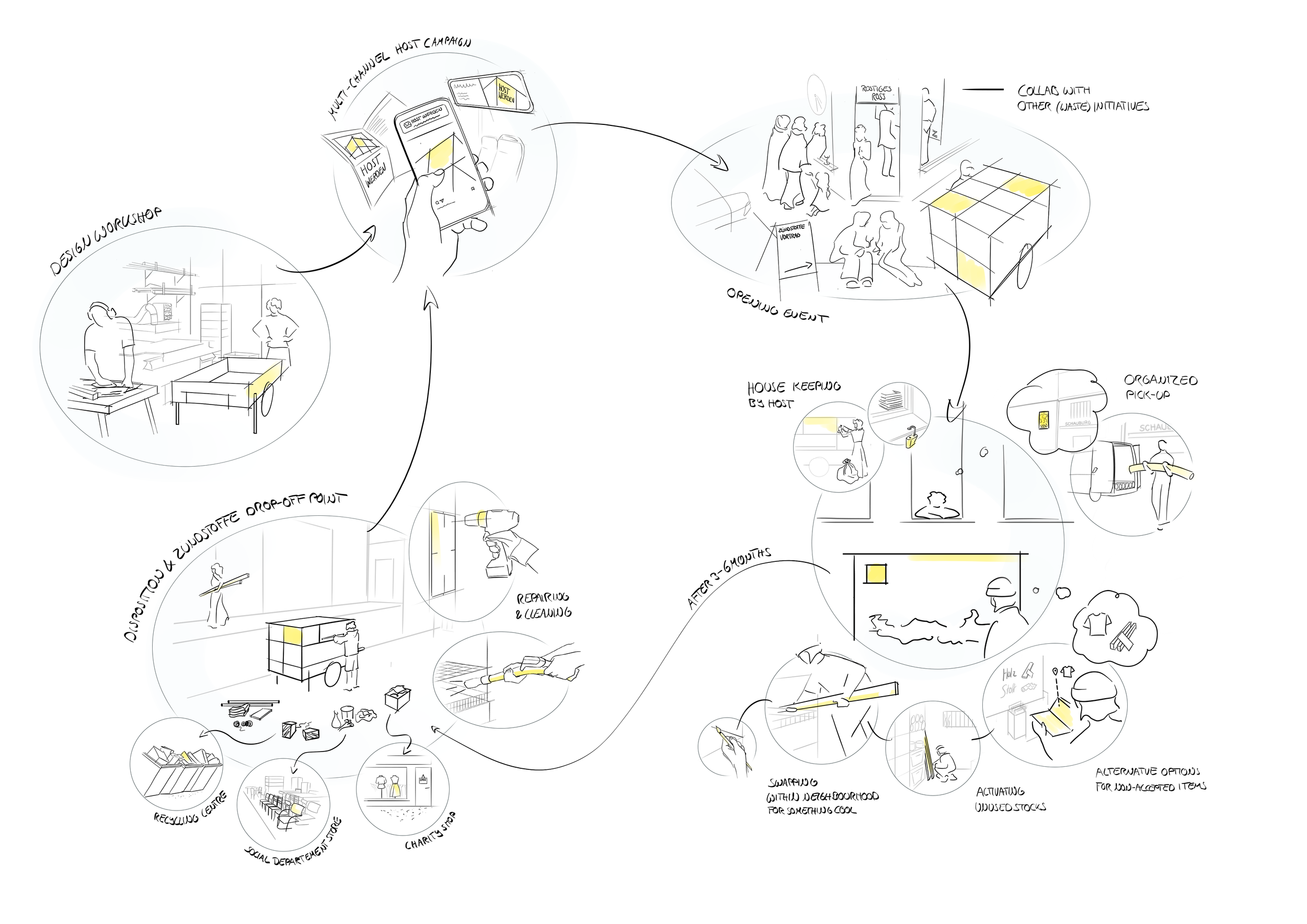
Constructed from reused materials in a circular design workshop with Zündstoffe and local education partners, it can be rented by institutions, collectives or residents for three to six months.
While in a neighbourhood, it offers daily opportunities to swap materials in existing parking spaces. At the end of the rental period, Zündstoffe and the municipal waste service collect any remaining items and prepare the shelf for its next location, raising awareness of their work and exploring sites for more permanent solutions.
You would like
to know more?
Have a look at the project proposal (German) or write me a short message.
I’d love to hear from you!