Prototyping for Collaboration
Sustainability transitions require collaboration across disciplines and with diverse stakeholders. Design artefacts such as sketches and prototypes can help create common ground without requiring everyone to share the same perspective.
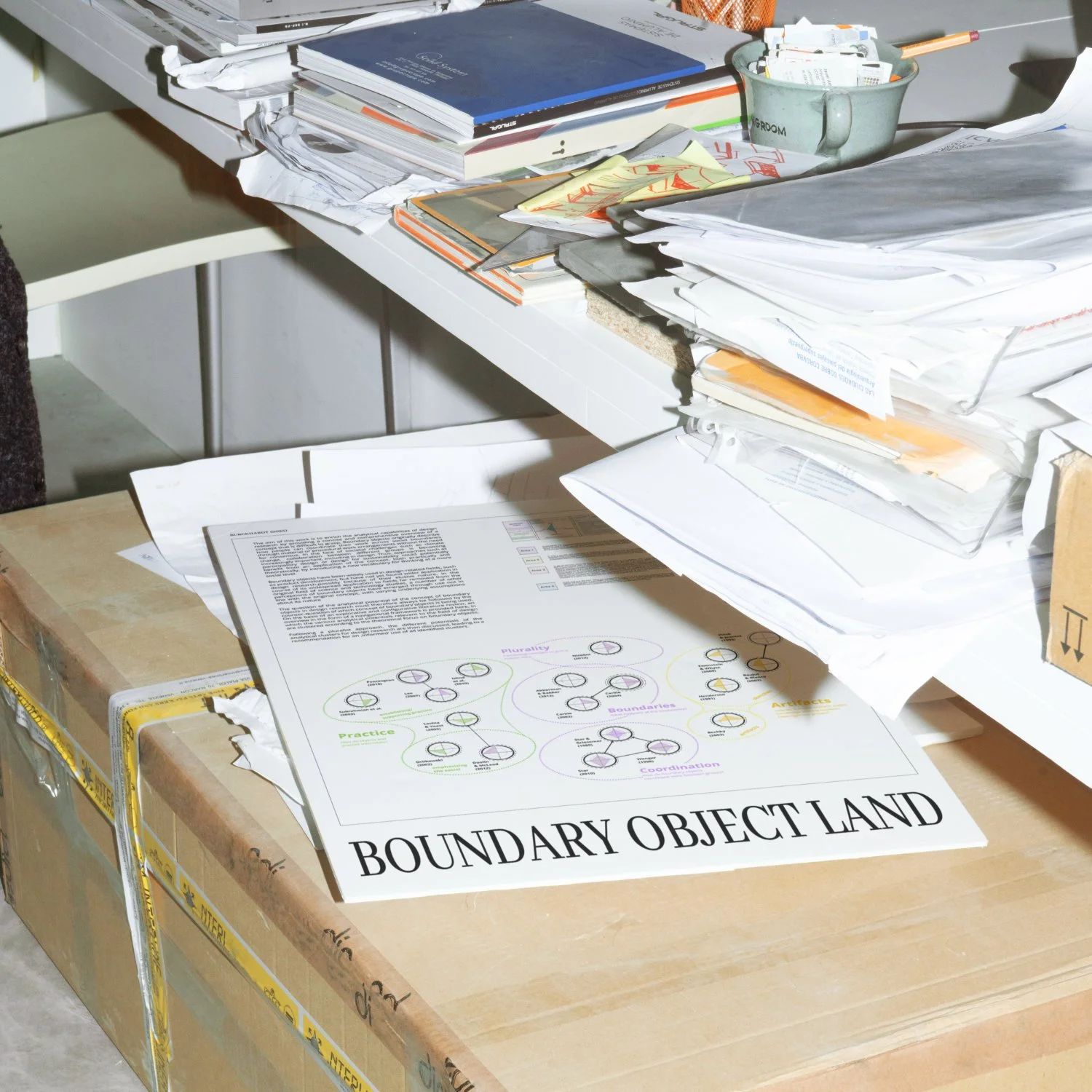
This theoretical research project explores boundary objects as a lens for understanding this coordinating role of design artefacts. It maps the concept’s different theoretical perspectives and asks how boundary object theory can contribute to design research, particularly participatory design.
Project Type: Research Thesis
Project Period: 06/2022 - 3/2023
Project @ German Design Graduates:
Conceptual Cartography. Mapping Theoretical Perspectives on Boundary Objects for Design Research.
-
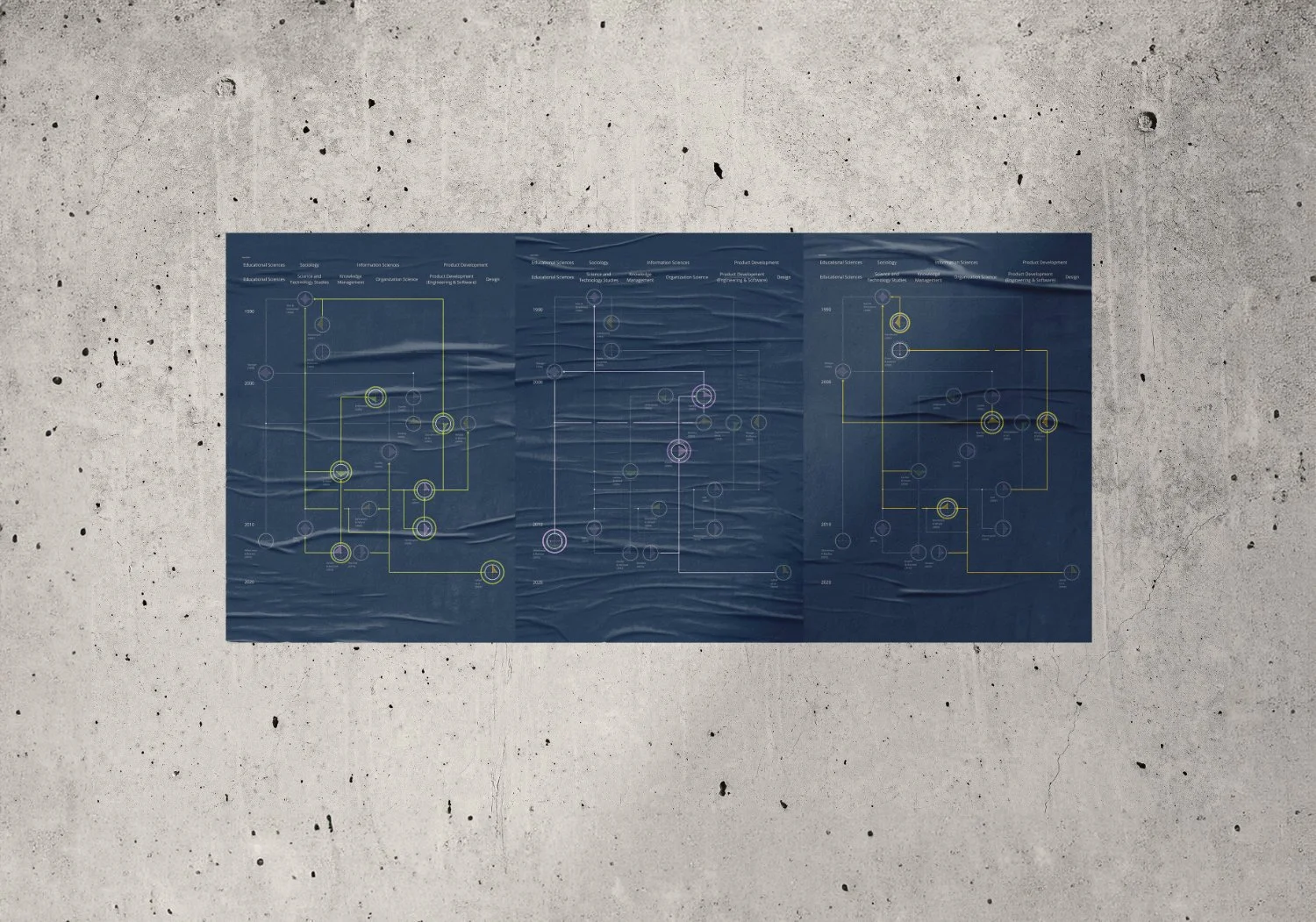
![Poster with a theory pedigree along different fields with significant contributions highlighted]()
Citation Analysis
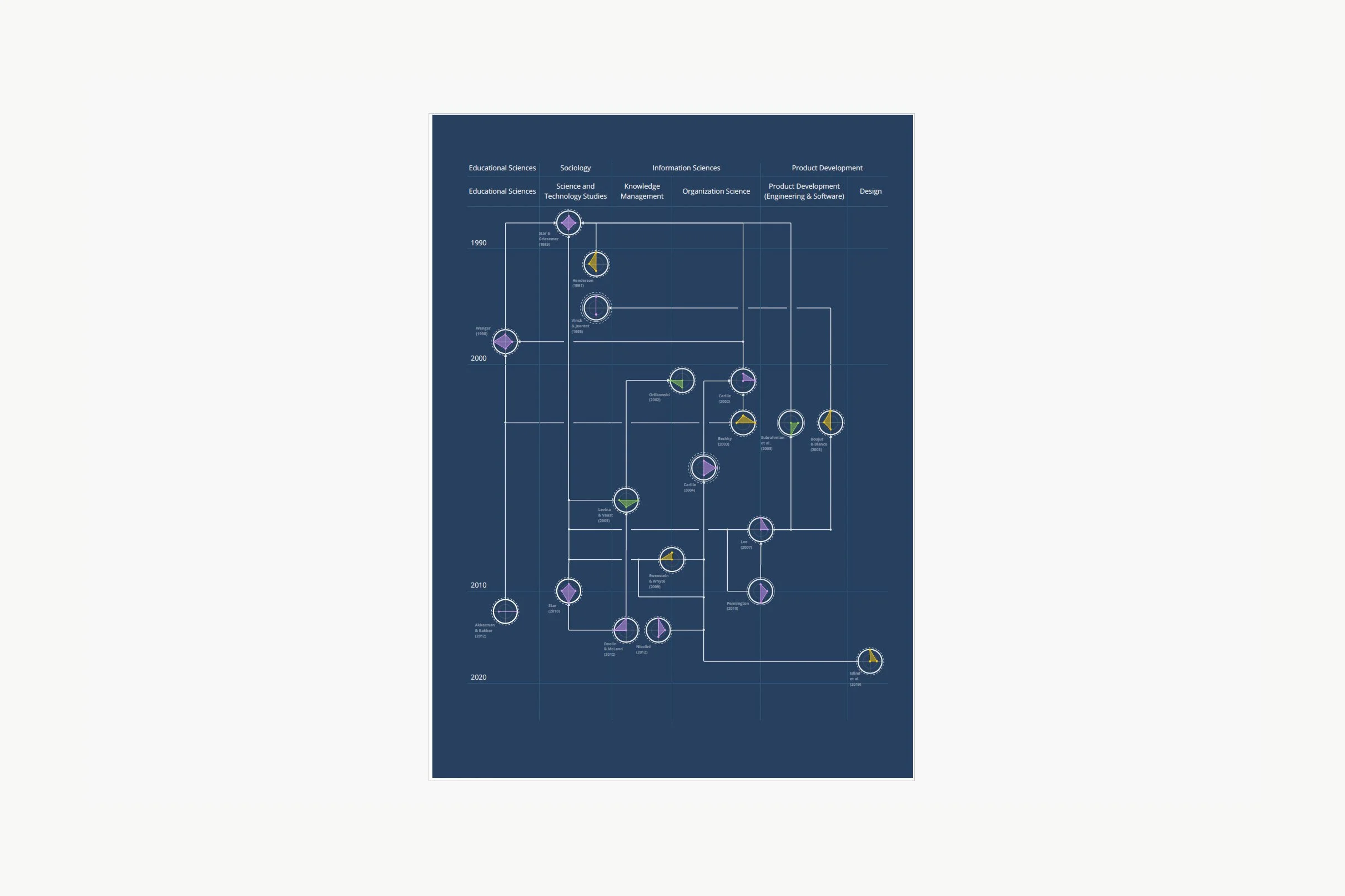
Tracing the development and application of boundary object theory in fields relevant for design research
-
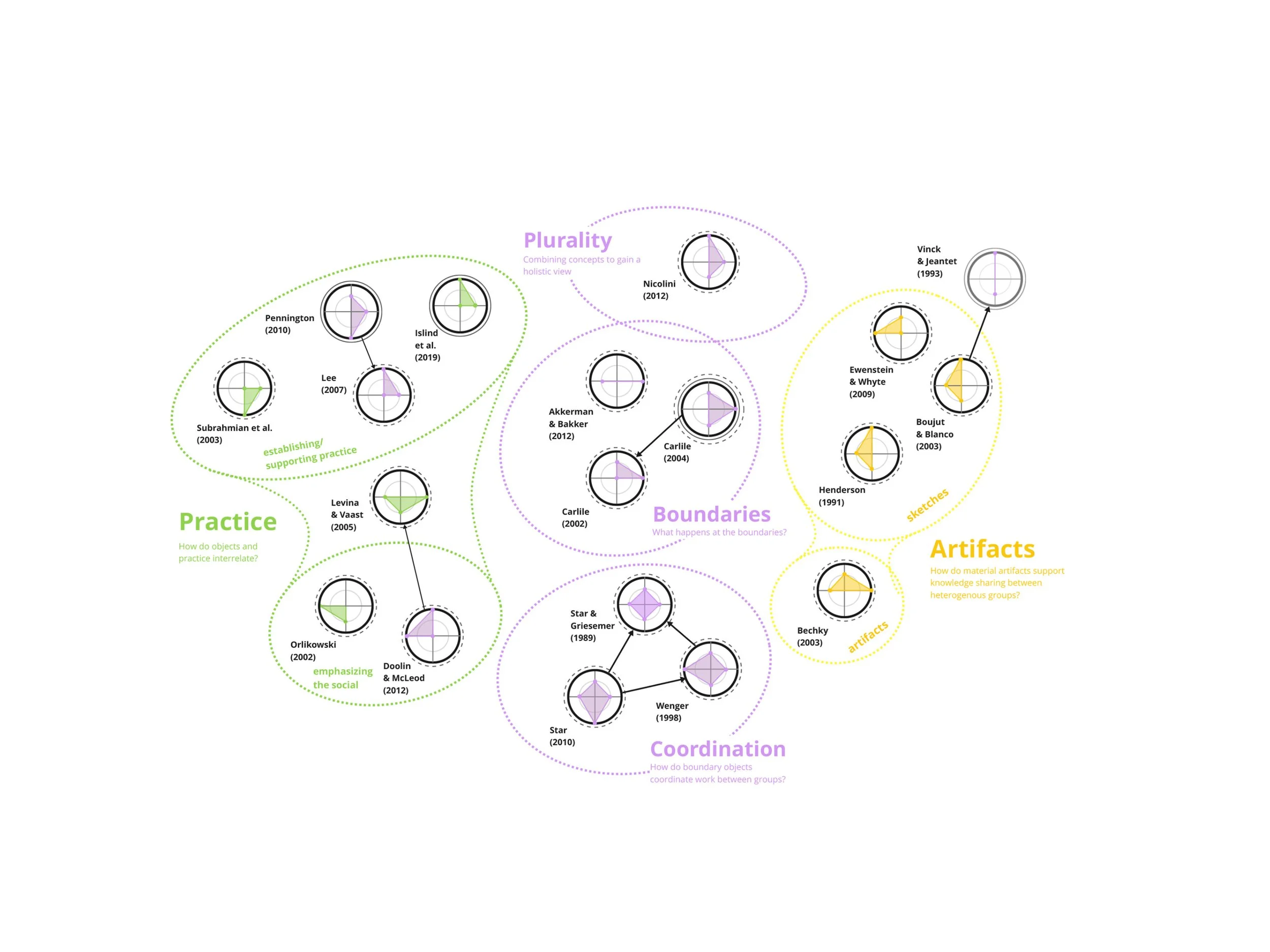
![Overview of different identified clusters of boundary object theory development]()
Navigational Framework
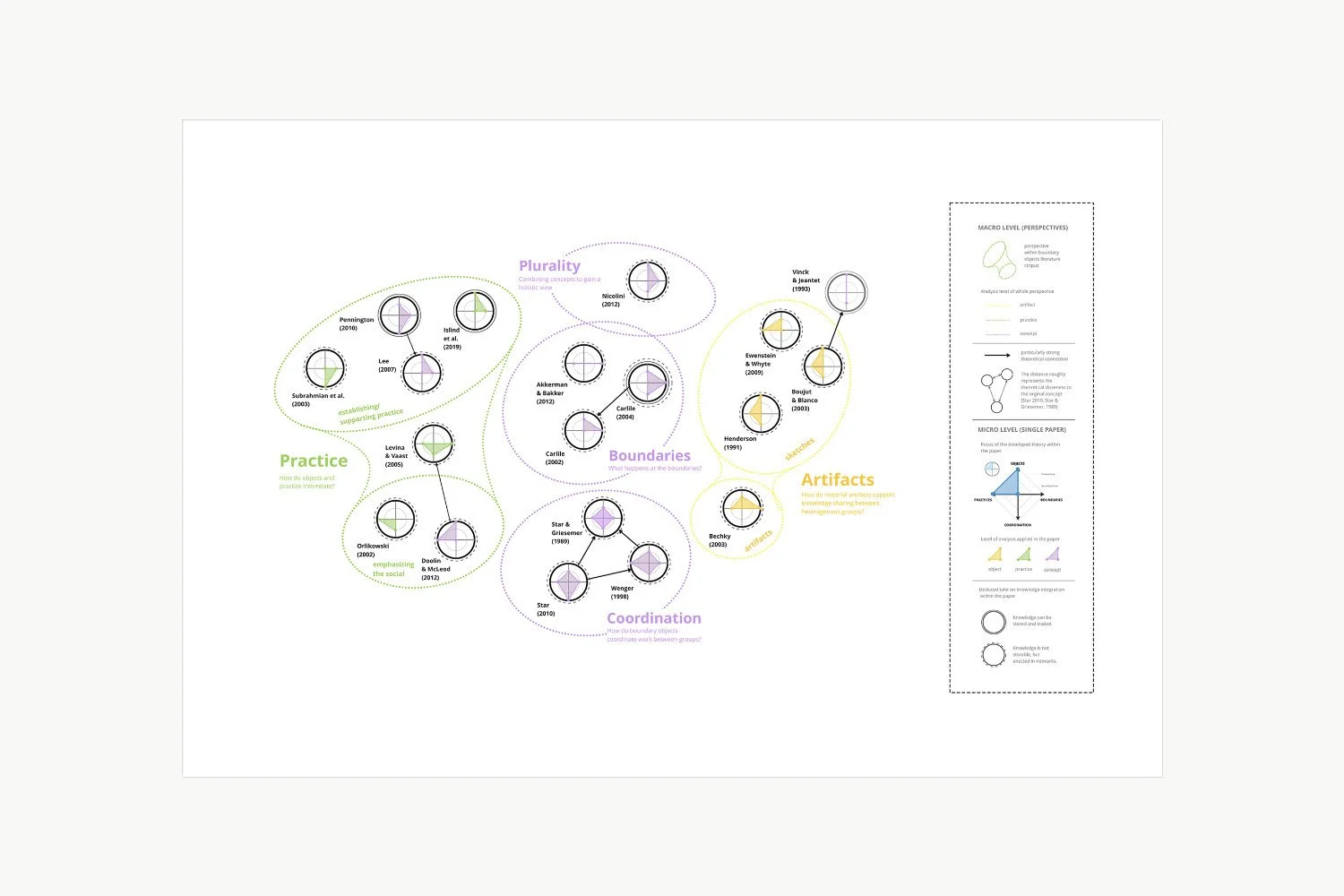
Graphical overview of different applied boundary object theory for design researchers
-
![Table showing identified clusters of boundary object theory application and how meaningful they are cited citations in design researchers]()
Mapping Opportunities
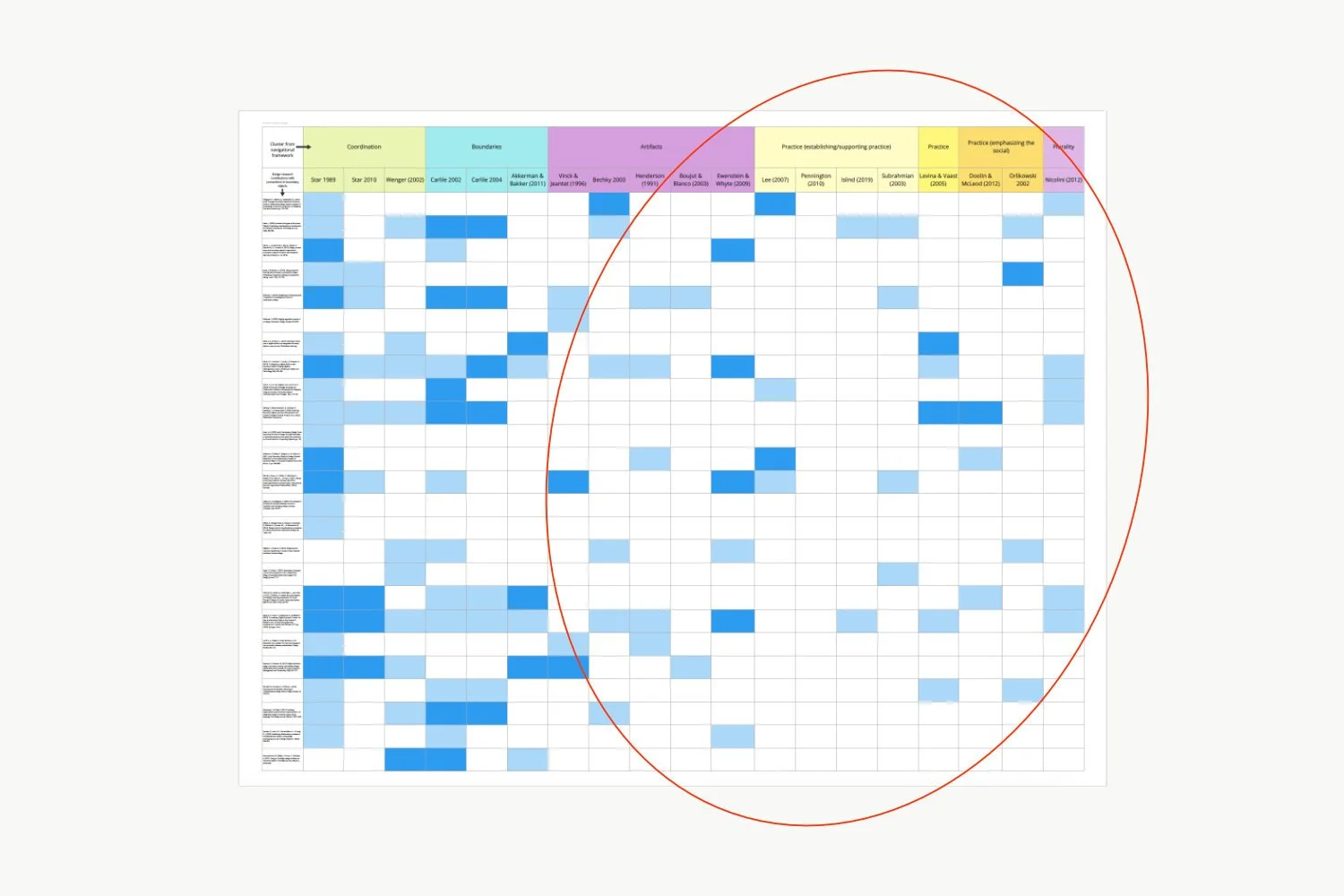
What parts of boundary object theory are design researchers missing out on?
In-Depth-Process
How can boundary object theory contribute to design research?
1
Trace different understandings
of boundary objects
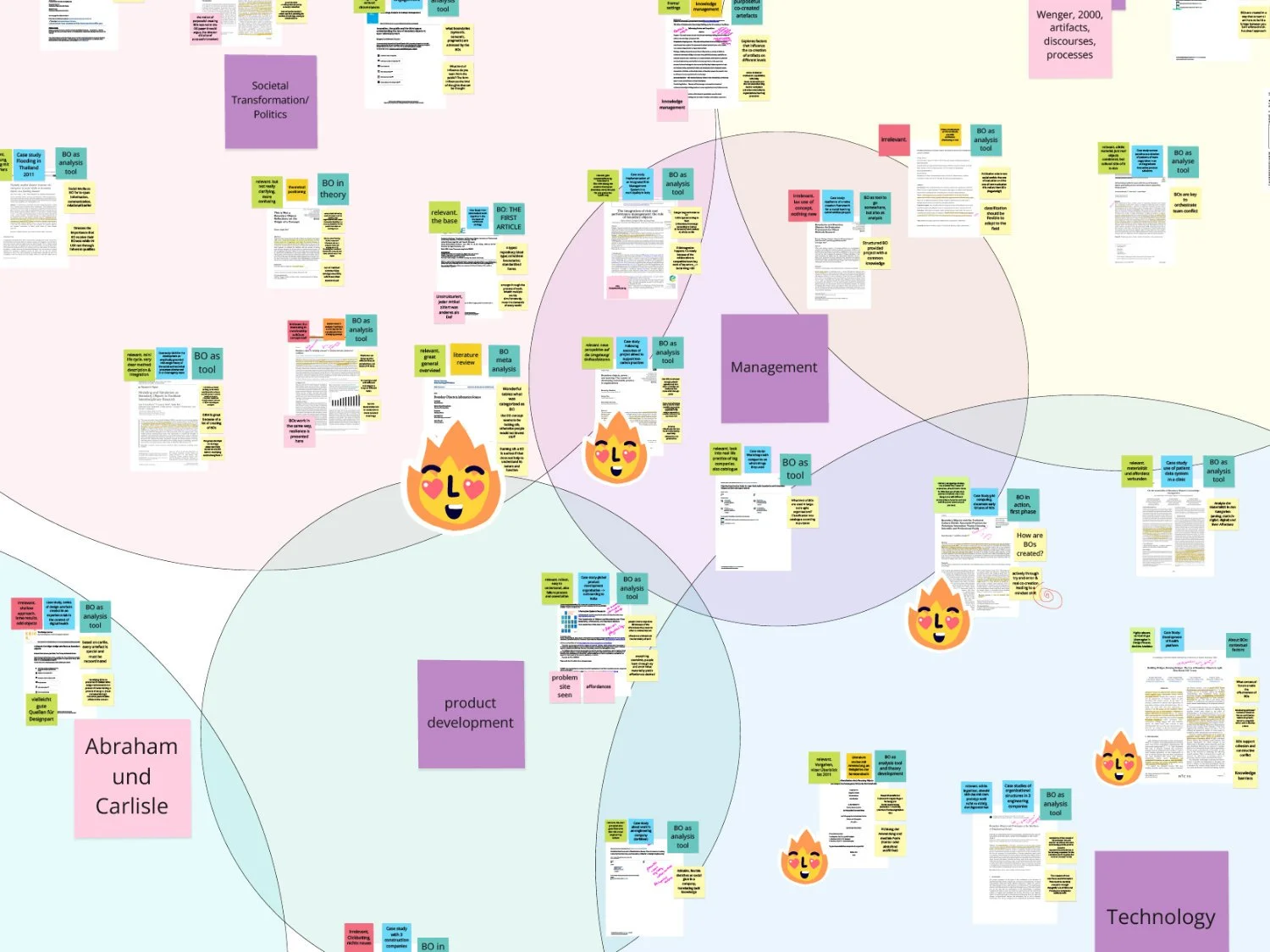
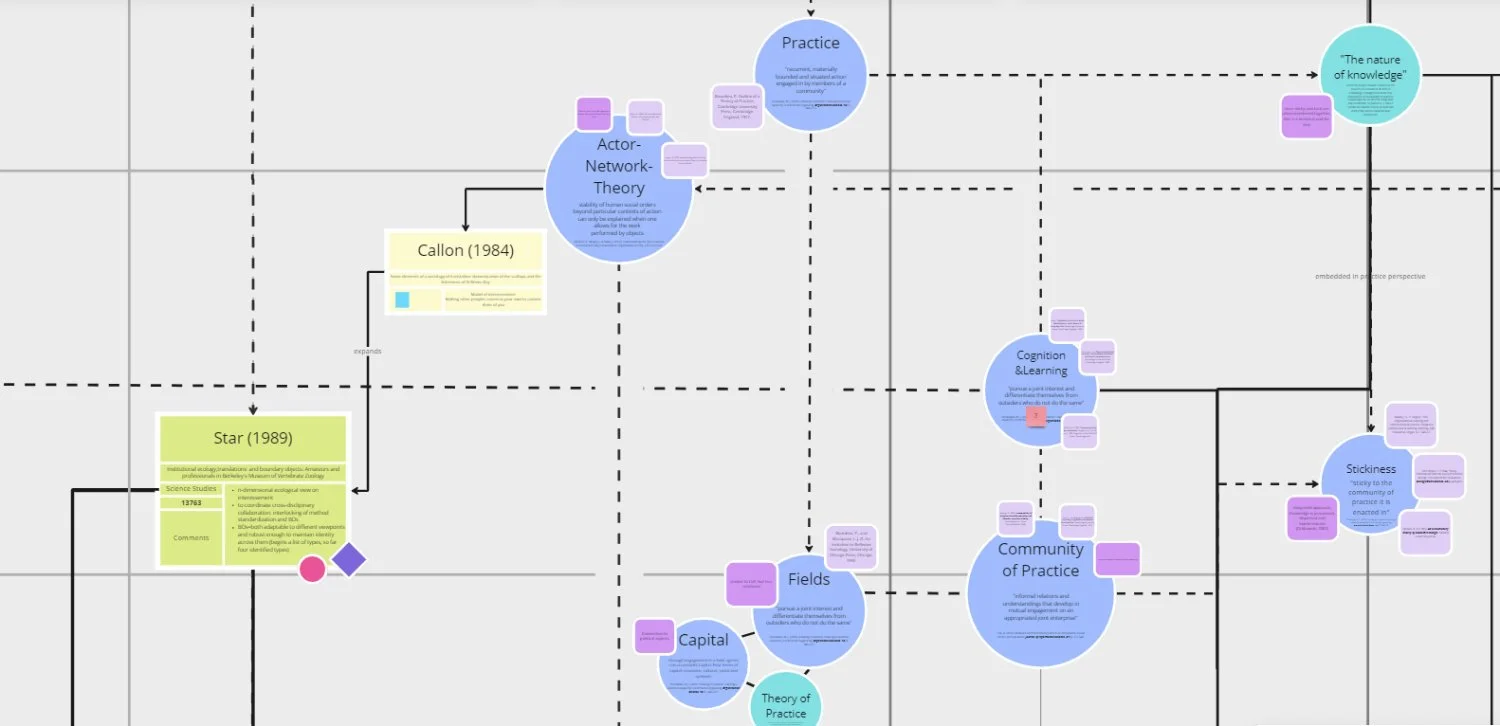
Since its introduction by Susan Leigh Star and James R. Griesemer 1989 in science and technology studies, the concept of boundary objects has been applied across disciplines, from management and product development to transition research. Along the way, different theoretical understandings have emerged, each offering different analytical potentials.
Moving from design research to adjacent fields the application of boundary object theory was analyzed. This resulted in the overview Meaningful Citation Tree, tracing the development and adjacent theories influencing the different understandings of boundary objects for collaborations in sustainability transitions.
2
Navigate different boundary object concepts and their potential for design research
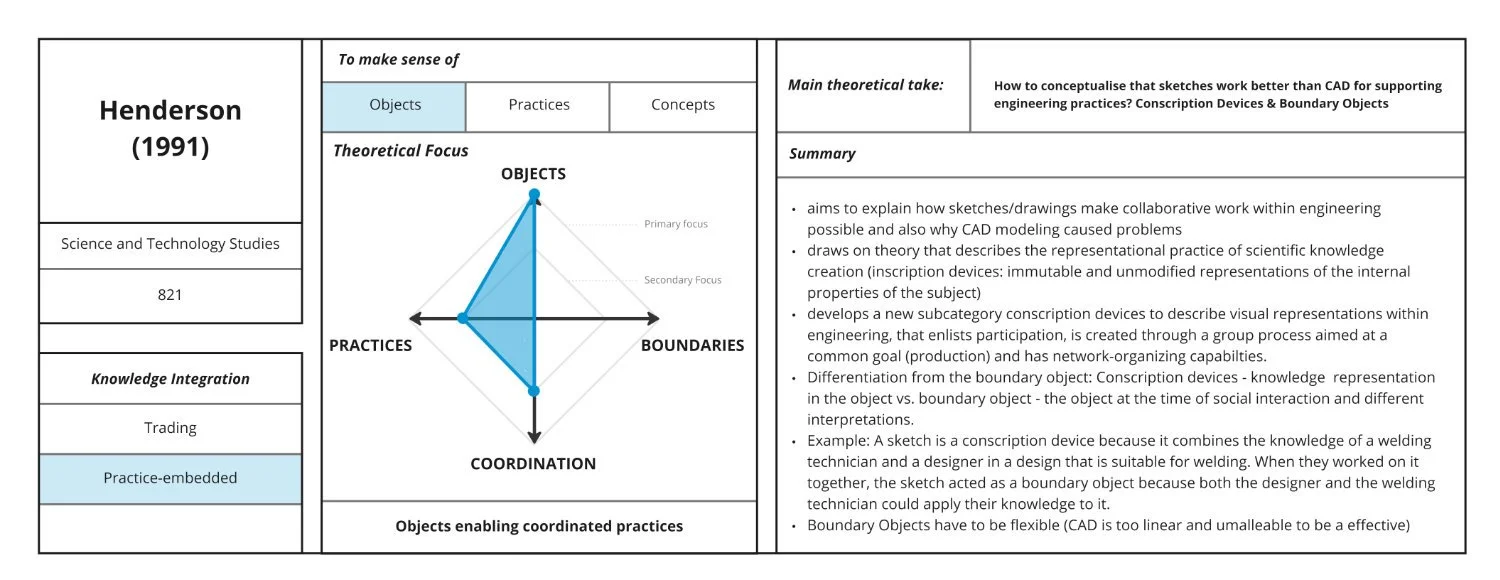
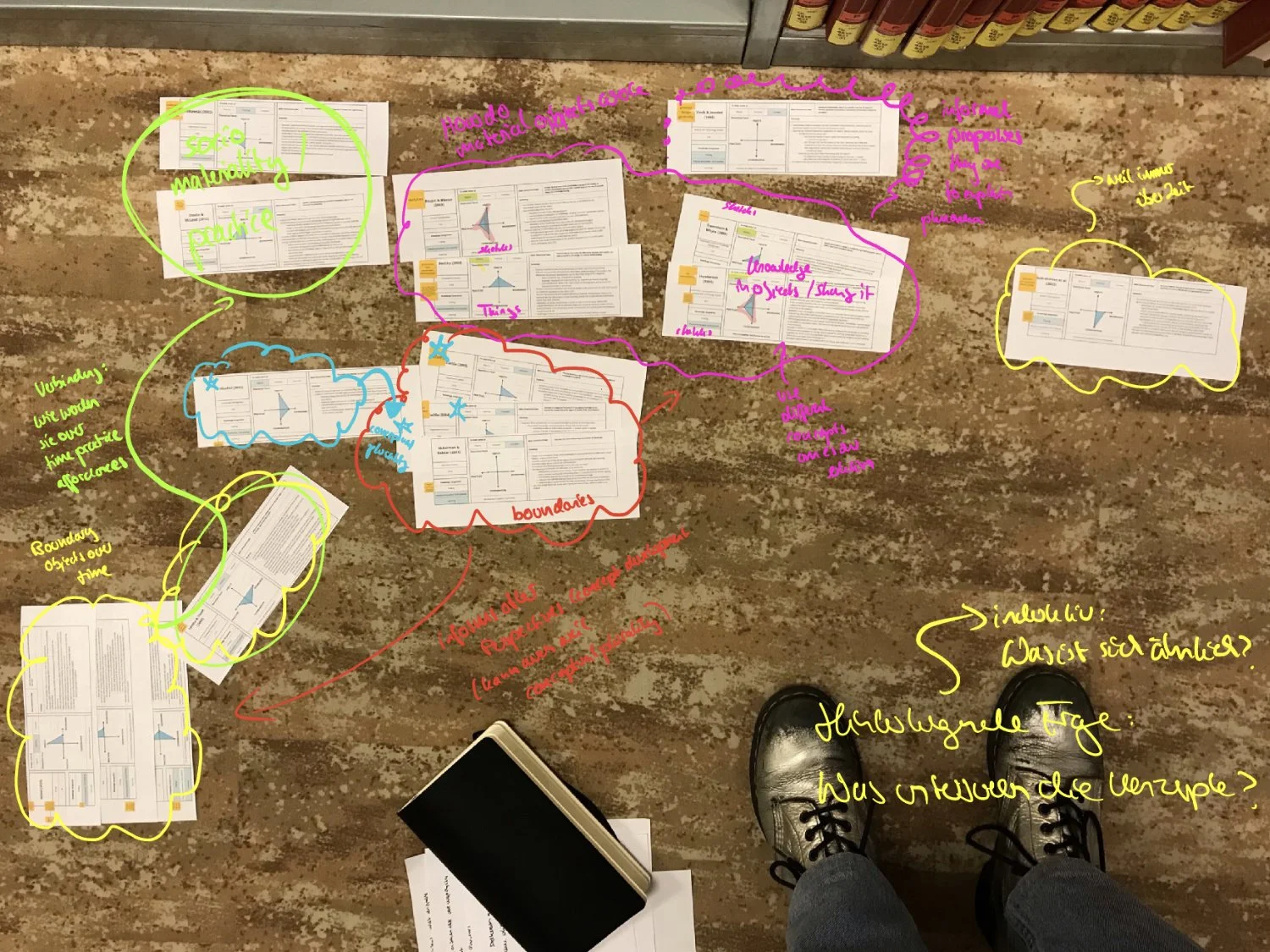
Each perspective focused on different aspects of collaborating through objects and had different underlying assumptions. Through comparison via a meta index card, different literature cluster could be identified. The resulting Navigational Framework guides design researchers to boundary object theory that could support work on different aspects of collaboration via design artefacts.
Taking a sketch in a product design process as an example, works in the different clusters could for example shed light on:
Coordination Perspective:
How did the sketch support work in different departments within the organisation?Artifacts Perspective:
What properties of the sketch supported knowledge sharing?Practice Perspective:
What practices were informed by the sketch and how did it fit into existing practices?Boundaries Perspective:
Which boundaries were how effectively bridged by the sketch?
3
Identify opportunities for the application of boundary object theory in design research
„“Claiming that something is a boundary object is not an extremely useful observation if this particular framing of a specific thing does not help to understand its nature or function.”
(Huvila et al., 2017, p. 1817)
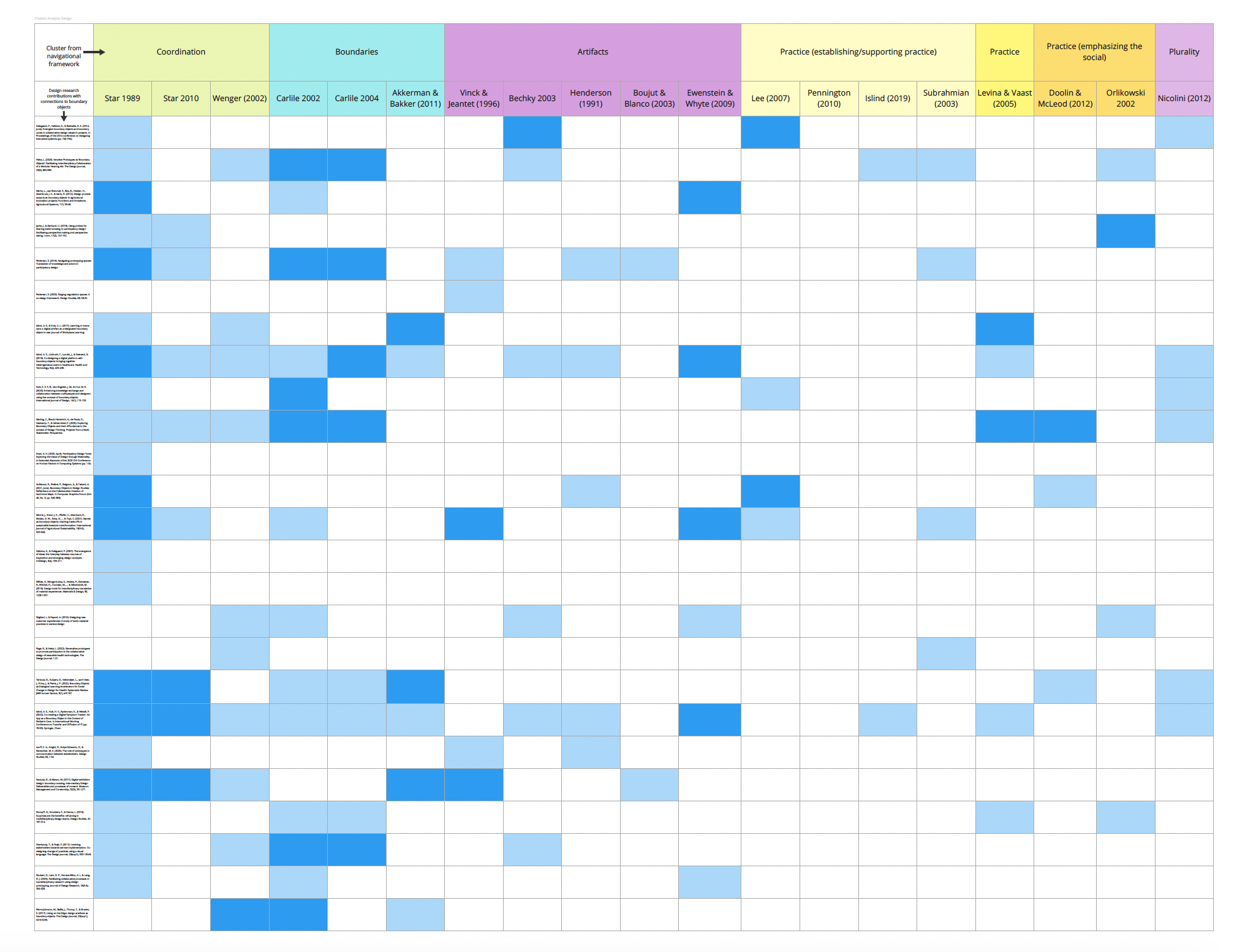
In the final part of the project, it was analyzed what clusters were already applied in design research. Further it was assessed if the authors used the cited work to build a meaningful theoretical point for the issues presented or just mentioned it.
The analysis shows that many design researchers drew on the original article from 1989 of Star and Griesemer, as well as on some works from the boundaries cluster. However, the artifacts and practice clusters were not widely cited and overall engagement with boundary object theory remained rather superficially.
Underexplored potentials include the artifact cluster informing the design of more effective collaboration supports in participative design and the practice cluster for developing objects that fit into a variety of practices.
You would like
to know more?
Have a look at the project in the German Design Graduates Archive or write me a short message.
I’d love to hear from you!